
Beyond the Map: Extraordinary Places Worth Traveling For
“Beyond the borders of the familiar lies the kind of beauty that changes you.”
Travel is no longer just about checking off the classics — it’s about chasing the places that make you pause, look closer, and feel something. Beyond the map’s bolded names lie landscapes shaped by mystery, culture, and raw natural beauty, each offering a story you won’t find in the guidebooks. From world‑famous wonders to hidden corners that defy expectations, these are the destinations that stay with you long after you’ve returned home.
This list is based on Conde Nast Travelers, "Top Places to go in 2026", but focuses on the lesser known locales including:
Africa: Arusha, Tanzania; Gabon, North Namibia
Oceania: Margaret River, Australia
North America: Guadalajara, Mexico
South America: Medellin, Columbia; Minas Gerais, Brazil; North Chilean, Patagonia
Africa
Arusha, Tanzania
Arusha is the beating heart of northern Tanzania — a vibrant, high‑altitude city framed by Mount Meru and serving as the gateway to some of Africa’s most iconic landscapes. While many travelers pass through on their way to Serengeti or Ngorongoro, Arusha is absolutely a destination in its own right, blending culture, coffee, wildlife, and mountain air into one unforgettable base.

🌤️ Best Time to Visit
Arusha has two main dry seasons, which are ideal for both city exploring and safari departures:
June–October (Peak Dry Season)
Clear skies, cool nights, warm days
Best wildlife viewing across the Northern Circuit
Higher prices and more visitors
December–March (Short Dry Season)
Another excellent window
Serengeti calving season = incredible wildlife
Rainy Seasons
March–May: Long rains; lush but muddy, some lodges close
November: Short rains; light showers, fewer crowds
Where to stay:
Legendary Lodge
3-Star Hotel
Legendary Lodge is a luxury accommodation located on the Selian Coffee Estate along Namanga Road in Arusha, Tanzania, nestled on the slopes of Mount Meru with scenic mountain views. It offers a tranquil retreat with colonial-style architecture, lush gardens, and a working coffee farm setting—ideal for pre- or post-safari relaxation.


Elewana Coffee Lodge
4-Star Hotel
Lying on the gently rolling foothills that cascade down from the ever-present Mount Meru is the bustling and vibrant town of Arusha. It is here on the outskirts of this town, hidden amongst one of Tanzania’s largest coffee plantations, that you will find Arusha Coffee Lodge, a perfect haven for relaxation either before or after any East African safari.


Four Seasons Safari Lodge Serengeti
5-Star Hotel
Join us deep in the heart of the world’s most celebrated wildlife reserves, where the Big Five – the lion, the leopard, the buffalo, the elephant and the rhinoceros – run free on the endless, untamed landscape. Perched on a series of elevated platforms and walkways, our Lodge sits next to an animal watering hole, where you can watch a family of elephants stop for their morning drink as you sip your own out on your room’s private balcony. Under the constant protection of local Maasai tribespeople, we’ll take you in the bush for an exhilarating game drive, or you can soar high in the sky on a hot-air balloon safari. However you spend your day, our Spa is waiting to help you rehydrate, restore and re-energize for your next adventure.


Things to do in Arusha:
🦒 1. Explore Arusha National Park
A compact but stunning park with giraffes, buffalo, monkeys, flamingos, and views of Mount Meru. Walking safaris and the Momella Lakes are highlights.
🎨 2. Visit the Cultural Heritage Centre
A massive complex showcasing Tanzanian art, sculpture, jewelry, and crafts. Great for browsing galleries, watching artisans, and picking up unique souvenirs.
💎 3. The Tanzanite Experience
A specialty museum dedicated to Tanzania’s rare blue gemstone. Learn how tanzanite is mined, cut, and valued — and browse certified stones.
☕ 4. Coffee Tours & Tastings
Arusha sits in coffee country, and plantation tours are a favorite. Walk the fields, learn the roasting process, and enjoy fresh tastings.
🛍️ 5. Wander Local Markets
Explore Maasai markets, spice stalls, and craft vendors. It’s one of the best ways to experience daily life and pick up handmade goods.
🥾 6. Book a Northern Circuit Safari
Arusha is the launchpad for world‑famous parks: Serengeti, Ngorongoro Crater, Tarangire, and Lake Manyara. Many travelers join group safaris directly from the city.
🌊 7. Day Trips to Waterfalls & Hot Springs
Popular excursions include:
• Materuni Waterfalls
• Kikuletwa Hot Springs
• Hidden Arusha Waterfall + Coffee Tour
These are highly rated and easy to reach from the city.
🏙️ 8. Arusha City Walking Tour
A guided walk through markets, historic sites, and local neighborhoods — great for understanding the city’s culture and rhythm.
🍳 9. Tanzanian Cooking Classes
Join a hands‑on cooking class paired with a market tour. Learn to prepare traditional dishes with local ingredients.
🏔️ 10. Mount Meru or Kilimanjaro Day Hikes
For active travelers, day hikes offer sweeping views and a taste of Tanzania’s mountain landscapes.
For more on Tanzania, see my post: https://www.wanderlusttravelbucketlist.com/post/detourism-the-new-way-to-travel
Loango National Park, Gabon, North Namibia
Gabon is one of Africa’s last true wilderness frontiers — a place where dense equatorial rainforest meets wild Atlantic coastline, and where conservation takes center stage. With 13 national parks protecting over 11% of the country, Gabon offers some of the most exclusive wildlife encounters on the continent, from surfing hippos to forest elephants wandering along empty beaches. It’s raw, biodiverse, culturally rich, and still remarkably under‑visited — which is exactly why it feels so magical.

Best time to visit:
☀️June–September — Best Overall (Dry Season)
This is widely considered the prime time to visit Loango.
• Trails and roads are more accessible
• Wildlife is easier to spot as vegetation thins
• Cooler temperatures make exploring more comfortable
• Excellent for elephants, buffalo, primates, and coastal sightings
Vibe: Clear skies, active wildlife, and the most reliable conditions.
🌦️ December–February — Second Dry Season (Also Excellent)
Another strong window with great wildlife viewing.
• Good chance of seeing forest elephants near the coast
• Beautiful light for photography
• Fewer travelers than June–September
Vibe: Warm, bright, and vibrant — a great alternative to peak season.
🌧️ March–May — Long Rains (Challenging but Lush)
Travel becomes more difficult, but the rainforest is at its most dramatic.
• Roads can flood
• Wildlife disperses
• Some camps may close
Vibe: Wild, green, and atmospheric — best for seasoned adventurers.
🌦️ October–November — Short Rains (Shoulder Season)
A transitional period with quick showers and fewer visitors.
• Landscapes turn lush
• Wildlife viewing is more hit‑or‑miss
• Good for travelers seeking solitude
Vibe: Quiet, moody, and beautifully green.
Where to stay:
Loango Lodge
Loango Lodge is a luxury eco-lodge located within Loango National Park, Gabon, offering immersive experiences in one of Africa’s most pristine and untouched wilderness areas. It serves as a gateway to explore equatorial rainforests, coastal savannas, and diverse wildlife, including Western lowland gorillas, forest elephants, and marine mammals.
Guests can enjoy a range of activities such as game drives, wildlife photography, sport fishing, whale watching, and guided rainforest walks. The lodge emphasizes sustainable tourism and conservation, with a focus on connecting visitors with nature in its most authentic form.


Tassi Savannah Camp
Tassi, in Loango National Park, is one of the last few places on earth where large mammals can still roam freely on the beach. Here, during the rainy season, buffaloes and forest elephants can often be found grazing on the coastal grasslands and the beach. Occasionally, families of gorillas can also be spotted foraging in the trees alongside the beach. Many of the Gabonese beaches provide a significant habitat for migrant shorebirds, including African skimmers and Damara terns, whose numbers are quickly diminishing across the rest of Africa.


Louri River Camp
Louri River Camp is within a small forest pocket overlooking the Louri River, just a short kayak and hike from the beach, and surrounded by savannas. It is best enjoyed in the rainy season when the larger mammals such as elephants and buffalo are on the savannas and on the beaches. If you are really lucky then you might be witness to Loango's famous surfing hippos! These aren't often spotted but when they are it is a real unique and special moment that even the most adventurous travelers have not usually seen.


Things to do in Loango:
🐘 1. Game Drives Through Forest & Savannah
Explore Loango’s mosaic of habitats by 4×4 — one of the best ways to see buffalo, forest elephants, red river hogs, sitatunga, and primates.
🌊 2. Beach Wildlife Watching (Hippos & Elephants on the Shore)
Loango is famous for its surreal coastline where hippos sometimes surf and elephants wander the beach — a phenomenon seen in very few places on Earth.
🚤 3. Boat Safaris on the Lagoon
Cruise through mangroves and waterways to spot forest elephants, crocodiles, monkeys, and hundreds of bird species. Sunset lagoon tours are especially magical.
🥾 4. Walking Safaris in the Rainforest
Head out with eco‑guides to explore Loango’s dense forest on foot. This is the best way to see smaller species, track animal signs, and immerse yourself in the park’s biodiversity.
🐢 5. Turtle Patrol (Seasonal)
From October to February, join nighttime patrols to witness leatherback and olive ridley turtles nesting on Loango’s beaches — one of the world’s most important nesting sites.
🐋 6. Whale Watching (Seasonal)
From mid‑July to mid‑September, humpback whales migrate along Gabon’s coast. Guided boat trips offer a chance to see breaching whales and mothers with calves.
🎣 7. Sport Fishing at the Lagoon Mouth
Where the lagoon meets the Atlantic, you’ll find some of the world’s largest game fish. Fly fishing in the smaller lagoons is also popular and exclusive to Loango Lodge guests.
🦍 8. Gorilla Trekking (Rare & Regulated)
Track habituated western lowland gorillas with expert guides — one of the most intimate wildlife experiences in Central Africa.
🐦 9. Birdwatching in a Congo Basin Hotspot
Loango is home to hundreds of forest and wetland species, making it a paradise for dedicated birders.
🏘️ 10. Cultural Walks to Local Villages
Visit nearby communities to learn about local traditions, conservation partnerships, and daily life along Gabon’s coast.
🧪 11. Meet Wildlife Conservation Society Researchers
Loango Lodge hosts WCS researchers who often give talks or join guests for dinner — a rare chance to learn about conservation work happening inside the park.
Asia
Naoshima, Japan
Naoshima is often called Japan’s Art Island, a tiny Seto Inland Sea escape known for world‑class museums, Tadao Ando architecture, and outdoor installations scattered across fishing villages and beaches. It’s a calm, sun‑washed, Mediterranean‑feeling island that has become a pilgrimage site for art lovers.

Best time to visit:
🌸 March–May — Best Overall (Spring)
Spring is the sweet spot for Naoshima.
• Mild temperatures and low humidity
• Clear skies ideal for outdoor installations
• Cherry blossoms on nearby mainland towns
• Perfect for biking and wandering Honmura’s art houses
Vibe: Soft light, calm seas, and the island at its most photogenic.
🌞 September–November — Also Excellent (Autumn)
Autumn rivals spring for comfort and atmosphere.
• Crisp, pleasant weather
• Fewer crowds than summer
• Gorgeous sunsets over the Seto Inland Sea
• Ideal for long museum days
Vibe: Golden light, quiet paths, and perfect gallery weather.
🌊 June–August — Warm, Bright, and Popular
Summer brings long days and a breezy, Mediterranean feel.
• Great for beaches and cycling
• Lively atmosphere during the Setouchi Triennale years
• Can be hot and humid, especially mid‑day
Vibe: Sun‑drenched, energetic, and best for travelers who don’t mind heat.
🍂 December–February — Quiet & Minimalist
Winter is peaceful but chilly.
• Very few crowds
• Clear, crisp days
• Some outdoor installations feel stark but beautiful
• Shorter museum hours and occasional closures
Vibe: Minimalist, contemplative, and perfect for travelers who love solitude.
Where to stay:
UNO HOTEL (3 miles from Naoshima)
UNO HOTEL is a modern Japanese-style hotel located in Tamano, Okayama Prefecture, Japan — not on Naoshima Island itself. It serves as a popular base for travelers visiting Naoshima and other art islands in the Seto Inland Sea.
The hotel is just a 3-minute walk from Uno Port Ferry Terminal, the main departure point for ferries to Naoshima, Teshima, and Inujima. It opened in July 2021 and is designed with a "casual luxury" concept, offering clean, comfortable rooms, a free Japanese tea bar, complimentary ice cream, and access to Tama no Yu, Okayama’s largest open-air bath, located just 2 minutes away.


Benesse Arts House
Benesse House is a renowned art hotel and contemporary art museum located on Naoshima Island in Japan’s Seto Inland Sea. Designed by the acclaimed architect Tadao Ando, it seamlessly blends modern architecture, nature, and art, offering guests an immersive experience. The property consists of four distinct buildings—Museum, Oval, Park, and Beach—each with its own unique design and art installations, all interconnected by a free shuttle bus.
Guests enjoy 24-hour access to the museum if staying in the Museum or Oval buildings, including the opportunity to experience the space in solitude at night. Each of the 65 guest rooms features floor-to-ceiling windows with views of the sea or gardens, and is adorned with original artworks by artists such as Yayoi Kusama, Jean-Michel Basquiat, David Hockney, and James Turrell. The hotel also includes two restaurants (one Japanese, one French), a spa, a shop, and a café, with the Benesse House Spa offering sensory-focused treatments.


Naoshima Ryokan Roka
Naoshima Ryokan Roka is a luxury ryokan located on Naoshima Island in Kagawa Prefecture, Japan, established in 2022 as the island’s first high-end traditional inn. Designed with a modern Japanese aesthetic, the property features earthen walls, pale wood paneling, tatami-matted rooms, handmade paper screens, and floor-to-ceiling windows overlooking serene landscapes. Each of its 11 suites includes a private open-air bath, and the hotel doubles as a cultural space, hosting art events in its minimalist bar-restaurant and firepit area.


Things to do in Naoshima:
🖼️ 1. Explore Chichu Art Museum
Tadao Ando’s underground masterpiece, lit entirely by natural light.
• Monet’s Water Lilies
• James Turrell’s immersive light installations
• Walter De Maria’s monumental sphere room
Tip: Reservations required; go early for the softest light.
🏛️ 2. Visit Benesse House Museum
A museum‑hotel hybrid overlooking the sea.
• Contemporary art integrated into architecture
• Outdoor installations scattered across the grounds
• Guests get after‑hours access
Vibe: Minimalist, serene, deeply intentional.
🏡 3. Wander the Art House Project (Honmura)
Traditional village homes transformed into site‑specific art installations.
• James Turrell’s Backside of the Moon
• Tatsuo Miyajima’s Sea of Time
• Haunting, poetic, and one of Naoshima’s most atmospheric experiences.
🪨 4. Lee Ufan Museum
A meditative collaboration between sculptor Lee Ufan and architect Tadao Ando.
• Stone, steel, and concrete in quiet dialogue
• Perfect for slow, reflective wandering
🎨 5. See Yayoi Kusama’s Pumpkins
Naoshima’s most iconic outdoor artworks.
• Yellow Pumpkin at Miyanoura (currently restored after storm damage)
• Red Pumpkin near the ferry port
Tip: Visit early morning or sunset for the best photos.
♨️ 6. Bathe at I♥Yu (Art Bathhouse)
A functioning sentō that doubles as an art installation.
• Colorful, quirky, and very Naoshima
• A fun way to unwind after a day of museums
🚲 7. Rent an Electric Bike and Explore the Island
The best way to experience Naoshima’s hills, beaches, and quiet roads.
• Ride between Miyanoura, Honmura, and Benesse House
• Stop at small shrines, sea overlooks, and hidden art pieces
🌊 8. Relax on Naoshima’s Beaches
The island has a surprisingly Mediterranean feel.
• Tsutsujiso Beach
• Benesse House Beach
Perfect for a breather between museum visits.
🛶 9. Take a Ferry to Teshima or Inujima
If you have extra time, hop to nearby art islands:
• Teshima Art Museum — one of Japan’s most ethereal spaces
• Inujima Seirensho — industrial ruins turned into art
These pair beautifully with Naoshima.
🍜 10. Explore Naoshima’s Tiny Cafés & Creative Eateries
Think: seaside curry shops, minimalist cafés, and artist‑run spaces.
• Café Konichiwa
• Aisunao (traditional set meals)
• Little Plum (casual, traveler‑friendly)
Saadiyat Island, Abu Dhabi
Saadiyat Island is Abu Dhabi’s cultural crown jewel — a calm, sun‑washed island home to pristine beaches, luxury resorts, and some of the most important art institutions in the Middle East. It’s quieter and more sophisticated than Dubai, with a focus on nature, architecture, and slow‑paced luxury.
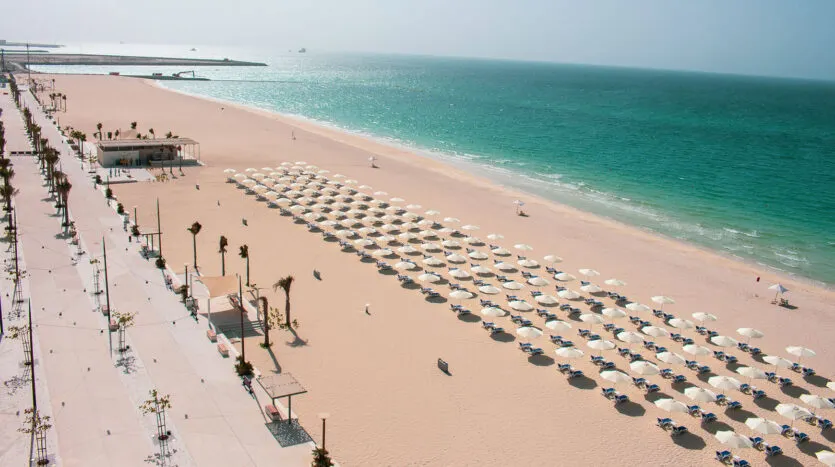
Best time to visit:
🌞 November–March — Best Overall (Winter Season)
This is when Saadiyat is at its most beautiful and comfortable.
• Perfect beach weather with mild temps
• Ideal for exploring Louvre Abu Dhabi’s outdoor courtyards
• Calm seas and soft winter light
• Peak season for outdoor dining and resort life
Vibe: Breezy, golden, and effortlessly luxurious — the island at its best.
🌅 October & April — Warm, Pleasant Shoulder Months
A great alternative to peak season with fewer crowds.
• Warm but manageable daytime temperatures
• Sea is beautifully swimmable
• Resorts feel lively but not packed
• Excellent value compared to winter
Vibe: Sun‑kissed, relaxed, and quietly elegant.
🔥 June–September — Extremely Hot (Summer)
The UAE’s desert heat is intense, but the island still has its charms.
• Daytime temps often exceed 40°C
• Perfect for spa days, long lunches, and indoor museum visits
• Resorts offer their best deals of the year
• Beaches are quiet and serene
Vibe: Slow, indulgent, and resort‑focused — ideal for travelers who love luxury cocooning.
Where to stay:
Jumeirah at Saadiyat Island Resort
5-Star Hotel
Abu Dhabi’s relatively newly developed Saadiyat Island is the setting for this ultra-modern outpost of the Dubai-based luxury-hotel brand. The Jumeirah at Saadiyat Island is a touch further from town than some of its competitors — still convenient, but more secluded, which affords its 293 rooms, suites, and villas a healthy measure of desert-island tranquility. The décor is contemporary-luxe, as are the comforts, both inside these lavish accommodations and out — in addition to the beach you’ll find three infinity pools, an outrageously well-equipped spa, facilities for tennis and golf, and a large handful of restaurants sensibly focused on local seafood, including the Lebanese-Mediterranean Tean.


Saadiyat Rotana Resort & Villas
5-Star Hotel
Set along the serene coastline of Saadiyat Island, just moments from the Saadiyat Cultural District, this luxury resort blends refined luxury with a sense of effortless elegance. Its 327 beautifully designed rooms, suites, and 13 private beach villas offer serene interiors, contemporary design, and uninterrupted views of the turquoise Arabian Gulf and its white sands.
Whether indulging in beachfront dining, enjoying signature treatments at Zen the Spa, or watching your children discover Explorers Kids Club at Aladdin’s Cave, each moment is thoughtfully crafted. From the lagoon pool to tennis courts, wellness experiences, and seven distinct dining venues, Saadiyat Rotana is where sophistication meets ease. Saadiyat Beach is also home to the Hawksbill turtle, a symbol of the island’s natural heritage.


Rixos Premium Saadiyat Island
5-Star Hotel
From swim-up bars to live music, a kids club to a waterpark, Abu Dhabi’s Rixos Premium Saadiyat Island has more than enough to keep the whole family entertained. Add in a white sandy beach, a host of restaurants, a spa and plenty of sports facilities and you’ll find your holiday is quickly ticking all the boxes. The comfortable bedrooms offer garden or sea views, but villas are also available, some with their own pools.

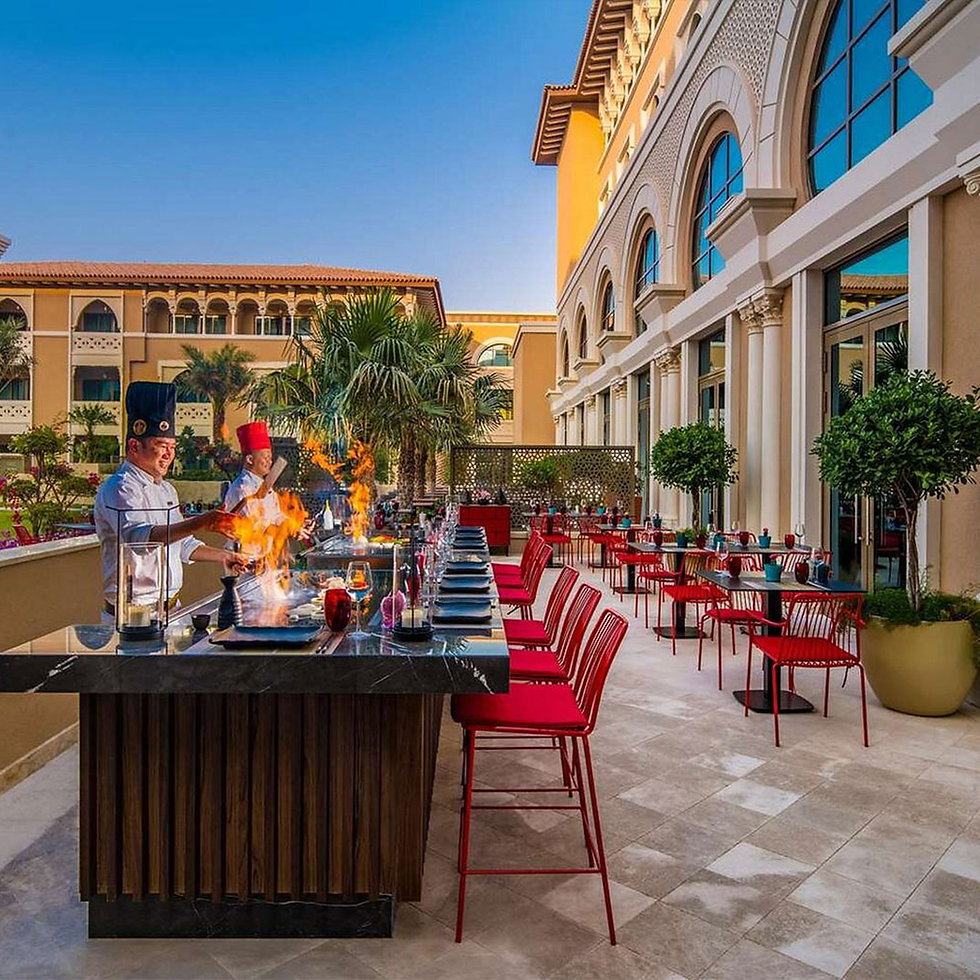

Things to do on Saadiyat Island:
🖼️ 1. Visit Louvre Abu Dhabi
A Jean Nouvel masterpiece floating under a dome of light.
• Global art spanning ancient to contemporary
• Stunning architecture + open‑air courtyards
• One of the UAE’s top cultural experiences
🌊 2. Relax on Saadiyat Beach
A long stretch of powder‑soft white sand and turquoise water.
• Calm, swimmable sea
• Protected dunes + wildlife
• One of Abu Dhabi’s most beautiful beaches
🎨 3. Explore Manarat Al Saadiyat
A creative hub for exhibitions, workshops, film screenings, and cultural events.
• Contemporary art shows
• Community programs
• Great for design‑minded travelers
🐢 4. Spot Wildlife (Hawksbill Turtles & Dolphins)
Parts of the island are protected conservation zones.
• Hawksbill turtle nesting areas
• Occasional dolphin sightings offshore
• Quiet, nature‑rich corners of the island
🏖️ 5. Spend a Day at Saadiyat Beach Club
Exclusive, stylish, and serene.
• Infinity pool
• Private beach access
• Dining + sunset lounging
⛳ 6. Play at Saadiyat Beach Golf Club
A Gary Player–designed course with sweeping sea views.
• Championship‑level greens
• Scenic coastal holes
• Great for golfers and non‑golfers alike
🍽️ 7. Enjoy Luxury Dining & Beachfront Cafés
The island is known for refined, wellness‑forward dining.
• Beach House (sunset views)
• Alkalime (healthy, organic, boho vibe)
• Antonia (Roman‑style pizza, lively atmosphere)
🚴 8. Walk or Cycle the Island
Well‑maintained paths make it easy to explore.
• Jogging and cycling routes
• Waterfront promenades
• Best during cooler months
🏛️ 9. Visit Emerging Cultural Icons
Several major museums are opening soon, making Saadiyat a rising global cultural hub.
• Zayed National Museum
• Natural History Museum Abu Dhabi
• Guggenheim Abu Dhabi (under development)
🎢 10. Hop Over to Yas Island (15 Minutes Away)
For travelers who want culture + fun.
• Ferrari World
• Warner Bros. World
• Yas Marina & Yas Mall
Europe
Gorenjska, Slovenia
Gorenjska (Upper Carniola) is Slovenia’s alpine soul — a region of emerald lakes, medieval towns, dramatic gorges, and the soaring Julian Alps. It’s home to the country’s most iconic landscapes, including Lake Bled, Lake Bohinj, and Triglav National Park, and blends outdoor adventure with deep cultural heritage.
It’s the perfect base for travelers who want mountains, lakes, charming villages, and easy access from Ljubljana.

Best time to visit:
🌸 May–June — Best Overall (Late Spring)
Late spring is when Gorenjska feels fresh, green, and wonderfully alive.
• Mild temperatures perfect for hiking
• Wildflowers in the alpine meadows
• Lakes Bled & Bohinj are calm before summer crowds
• Long daylight hours for exploring
Vibe: Bright, blooming, and effortlessly scenic — the Julian Alps at their gentlest.
🌞 July–August — Peak Summer (Warm, Lively, Outdoor‑Perfect)
Summer is the most popular time to visit, especially for lake days and mountain adventures.
• Warm weather ideal for swimming and kayaking
• Mountain trails fully open and accessible
• Festivals and village events throughout the region
• Expect more visitors at Bled and Vintgar Gorge
Vibe: Sun‑soaked, energetic, and full of alpine adventure.
🍁 September–October — Also Excellent (Autumn Calm)
Autumn rivals spring for comfort and atmosphere.
• Crisp, clear hiking weather
• Fewer crowds at major lakes and gorges
• Beautiful fall colors in alpine valleys
• Perfect for photography and slow travel
Vibe: Golden, peaceful, and quietly dramatic — Slovenia at its most romantic.
❄️ December–March — Winter Wonderland (Ski Season)
Winter transforms Gorenjska into a snowy alpine escape.
• Skiing at Vogel, Krvavec, and Kranjska Gora
• Frozen lakes and snow‑dusted villages
• Christmas markets in nearby towns
• Cold temperatures but magical scenery
Vibe: Cozy, festive, and storybook‑pretty — ideal for winter lovers.
Where to stay:
Vila Alpina
3-Star Guesthouse
Vila Alpina is a guesthouse located in Bled, Slovenia, just a 5-10 minute walk from Lake Bled. It offers modern, clean accommodations with a cozy alpine-style design, free parking, and excellent guest service, particularly from the friendly staff,


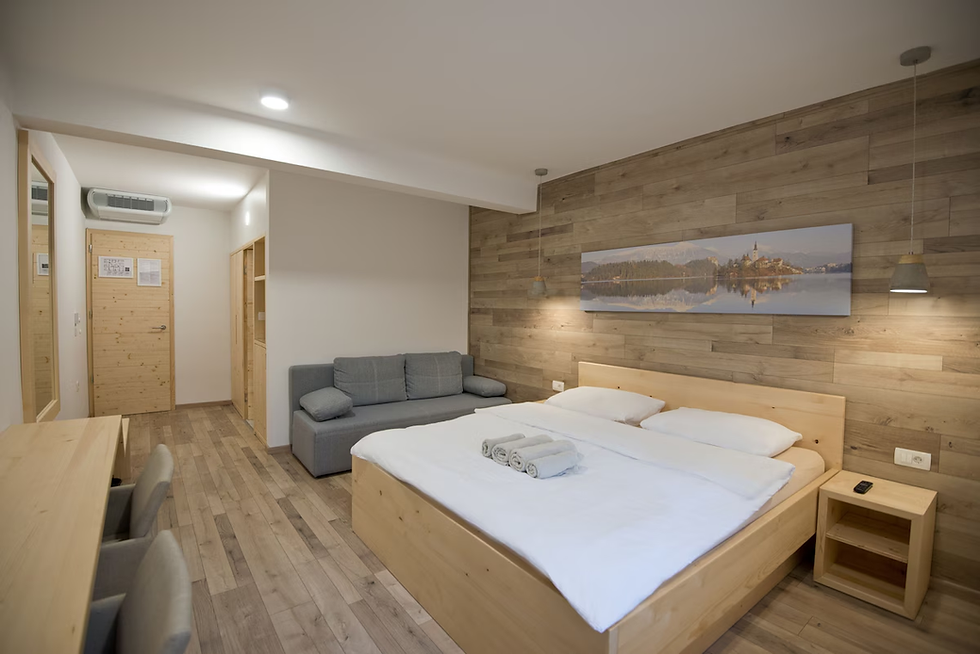
Triglav Bled
4-Star Hotel
Hotel Triglav Bled is the second hotel built in Bled and an important part of the beginnings of Bled tourism. This boutique hotel has a rich history, with refined comfort, and award winning dining. We’re proud to share our heritage and heartfelt hospitality above Slovenia’s most iconic view.
Uniquely furnished rooms, an exquisite restaurant, a day bar and wine cellar, as well as a sauna and pool, are beautifully presented in our special packages: Perfect Relaxation & Active Break.
Located just a few steps away from the Bled-jezero railway station.


Grand Hotel Toplice
5-Star Hotel
The Grand Hotel Toplice is located on the shore of Lake Bled, in the spot offering the most beautiful view of the lake, the Bled Island and the Bled Castle. Step into the hotel with the longest tradition at Bled and listen to the stories whispered by rustic parquet under your feet and emanating from romantic furniture with a history spanning over 90 years. Let yourself be transported to a world of old when time passed more slowly. You will never forget your visit to the Grand Hotel Toplice!


Things to do at Lake Bled:
🛶 1. Visit Bled Island (by Pletna or Rowboat)
The island is the centerpiece of Lake Bled — a tiny, storybook spot with a baroque church and gardens.
• Take a traditional pletna boat (about €20 per person) or rent a rowboat (about €30/hour) to reach the island.
• Climb the 99 steps to the Church of the Assumption.
• Ring the Wishing Bell for good luck.
Why it’s special: The journey across the emerald water is as magical as the island itself.
🏰 2. Explore Bled Castle
A medieval castle perched dramatically on a cliff above the lake.
• Panoramic views of the Julian Alps and the island.
• Exhibits on Bled’s history, a wine cellar, and a blacksmith workshop.
Why it’s special: It’s one of the most photogenic viewpoints in Slovenia.
🚶 3. Walk the Lake Bled Loop (6 km)
A flat, scenic path circles the entire lake.
• Perfect for sunrise or sunset photography.
• Benches and cafés along the way.
• Great for families and casual walkers.
Why it’s special: Every angle gives you a new postcard view.
🥾 4. Hike to Ojstrica or Mala Osojnica Viewpoints
These short but steep hikes offer the famous panoramic shot of the lake, island, and castle.
• Best light: early morning or golden hour.
Why it’s special: It’s the classic Lake Bled photo spot.
🍰 5. Try Bled Cream Cake (Kremšnita)
A local specialty with layers of custard, cream, and flaky pastry.
• Best enjoyed lakeside after a walk or boat ride.
Why it’s special: It’s iconic — and delicious.
🏊 6. Swim or Paddleboard in Summer
The lake’s calm, clear water is perfect for:
• Swimming
• Stand‑up paddleboarding
• Kayaking
Why it’s special: The water is surprisingly warm in July–August.
🌄 7. Visit Vintgar Gorge (Nearby)
A dramatic 1.6 km wooden walkway through turquoise river rapids and waterfalls.
• Just a short drive or shuttle from Bled.
• Ends at the Šum Waterfall.
Why it’s special: It’s one of Slovenia’s most beautiful natural walks.
🎈 8. Adventure Activities (For Thrill‑Seekers)
The Bled region is an adventure hub.
• Canyoning
• White‑water rafting
• Zip‑lining
• Paragliding
• Hot‑air ballooning at sunrise (spectacular views)
Why it’s special: The contrast between calm lake life and high‑adrenaline options is part of Bled’s charm.
🚴 9. Cycle to Lake Bohinj or Around the Countryside
Easy cycling paths connect Bled to nearby villages and viewpoints.
Why it’s special: It’s a peaceful way to explore the alpine landscape.
🧘 10. Slow Down and Enjoy the Lakeside
Sometimes the best thing to do is nothing at all.
• Sit by the water
• Watch the swans
• Enjoy the mountain reflections
Why it’s special: Bled is as much about atmosphere as activities.
For more on Slovenia, see my post: https://www.wanderlusttravelbucketlist.com/post/post-2-coolcations#viewer-husg3220440
Saint Gervais Les Baines, France
Saint‑Gervais‑les‑Bains is a classic Haute‑Savoie alpine town with a mix of spa heritage, Mont Blanc access, and year‑round mountain adventure. It sits between Chamonix and Megève and is known for its thermal baths, Belle Époque architecture, and the historic Mont Blanc Tramway. The region blends village charm with big‑mountain drama, making it a strong base for both winter skiing and summer hiking.

Best time to visit:
🌸 May–June — Best Overall for Pleasant Weather (Late Spring)
Late spring brings milder temperatures and the start of reliable sunshine.
• Daytime highs reach the mid‑60s °F (18–21°C)
• Snow has melted on most lower trails
• Meadows and forests are lush and green
• Rain is possible, especially in May, but days are long
Vibe: Fresh, bright, and alpine‑crisp — perfect for hiking and scenic exploring.
🌞 July–August — Warmest & Most Active (Peak Summer)
Summer is the warmest and most popular time to visit.
• Highs around 70–74°F (21–23°C)
• Ideal for hiking, gondola rides, and mountain lakes
• Long daylight and lively village atmosphere
• Afternoon storms are possible but brief
Vibe: Sun‑soaked, energetic, and full of mountain adventure.
🍁 September — Quiet, Clear, and Underrated (Early Autumn)
Early autumn is still favorable for outdoor activities.
• Highs around 64°F (18°C) with lower rainfall than summer
• Trails are quieter after August
• Crisp mornings and golden light
Vibe: Calm, golden, and beautifully photogenic — a sweet spot for hikers.
❄️ December–March — Best for Skiing (Winter Season)
Winter transforms the region into a snowy alpine base.
• Highs range from 36–44°F (2–7°C) depending on the month
• Reliable snowfall in the ski areas
• Perfect for spa‑plus‑ski days
• Cold, with short daylight hours
Vibe: Cozy, festive, and snow‑dusted — ideal for winter sports and thermal baths.
Where to stay:
RockyPop Chamonix - Les Houches
3-Star Hotel
It’s fair to say RockyPop isn’t the easiest word to pronounce in a sober and dignified tone — but given that the hotel’s stated aim is to shake up the conventional image of the Alpine ski lodge, we’ll happily grant them license to have a bit of fun with the name. And as you arrive in Les Houches, just outside of Chamonix, it’s clear from a glance at the marquee, proudly emblazoned with the phrase “we will RockyPop you,” that they’re in it all the way — this is the ski-resort version of the accessible, youth-oriented boutique hotels that have been taking the world’s cities by storm.
To that end, RockyPop features fun, vibrantly colored guest rooms, with a bare minimum of old-fashioned luxury — they’re comfortable enough, to be sure, but for this audience, reading lights, comfortable duvets, and HD televisions with unlimited video-on-demand are all you really need. The restaurant is similarly laid-back and casual, with a bit of a food-truck theme going on, and a communal-dining vibe that livens the mood. And they don’t neglect the basics; the ski shop carries everything you need for rental or sale, whether you’re a snowshoer, a skier, or — let’s be honest, far more likely — a snowboarder.


Auberge du Bois Prin
4-Star Hotel
In the upper reaches of the resort, this pretty chalet offers a peerless view over Chamonix and the Mont - Blanc massif. Designer decor, high - tech equipment and wood paneling blend tastefully in its luxurious rooms.
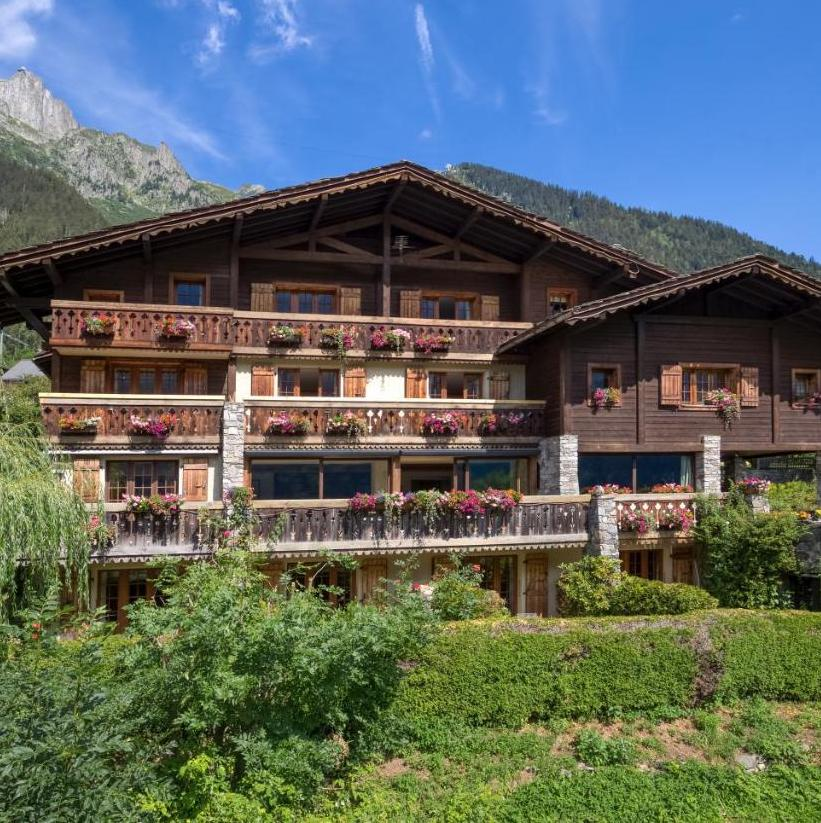


Hôtel Mont Blanc Chamonix
5-Star Hotel
With a name as definitive as the Hôtel Mont-Blanc Chamonix, it’s clear this is no upstart — after a hundred years in business, though, the Mont-Blanc has been thoroughly redesigned by the interior architect Sybille de Margerie. The result is equal parts Alpine charm, Belle Époque elegance, and contemporary cool, and the comforts have kept pace with expectations in this most luxurious of ski towns — they details like Bose sound systems and Nespresso machines. Skiing, obviously, is central to the hotel’s appeal, as is the Spa Clarins, and the Restaurant Le Matafan and Le Bar Lounge are the icing on the cake.


Things to do in Chamonix:
🏔️ Aiguille du Midi (Top of the World Views)
Riding the cable car to Aiguille du Midi (3,842 m) is consistently cited as the top experience in Chamonix. You get 360° views of the French, Swiss, and Italian Alps, terraces overlooking Mont Blanc, and the famous Step Into the Void glass box.
• One of the highest cable cars in the world
• Best early in the morning before clouds form
• Option to continue on the Panoramic Mont‑Blanc gondola toward Italy
🏞️ Montenvers Railway & Mer de Glace
A historic cogwheel train climbs to Montenvers, overlooking the Mer de Glace glacier.
• Visit the glacier ice cave (seasonal)
• Learn about climate change and glacial retreat
• Classic red train + dramatic alpine scenery
🚡 Le Brévent Cable Car
Lonely Planet highlights this as one of the best viewpoints in the valley.
• Incredible views of Mont Blanc from across the valley
• Great starting point for hikes
• Sunset is spectacular here
🥾 World‑Class Hiking
Chamonix is a summer hiking paradise with trails for every level.
• Lac Blanc (iconic reflections of Mont Blanc)
• Grand Balcon Nord & Sud
• Aiguilles Rouges Nature Reserve
• Start of the Tour du Mont Blanc and Walker’s Haute Route
❄️ Skiing & Snowboarding
One of Europe’s most legendary ski destinations.
• Grands Montets (expert terrain)
• Brévent–Flégère (sunny, scenic)
• Les Houches (family‑friendly)
• Off‑piste and mountaineering routes for advanced skiers
🧗 Mountaineering & Via Ferrata
Chamonix is the birthplace of modern alpinism.
• Guided climbs on Mont Blanc (for experienced climbers)
• Via ferrata routes for intermediate adventurers
• Rock climbing in the Aiguilles Rouges
🪂 Paragliding Over the Valley
One of the most popular adventure activities, with tandem flights launching from Brévent or Planpraz.
• Panoramic views of glaciers and peaks
• Smooth, accessible for beginners
• Highly rated by travelers on major platforms
🧊 Glacier Adventures
Depending on the season:
• Ice climbing
• Glacier trekking with a guide
• Exploring seracs and crevasses safely
🚴 Mountain Biking
Chamonix offers downhill and cross‑country routes with lift access.
• Trails around Le Tour & Vallorcine
• Scenic valley rides for beginners
🏙️ Explore Chamonix Town
A lively alpine hub with cafés, gear shops, and Belle Époque architecture.
• Rue du Docteur Paccard (main pedestrian street)
• Alpine Museum (history of mountaineering)
• Weekly markets and local Savoie specialties
🌌 Nightlife & Après‑Mountain
Chamonix has a surprisingly vibrant après scene:
• Microbreweries
• Wine bars
• Live music venues
🧀 Food & Local Specialties
Try:
• Tartiflette
• Raclette
• Fondue
• Blueberry tarts
• Savoie wines
For more on Chamonix, see my blog: https://www.wanderlusttravelbucketlist.com/post/top-10-amazing-race-destinations
Peloponnese, Greece
The Peloponnese is one of Greece’s richest, most atmospheric regions — a place where ancient cities, Venetian fortresses, mountain villages, and pristine beaches all sit within a few hours of each other. It’s often described as “an island in spirit” thanks to the Corinth Canal, and it offers a deeper, more authentic slice of Greece than many island‑hopping routes.

Best time to visit:
🌸 May–June — Best Overall (Late Spring)
Late spring is widely considered the ideal time to explore the Peloponnese.
• Warm but not scorching temperatures
• Wildflowers across the countryside
• Perfect for hiking, cycling, and archaeological sites
• Sea still cool but swimmable by June
Vibe: Fresh, green, and sun‑dappled — the region at its most balanced and beautiful.
🌞 July–August — Hot, Lively, and Beach‑Perfect (Peak Summer)
Summer brings long days and classic Mediterranean heat.
• Warm, sunny weather with almost no rain
• Best for beaches like Simos and Voidokilia
• Festivals in Nafplio, Epidaurus, and Argos‑Mycenae
• Crowds at major sites like Olympia
Vibe: Sun‑soaked, energetic, and ideal for coastal road‑tripping.
🍁 September–October — Also Excellent (Autumn Calm)
Autumn rivals spring for comfort and atmosphere.
• Warm land + warm sea (peak swimming conditions)
• Fewer crowds and softer prices
• Olive harvest season and golden landscapes
• Great for hiking and archaeological sites
Vibe: Golden, mellow, and deeply atmospheric — perfect for slow travel.
❄️ December–February — Quiet, Cultural, and Cool (Winter)
Winter is mild on the coast and crisp in the mountains.
• Cooler temps with occasional rain
• Peaceful archaeological sites
• Snow possible in higher elevations
• Some museums close early
Vibe: Calm, reflective, and ideal for history lovers and mountain villages.
🔥 March–April — Early Spring (Variable but Beautiful)
A transitional season with mild days and blooming landscapes.
• Great for hiking and biking
• Easter is a major holiday with closures and crowds
• Weather can swing between sunny and rainy
Vibe: Blossoming, lively, and culturally rich.
Where to stay:
The K Nest Hotel Nafplio
3-Star Hotel
Tucked away in a quiet corner of Nafplio Old Town, The K Nest Hotel Nafplio offers a peaceful and private escape just steps from the city’s most iconic landmarks. Housed in an elegant 1831 residence, our boutique hotel blends heritage architecture with refined comforts, creating an inviting atmosphere for the sophisticated traveler. Thoughtfully designed Rooms and Suites with sea or city views, curated in-room details, and personalized service promise a truly memorable stay.


Naus Hotel
4-Star Hotel
Welcome to Naus Boutique Hotel, where a distinctive and refined experience awaits in the charming town of Nafplio. Nestled in the heart of the historic old town, this hotel is your perfect base for exploring every captivating corner of this remarkable region. Boasting 38 meticulously designed rooms and suites, Naus Boutique Hotel caters to the most discerning travelers. The sophisticated, minimalist décor, expansive interiors, and mesmerizing views from private balconies set the stage for pure relaxation and bliss. Embrace the perfect blend of comfort and tranquility and discover a truly memorable escape at Naus Boutique Hotel.


Mandola Rosa Grecotel Boutique Resort
5-Star Hotel
Grecotel Mandola Rosa is a luxury boutique beachfront resort located in Killini, Western Peloponnese, Greece, nestled along a 2km stretch of pristine sandy beach within the Riviera Olympia resort enclave. Known for its elegant suites and private beachfront villas, the resort offers stunning Ionian Sea views, a refined 1920s-inspired atmosphere, and access to cultural and recreational experiences near Ancient Olympia.


Things to do in Peloponnese:
🏛️ Ancient Sites & UNESCO Classics
Epidaurus — The Great Theatre
One of the finest ancient theaters in the world, famed for its perfect acoustics.
• Built in the 4th century BC
• Still hosts performances during summer festivals
• A must‑see for archaeology lovers
Mycenae — The Bronze Age Citadel
A powerful ancient city with monumental ruins.
• Lion Gate
• Royal tombs and the Treasury of Atreus
• Key center of Mycenaean civilization
Ancient Olympia — Birthplace of the Olympic Games
Extensive ruins, temples, and a world‑class museum.
• Temple of Zeus
• Ancient stadium
• Archaeological treasures
🏰 Medieval & Byzantine Wonders
Monemvasia — The Stone Fortress Town
A dramatic medieval citadel carved into a rock island.
• Byzantine churches
• Sea‑view alleys
• One of Greece’s most atmospheric towns
Mystras — Byzantine Ghost City
A hillside complex of palaces, monasteries, and frescoed churches.
• UNESCO‑listed
• Incredible views over Sparta
🌊 Coastal Beauty & Beaches
Voidokilia Beach — Perfect Horseshoe Bay
One of Greece’s most photographed beaches.
• Turquoise water
• Protected dunes
• Near Pylos and Gialova Lagoon
Elafonisos & Simos Beach
Caribbean‑like turquoise water and soft sand.
• Ideal for swimming and relaxing
Mani Peninsula — Wild & Rugged Coast
A dramatic coastline with stone tower houses and hidden coves.
• Foneas Beach
• Delfinia Beach
🏞️ Nature, Gorges & Mountain Villages
Vouraikos Gorge
A scenic gorge accessible by hiking or the historic rack railway.
• Waterfalls, cliffs, and lush vegetation
Lousios Gorge & Menalon Trail
One of Greece’s best long‑distance hiking routes.
• Monasteries built into cliffs
• Forested trails and river views
Arcadian Mountain Villages
Dimitsana, Stemnitsa, and Karytaina offer stone architecture, rivers, and traditional tavernas.
🏙️ Charming Towns & Cultural Stops
Nafplio — Neoclassical Beauty
Often considered one of Greece’s prettiest towns.
• Palamidi Fortress
• Seaside promenade
• Venetian architecture
Pylos & Navarino Bay
Venetian castles, calm waters, and access to Voidokilia.
Corinth Canal
A dramatic 19th‑century engineering marvel slicing the Peloponnese from the mainland.
🍷 Food, Wine & Local Experiences
• Wine tasting in Nemea, one of Greece’s top wine regions
• Olive oil tasting in Messinia
• Fresh seafood in coastal towns
• Traditional mountain cuisine in Arcadia
🧭 Adventure & Outdoor Activities
• Hiking in Trikala, Arcadia, and Taygetos
• Sea kayaking around Navarino Bay
• Sailing along the Mani and Messinian coasts
• Caving in Diros Caves (Mani)
• Cycling through olive groves and coastal roads
Oceania
Margaret River, Australia
Margaret River is one of Western Australia’s most beloved regions — a place where world‑class wineries, dramatic coastline, surf breaks, forests, caves, and relaxed country towns all sit within an easy drive of each other. It’s consistently described as one of the best destinations beyond Perth, and the sources highlight its mix of nature, food, wine, and adventure.

Best time to visit:
🌸 September–November — Best Overall (Spring in the Southern Hemisphere)
This is the region’s most balanced season.
• Wildflowers bloom across forests and coastal trails
• Temperatures warm up without summer heat
• Vineyards begin their new cycle
• Ideal for hiking, wine touring, and scenic drives
Vibe: Fresh, green, and full of color — the Peloponnese at its most alive.
🌞 December–February — Warm, Dry, and Beach‑Perfect (Summer)
Summer is the classic Mediterranean experience.
• Long, sunny days with very little rain
• Perfect for beaches like Voidokilia and Simos
• Peak season for festivals and outdoor dining
• Busiest time of year, especially in coastal towns
Vibe: Sun‑soaked, lively, and ideal for coastal road‑tripping.
Climate note: Temperatures often sit in the 20–30°C (68–86°F) range.
🍁 March–May — Also Excellent (Autumn Calm)
A shoulder season with warm days and cooler evenings.
• Great for hiking, biking, and exploring archaeological sites
• Fewer crowds than summer
• Vineyards shift into harvest mode with golden foliage
Vibe: Golden, mellow, and deeply atmospheric — perfect for slow travel.
❄️ June–August — Cool, Wet, and Quiet (Winter)
Winter is mild but wetter, especially in the mountains.
• Crisp air and cozy evenings
• Great for cultural touring and mountain villages
• Wettest months of the year
Vibe: Quiet, reflective, and ideal for history lovers.
Climate note: Winters bring most of the region’s annual rainfall.
Where to stay:
Margarets in Town Apartments
3-Star Accommodations
Margarets In Town Apartments is a well-appointed accommodation option located in the heart of Margaret River, Western Australia, just steps from shops, restaurants, galleries, and the scenic state forest. The property offers a range of self-contained options, including 1-bedroom apartments, 2-bedroom suites, and a 3-bedroom townhouse, all designed for comfort and convenience.


Margaret River B&B
4-Star Hotel
Margaret River Bed and Breakfast is a boutique, eco-friendly guesthouse located at 15 Loaring Place, Margaret River, WA 6285, Australia, nestled within a peaceful forest just minutes from the town center, beaches, and wineries. It offers four luxury, individually furnished rooms with ensuite bathrooms, king beds, spa baths, and modern amenities like flat-screen TVs, DVD players, and free Wi-Fi.

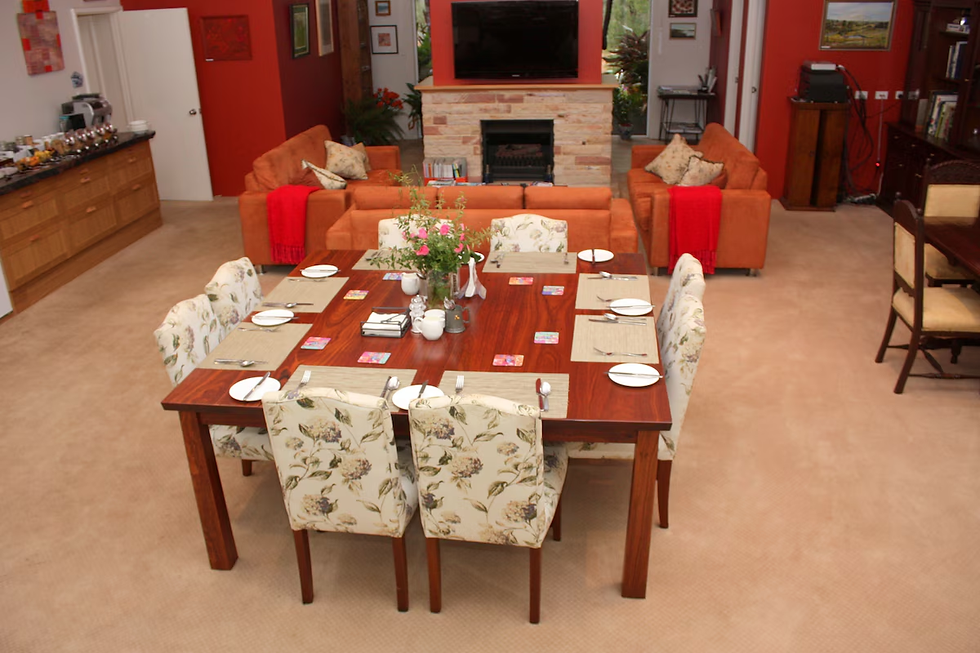

Pullman Bunker Bay Resort Margaret River Region
5-Star Hotel
Just over three hour's drive south of Perth, Pullman Bunker Bay Resort offers the ultimate getaway. Nestled on the white sands of Bunker Bay, our 5 star Margaret River Region resort boasts an absolute beachfront location with direct beach access. Guests can relax, recharge & unwind. Look to explore the surrounding area including nearby Dunsborough, Yallingup and the amazing Margaret River wine region. Avid scuba divers cannot miss the beautiful Geographe Bay, just an hour from our Margaret River resort.
With an amazing beachfront location, Pullman Bunker Bay Resort Margaret River is the ideal getaway destination. With Bunker Bay beach on the doorstep and Geographe Bay and the Margaret River wine region a short distance away, guests can indulge and relax.


Things to do at Margaret River:
🍷 Wine, Food & Culinary Experiences
Margaret River is internationally known for its Cabernet Sauvignon, Chardonnay, and boutique cellar doors.
• Wine tastings at iconic estates like Vasse Felix, Leeuwin Estate, Cullen Wines, and Voyager Estate.
• Food‑forward experiences: winery restaurants, farm visits, chocolate and olive oil tastings, and farmers markets.
• Highly rated guided wine tours, including boutique full‑day tours and blind tastings.
• Culinary trails across Busselton, Dunsborough, and Augusta, with cafés, fish & chips, and chef‑driven dining.
Why it matters: The region blends world‑class wine with a strong artisanal food culture, making it a top destination for foodies.
🌊 Coastline, Beaches & Ocean Adventures
The coastline is rugged, dramatic, and perfect for both surfers and sightseers.
• Surfing at Surfers Point and other world‑class breaks.
• Scenic coastal lookouts like Sugarloaf Rock and Canal Rocks.
• Hidden swimming spots and natural formations like Injidup Natural Spa.
• Whale‑watching in season (typically winter–spring).
• Sea kayaking and coastal walks.
Why it matters: The region’s ocean landscapes are some of the most photogenic in Australia.
🌳 Forests, Wildlife & Nature
Margaret River’s inland landscapes are just as compelling.
• Walk or drive through Boranup Karri Forest, known for towering karri trees and filtered light.
• Birdwatching and wildlife encounters, including woylies and birds of prey.
• Spring wildflowers (especially October), one of the region’s seasonal highlights.
Why it matters: The biodiversity here is exceptional, with eco‑adventures and quiet forest trails.
🕳️ Caves & Underground Experiences
The region has more than 100 limestone caves, with several open to visitors.
• Lake Cave — guided tours with dramatic lighting.
• Mammoth Cave — self‑guided audio tours.
• Jewel Cave — one of the largest show caves in Australia.
These caves are consistently listed among the top attractions.
Why it matters: The caves offer a completely different dimension of the region — ancient, cool, and otherworldly.
🚴 Adventure, Outdoor Activities & Unique Tours
Margaret River is a hub for soft and high‑adventure experiences.
• Abseiling, coasteering, and guided walks along the surf coast.
• Electric quad bike tours through Boranup Forest.
• Mountain biking trails across the region.
• Canoe tours on the Margaret River, often paired with wild food tastings.
• Scenic helicopter flights over the coast and vineyards.
Why it matters: The region caters to every adventure level, from gentle nature walks to adrenaline‑heavy coasteering.
🏖️ Towns, Culture & Local Life
The broader Margaret River Region includes Busselton, Dunsborough, Yallingup, and Augusta — each with its own character.
• Art galleries, working studios, and open‑air cinema nights.
• Busselton Jetty and its underwater observatory.
• Augusta’s lighthouse and coastal trails.
• Local markets and community events.
Why it matters: The region’s creative community and small‑town charm add depth beyond nature and wine.
For more on Perth, see my post: https://www.wanderlusttravelbucketlist.com/post/new-year-trend-top-10-travel-dupes
North America
Guadalajara, Mexico
Guadalajara blends deep tradition, modern creativity, and some of Mexico’s best food and culture, making it one of the country’s most rewarding city destinations. It’s Mexico’s second‑largest city and the cultural heart of Jalisco — home of mariachi, tequila, and a thriving arts scene.

Best time to visit:
🍂 October–December — Best Overall (Dry, Sunny, Festival‑Heavy)
This is Guadalajara at its most vibrant.
• Dry weather with highs in the upper 70s to low 80s°F
• Virtually no rainfall
• Major cultural events: Fiestas de Octubre, Día de Muertos, International Book Fair
• Ideal for walking the Centro Histórico and exploring Colonia Americana
Why it’s ideal: Perfect weather + the richest cultural calendar of the year.
🌤️ January–May — Great Alternative (Mild, Sunny, Fewer Crowds)
A long, pleasant shoulder season.
• Mild days, cooler nights
• Lower hotel prices
• Spring can get warm but stays dry
Why it’s appealing: Comfortable weather and better value without losing the city’s energy.
🌧️ June–September — Low Season (Rainy, Warm, Budget‑Friendly)
Summer brings daily rain, especially in July and August.
• Heavy afternoon/evening showers
• Warm temperatures
• Fewer crowds and better hotel deals
Why you might still go: Great prices and a lively local scene if you don’t mind the rain.
Where to stay:
voco Guadalajara Neruda by IHG
4-Star Hotel
Voco Guadalajara Neruda is the brand’s first in Mexico, and is named for its location: the city of Guadalajara, obviously, but also its address on the Avenida Pablo Neruda, right in the heart of the financial district. The quasi-minimalist, modernist-inspired look is immediately familiar, and is elevated by substantial gestures towards localization, including artwork depicting local scenes. Its location, in the Neruda 2828 mixed-use development, means it can outsource much of its nightlife and entertainment, but its one restaurant is an impressive one: the Bar y Restaurant Querida Luna comes with far-ranging views from its 7th-floor terrace.


Casa Habita, Guadalajara, a Member of Design Hotels
4-Star Hotel
When you think of a dream trip through Mexico, Guadalajara may not one of the first places that springs to mind. There is a sense of expectation, however, around a hotel like Casa Habita — it’s a member of Grupo Habita, the Mexican mini-chain responsible for some of the most stylish boutique hotels in D.F. and throughout the country.
Located in the happening neighborhood of Zona Minerva, west of the Centro Histórico, Casa Habita is a chic 37-room hotel with a minimalist aesthetic and a breezy rooftop terrace. The design has a distinctly European feel, though most of the materials, from stone to textiles, were sourced in Jalisco. Guest rooms are spare and geometric, fitted with glass panes, metallic surfaces, and luxurious marble bathrooms. There’s a Mondrian-esque look to the sliding glass doors, light installations, and windows, and a cool color palette of celeste, white, grass green and slate gray. The best rooms and suites have balconies and floor-to-ceiling windows that look out over treetops and city streets.
Upstairs, a rooftop terrace and swimming pool provide a calm respite from the city outside. There’s a lively city just outside the hotel’s doors, one largely untouched by the tourist industry, but you’ll want to save at least one evening for dinner at Casa Habita’s restaurant, with its menu of American comfort food and Mexican classics. And save time for a nightcap as well; the hotel’s cocktail bar is rightfully popular among visitors and locals alike.


Quinta Real Guadalajara
5-Star Hotel
Some hotels are remarkable for the ease with which they represent the essence of their location; others are remarkable for the contrast between the hotel’s environment and that of the city at large. Guadalajara is one of Mexico’s biggest cities, a bustling and chaotic metropolis, but you’d be hard pressed to notice this from within the walls of the Quinta Real.
Like the other hotels in the Quinta Real group, this one avoids the familiar pitfalls of the big-city business hotel, instead opting for a colonial-influenced residential style. The hotel is tucked into a leafy residential area about four kilometers from downtown, making it a favorite for business travelers who need access to the city center, yet can afford a bit of peace and quiet.
The Quinta Real is an all-suite property, and all the suites are spacious, with classic furnishings and expansive marble bathrooms outfitted with Hermès bath products as well as plush robes and slippers. A pillow menu helps ensure quality sleep, and the service is top-notch. The slightly higher-end suites feature Jacuzzi baths, and the Presidential suite shames many private residences, with three bedrooms across its two floors and even a piano, for the musically inclined.
Hotel services include a swimming pool and passes to a nearby gym, as well as a restaurant serving upscale Mexican and international fare.


Things to do in Guadalajara:
🏛️ Historic Landmarks & Architecture
Guadalajara’s historic core is filled with plazas, cathedrals, and UNESCO‑recognized sites.
• Guadalajara Cathedral — A 16th–17th century landmark with neo‑Gothic towers rebuilt after earthquakes. It anchors four plazas arranged in a cross pattern.
• Hospicio Cabañas — A vast 18th‑century complex with arcaded courtyards and José Clemente Orozco’s famous Man of Fire fresco.
• Rotonda de los Jaliscienses Ilustres — A monument honoring notable figures from Jalisco.
These sites form the backbone of the Centro Histórico and are ideal for a half‑day walking loop.
🎨 Art, Museums & Creative Culture
Guadalajara’s art scene is one of the strongest in Mexico.
• MUSA (Museo de las Artes) — Free to enter, with more than 100 works by Mexican and international artists.
• Street art in Colonia Americana — Murals, galleries, and cafés in one of the city’s trendiest neighborhoods.
• Tlaquepaque — A nearby arts district known for ceramics, glasswork, and mariachi.
The city’s creative momentum is often compared to Mexico City a decade ago — energetic, local, and evolving.
🍽️ Food Experiences & Local Specialties
Guadalajara’s cuisine is distinct within Mexico.
• Torta ahogada — A pork carnitas sandwich drenched in spicy tomato sauce, invented by accident and now a city icon.
• Birria, barbacoa, and street tacos — Found throughout Centro and Americana.
• Modern dining — Restaurants like Alcalde and Xokol push contemporary Mexican cuisine.
Food is one of the city’s strongest draws, from street stalls to Michelin‑recognized dining.
🎭 Culture, Music & Local Life
• Lucha Libre — A high‑energy, theatrical night out.
• Mariachi — Hear live performances in plazas or in Tlaquepaque’s El Parián.
• Mercado San Juan de Dios — The largest indoor market in the Americas, offering food, crafts, and local treats like iced horchata.
These experiences capture the city’s mix of tradition and everyday vibrancy.
🌄 Day Trips from Guadalajara
The city is a perfect base for exploring Jalisco.
• Tequila — Blue‑agave fields, distilleries, and UNESCO landscapes.
• Tlaquepaque & Tonalá — Artisan towns known for crafts and mariachi.
• Guachimontones — Circular pyramids and archaeological sites.
• Lake Chapala & Ajijic — Lakeside towns with mountain views and colorful streets.
These excursions add depth to any Guadalajara itinerary.
South America
Medellin, Columbia
Medellín is one of Colombia’s most compelling destinations — a city defined by mountains, innovation, year‑round spring weather, public art, and a powerful story of transformation. It’s often called La Ciudad de la Eterna Primavera (City of Eternal Spring) for its mild climate and lush greenery. The sources highlight how dramatically the city has evolved and how rich the cultural, outdoor, and urban experiences are.

Best time to visit:
🌞 December–March — Best Overall (Dry, Sunny, Ideal for Exploring)
This is Medellín’s clearest, driest season and the easiest time to enjoy the city’s outdoor spaces.
Least rainy months of the year
Highs typically in the low 80s°F (around 27°C)
Perfect for cable‑car rides, Comuna 13, botanical gardens, and day trips
Peak season for travelers thanks to reliable weather
Why it’s ideal: Consistently great conditions for both city and nature activities.
🌤️ June–August — Also Excellent (Dry, Pleasant, Festival Season)
A second, shorter dry season with comfortable temperatures.
Great for hiking, parks, and outdoor cafés
Popular with visitors — book ahead
Home to major cultural events like the Flower Festival in August
Why it’s appealing: Good weather + Medellín’s biggest cultural celebrations.
🌦️ April–May & September–October — Shoulder Seasons (Rainy but Budget‑Friendly)
These months bring more frequent afternoon showers, especially April–May and October.
Mild temperatures remain steady
Lower prices and fewer crowds
Mornings are often dry and good for exploring
Why you might choose it: Best value and a more local feel.
Where to stay:
Hotel Quinta Ladera
3-Star Hotel
Many of Medellin’s best hotels are housed in modern high-rises, a fact that makes Hotel Quinta Ladera especially notable. While it’s close by to the museums, this sustainably built 20-room boutique hotel feels like an urban oasis — calm, light-filled, and neatly tucked away from the busy city streets. Lush greenery frames the petite property, with its verdant courtyard gardens and trees illuminated with twinkling lights after dark; thanks to the hotel’s thoughtful design, the indoor-outdoor flow is seamless, creating a treehouse-like atmosphere in garden-facing guest rooms.
In addition to being full of natural light, the interiors are elegant, cozy, and full of character with terracotta-tiled floors and white wood-beamed ceilings. A team of Colombian artists and artisans is responsible for many of the hotel’s charming details, from decorative woven baskets and handmade ceramics to delicate framed watercolors and large-scale oil paintings. Guest rooms have tangerine or olive green accent walls, potted plants, and modern bathrooms stocked with organic products and artisan-made towels. Some have French doors opening onto private tree-shaded patios with luxurious stone tubs.
There’s a French flavor to the hotel’s all-day café and restaurant, as well, though several traditional Colombian dishes are also on offer for breakfast, alongside freshly baked almond croissants. Many of Medellin’s cultural attractions are an easy stroll away, and after a day of sightseeing, there’s no better place to relax than a hammock suspended by the hotel’s reflecting pool.


The Click Clack Hotel Medellín
5-Star Hotel
To say that tourism in Medellín has come a long way would already be a huge understatement. And now that the second Click Clack Hotel has set up shop in Colombia’s second city, it’s a location that’s now on the radar for a whole new audience of boutique-hotel enthusiasts — and of course it’ll find an audience among Colombia’s style-conscious domestic travelers as well.
The building itself is a stunning piece of modern architecture, and serves as something of a mission statement: this is not just a hip hotel, but an unapologetically upscale one as well. The rooms, sensibly categorized by size (from S to 2XL), are polished and luxe, their rich dark colors livened by whimsical touches like little terrariums perched atop the bedside lamps.
El Poblado, the surrounding district, is Medellín’s most desirable, packed with shops, bars, cafés, and restaurants. But you’ll be tempted to stay in — the poolside bar makes a compelling case by day, and the cocktail lounge is a local hotspot by night. Also in demand is the hotel’s restaurant, with brunch a particularly popular option.


Elcielo Hotel & Restaurant
5-Star Hotel
Elcielo Hotel’s name — and that of its proprietor, Juan Manuel Barrientos — might be familiar to gastronomes; the restaurant of the same name in Washington D.C. earned a Michelin star in 2021. Here, in his hometown of Medellín, Barrientos has expanded his vision into the luxury-hotel world, with results that are impressive, to say the least — this is much more than a restaurant with rooms, and in fact occupies a place at the top end of the local hospitality scene.
The building is immediately arresting, a modern structure whose full-length windows are shielded by articulated metal screens. The interior is perhaps even more dramatic, oriented around a verdant atrium garden. Upstairs, the 28 suites are ultra-modern and ultra-tasteful, with modern furniture set against rich hardwood paneling and classic travertine bathrooms.
The neighborhood, too, has much to recommend it; El Poblado is the city’s most vibrant upscale enclave. And the eponymous in-house restaurant, arguably the hotel’s main attraction, is every bit the equal of its sisters in D.C., Miami, and Bogotá, and serves everything from a very fine hotel breakfast to an extravagant 17-course tasting menu — and the concierge is happy to arrange outings to Mr. Barrientos’s other local restaurants.


Things to do in Medellin:
🏛️ Historic & Cultural Landmarks
Museo de Antioquia & Plaza Botero
A must‑see pairing: the city’s premier art museum and a plaza filled with 23 oversized Botero sculptures. The museum houses Botero’s donated works and international pieces, making it one of Medellín’s cultural anchors.
Casa de la Memoria
A powerful museum documenting Colombia’s conflict, memory, and resilience. It’s one of the most meaningful cultural stops in the city.
Cementerio Museo de San Pedro
A historic cemetery‑museum with architecture, sculpture, and guided cultural programming.
🎨 Art, Parks & Public Spaces
Parque Arví (via Metrocable)
Ride the gondola straight from the metro into a 16,000‑hectare ecological park with ancient trails and sweeping valley views. It’s one of Medellín’s signature experiences.
Jardín Botánico
A peaceful botanical garden with orchids, shaded paths, and a striking pavilion — perfect for a slow morning.
Parks & Plazas
Medellín’s climate makes outdoor life central to the city.
• Parque Lleras — nightlife and people‑watching
• Plaza Botero — art and street life
• Parque Berrío — historic heart of the city
🧭 Neighborhood Experiences
Comuna 13
Once one of the city’s most troubled areas, now known for street art, escalators, and community‑driven transformation. Guided tours offer essential context.
El Poblado
Cafés, restaurants, nightlife, and leafy streets — the city’s most popular base for visitors.
Laureles
A more local, residential vibe with great restaurants and walkable boulevards.
🍽️ Food, Coffee & Nightlife
• Food tours that highlight local dishes and markets.
• Microbreweries and craft beer spots across Laureles and Poblado.
• Coffee tours within the city or nearby fincas.
• Nightlife in Parque Lleras, Provenza, and Laureles.
🌄 Iconic Day Trips
Guatapé & Piedra del Peñol
Climb 740 steps for panoramic views of lakes and islands — one of Colombia’s most photographed landscapes.
Coffee Farm Tours
Visit working fincas for tastings and hands‑on learning.
Santa Fe de Antioquia
A colonial town with cobblestone streets and the historic Puente de Occidente.
🪂 Adventure & Outdoor Activities
• Paragliding over the Aburrá Valley.
• ATV tours in the surrounding mountains.
• Hiking to hidden waterfalls and nature reserves.
Minas Gerais, Brazil
Minas Gerais is one of Brazil’s most culturally rich and geographically diverse states — a place where UNESCO‑listed colonial towns, baroque churches, mountain parks, waterfalls, caves, and world‑class gastronomy all sit within a few hours of each other. It’s often described as Brazil’s most soulful region, and the search results reinforce just how deep and varied the experience is.

Best time to visit:
☀️ May–August — Best Overall (Dry, Mild, Perfect for Exploring)
This is the sweet spot for Minas Gerais.
• May: ~4 mm of rain, 30 dry days
• June: ~10 mm of rain, 26 dry days
• July: ~2 mm of rain, 31 dry days
• August: ~38 mm of rain, still mostly dry
• Daytime temps: 26–29°C (79–84°F)
Why it’s ideal: Clear skies for colonial towns like Ouro Preto and Tiradentes, perfect hiking conditions in Serra do Cipó and Canastra, and comfortable city days in Belo Horizonte.
Vibe: Crisp mornings, sunny afternoons, and golden mountain light.
🌼 April & September — Great Shoulder Seasons
Both months offer warm temperatures and relatively low rainfall.
• April: 108 mm of rain, but many pleasant days
• September: Only ~12 mm of rain and 25 dry days
Why it’s appealing: Fewer crowds, good value, and excellent conditions for road‑tripping and nature.
Vibe: Transitional, warm, and scenic.
🌧️ October–March — Rainy Season (Warm, Lush, Unpredictable)
This is the wettest stretch of the year, especially December–February, when rainfall can exceed 250 mm per month.
• Heavy afternoon showers
• Humid, lush landscapes
• Best for food, culture, and city‑based travel
Vibe: Green, tropical, and atmospheric — but not ideal for hiking or long drives.
Where to stay:
Pousada Sinhá Olímpia
3-Star Hotel
Pousada Sinhá Olímpia is a charming guesthouse located in Ouro Preto, Minas Gerais, Brazil, housed in a historic colonial building with elegant decor and a tranquil atmosphere. It offers comfortable rooms, free Wi-Fi, a swimming pool, sauna, and a highly praised breakfast, making it ideal for travelers seeking a peaceful retreat with a touch of heritage.


Caesar Business Belo Horizonte Belvedere Managed by Mercure
4-Star Hotel
Caesar Business BH Belvedere is perfect for your stay in the capital of Minas Gerais. Rooms are large, air-conditioned, with spacious beds and free WIFI. Santa Fe restaurant serves the best cuisine, including amazing Japanese cuisine from Udon restaurant. The hotel also has function rooms for social and business occasions, play area with pool, sauna, massage and beauty salon, and gym.
Caesar Business is strategically located in the mining region. Near BH Mall, is perfect for shopping and leisure. Close to highway exits to other cities, and to several tourist attractions. The hotel is a 13-minute drive from the Savassi district, main point of the mining bohemia, where you can enjoy the best of local cuisine. Visit Praça da Liberdade and its cultural complex.
Stay in a hotel in Belo Horizonte well-located to make the most of the capital of Minas Gerais. A mix of business and leisure with maximum comfort.


Fasano Belo Horizonte
5-Star Hotel
In Brazil, the Fasano brand is a symbol of cutting-edge glamour, and their hotel in mountainous Minas Gerais, in the heart of one of the country’s largest cities, lives up to the reputation. Hotel Fasano Belo Horizonte is a luxury hotel renowned for its high-end restaurant and bar and its sleek, spacious guest rooms, with their gleaming hardwood floors and crisp white Egyptian cotton linens.
The look, in warm natural tones of cream, wood, and copper, is something of a Fasano signature, and is emblematic of a specifically Brazilian vision of luxury. Even the humblest Superior rooms span nearly 300 square feet, and their marble bathrooms are furnished with high-pressure showers and Havaianas flip-flops; suites quickly grow to vast proportions.
Gero Belo Horizonte is the first outpost of the Fasano family’s high-end Gero restaurants to be found in a hotel setting, while Baretto, the plush cocktail bar featuring live music by local talent, brings in a steady stream of stylish Brazilians. Head up to the rooftop spa for a facial or a dip in the pool, or stroll out the front door to explore the fashionable neighborhood of Lourdes, with its countless wine bars and boutiques.


Things to do in Minas Gerais:
🏛️ Colonial Towns & Baroque Heritage
Minas Gerais is Brazil’s strongest region for preserved colonial architecture and gold‑rush history.
• Ouro Preto — A UNESCO World Heritage town filled with baroque churches, cobblestone streets, and museums. It’s one of the state’s most visited destinations.
• Tiradentes — A beautifully restored town with artisan shops, regional cuisine, and the gold‑laden Matriz de Santo Antônio church.
• São João del‑Rei & Congonhas — Known for Aleijadinho’s sculptures and historic plazas.
• Diamantina — Another UNESCO site with 18th‑century mansions and music traditions.
These towns are ideal for slow wandering, photography, and immersing yourself in Brazil’s baroque past.
🌿 National Parks, Waterfalls & Mountain Landscapes
Minas Gerais is one of Brazil’s top eco‑tourism regions, with hundreds of waterfalls and dozens of parks.
• Waterfalls — Over 300 waterfall experiences are listed across the state, making it a major draw for nature lovers.
• Serra do Cipó National Park — Hiking, rock formations, and the Espinhaço mountain range.
• Serra da Canastra National Park — Home to the headwaters of the São Francisco River and wildlife like the maned wolf.
• Ibitipoca State Park — Caves, canyons, and high‑altitude viewpoints.
• Lavras Novas — A small mountain town known for hiking, abseiling, and sweeping views.
These landscapes are perfect for hikers, photographers, and anyone who loves dramatic scenery.
🎨 Art, Culture & Modern Attractions
Minas Gerais blends deep history with cutting‑edge art and lively urban culture.
• Inhotim — One of the world’s largest open‑air contemporary art museums, consistently ranked the #1 attraction in the state.
• Mercado Central (Belo Horizonte) — A massive market with local foods, cheeses, sweets, and crafts; one of the state’s top‑rated experiences.
• Museums & Galleries — Belo Horizonte has specialty museums, art museums, and theaters (over 140 listed).
This is where Minas Gerais shows its modern, creative side.
🍽️ Food, Cheese & Regional Flavors
Minas Gerais is considered one of Brazil’s best culinary regions.
• Pão de queijo, doce de leite, feijão tropeiro, and artisanal cheeses are regional icons.
• Food tours in Belo Horizonte — Highly rated experiences include market crawls and local‑flavor tastings.
• Cachaça tasting — Especially in towns like Tiradentes and rural distilleries.
The food here is hearty, homemade, and deeply tied to local identity.
🧭 Scenic Towns & Mountain Villages
Beyond the famous colonial cities, Minas Gerais has charming small towns worth exploring.
• Monte Verde — A Swiss‑style mountain town with cozy restaurants and cold winters.
• Lavras Novas — Quiet, scenic, and ideal for outdoor activities.
• Alto Caparaó — Gateway to Caparaó National Park and Pico da Bandeira.
These towns offer a slower, more atmospheric side of Minas Gerais.
Coyhaique, North Chilean, Patagonia
North Chilean Patagonia is one of the wildest, least‑visited, and most spectacular regions in South America — a narrow ribbon of land between the Andes and the Pacific, carved by fjords, glaciers, and dense forests. It’s remote, hard to reach, and absolutely unforgettable.

Best time to visit:
☀️ December–March — Best Overall (Summer)
This is the season when North Patagonia opens up most fully.
- Long daylight hours for driving, hiking, and glacier excursions
- Milder temperatures across fjords, forests, and mountain valleys
- Most ferries, lodges, and remote routes operating
- Ideal for Marble Caves, San Rafael Glacier, Queulat, and Cerro Castillo
Why it works: Accessibility + weather stability in a region where both are rare.
🌤️ October–November & April — Shoulder Seasons
These months can be beautiful but more variable.
- Spring (Oct–Nov): snowmelt, wildflowers, rising temperatures
- Autumn (April): golden colors, quieter roads, crisp air
- Some services may be limited, especially in April
Why consider it: Fewer travelers and dramatic seasonal scenery.
🌧️ May–September — Winter (Not Ideal)
Winter brings heavy rain, snow in higher elevations, and reduced access.
- Many trails, ferries, and remote roads close
- Short daylight hours
- Best only for experienced travelers with flexible plans
Why to avoid: Limited mobility in a region already defined by logistical challenges.
Where to stay:
HOTEL BACARIS
3-Star Hotel
Hotel Bacaris is a modern, 3-star hotel located in Puerto Tranquilo, Chilean Patagonia, at Los Arrayanes 354, 6060000 Puerto Río Tranquilo, Aysén, Chile. It features a garden, terrace, free private parking, and bike rental, with air-conditioned rooms offering free Wi-Fi, private bathrooms, and some units including kitchenettes with fridges and toasters.


Okeyloft Coyhaique
3-Star Hotel
Okeyloft Coyhaique is a family-run, boutique-style lodging in the heart of Coyhaique, Aysén Region, Chile — a gateway to the stunning Patagonian landscape. It offers six modern, vanguardist loft apartments designed for daily rentals, each with unique decor, high-quality amenities, and a focus on comfort and style. All units feature central heating, jacuzzi showers, premium bedding, free Wi-Fi, and fully equipped kitchens, with options for 1 to 4 guests.


Hotel Loberias del Sur
3-Star Hotel
Hotel Loberías del Sur is a 60-room hotel located in Puerto Chacabuco, Aysén Region, Northern Patagonia, Chile, offering a blend of comfort, scenic views, and access to outdoor adventures. The hotel features a restaurant with an international buffet, bar, free Wi-Fi, meeting rooms for up to 120 people, and shuttle service from the airport. It is situated just 0.2 km from the town center and is known for its welcoming atmosphere, live music, and proximity to natural attractions.


Things to do near Coyhaique:
🌲 Coyhaique National Reserve
One of the easiest and most rewarding outings near town.
• Short, low‑intensity trails like Los Leñeros and Los Carreros lead to viewpoints and Laguna Verde.
• Great for first hikes, families, and anyone wanting a quick immersion in Patagonian forest.
• The reserve entrance is just 2 km from town.
🏔️ Cerro Castillo National Park
A dramatic mountain landscape with turquoise lakes and jagged peaks.
• Day hikes and multi‑day treks, including the famous Laguna Cerro Castillo route.
• One of the top‑ranked attractions in the region.
🌄 Marchant Viewpoint
A scenic overlook offering sweeping views of Coyhaique and the surrounding mountains.
• Easy to reach and perfect for photography.
🌊 Simpson River National Reserve
A lush valley with rivers, waterfalls, and wildlife.
• Ideal for hiking, fly‑fishing, and scenic drives.
• Often paired with visits to Puerto Aysén.
🛶 Day Trips & Adventure Tours
Coyhaique is a launch point for some of Patagonia’s most iconic excursions.
• Marble Caves (Capillas de Mármol) — full‑day trips to General Carrera Lake.
• Rock climbing, e‑mountain biking, and guided trekking.
• Shore excursions from Puerto Chacabuco, including fjord landscapes and wildlife.
🏙️ In‑Town Experiences
Coyhaique itself offers a few cultural stops worth a slow morning.
• Plaza de Armas — the city’s central square, lively and scenic.
• Museo Regional de Aysén — regional history, indigenous culture, and natural heritage.
For more on Patagonia, see my post: https://www.wanderlusttravelbucketlist.com/post/bucket-list-south-america#viewer-kosb3778


Comments