
Eight Countries, One Rail Pass: A Storybook Journey Through Europe
Updated: Sep 25, 2025
“Wherever you go becomes a part of you somehow.” — Anita Desai
There’s something timeless about crossing borders by train—watching landscapes shift from alpine peaks to sun-drenched coastlines, hearing languages change with each station, and feeling the rhythm of Europe pulse beneath the tracks. This Eurail journey will go through eight countries—Germany, Austria, Croatia, Slovenia, Italy, France, Spain, and Portugal—each offering its own mosaic of culture, cuisine, and charm. From sipping espresso in sleepy Italian towns to waking up in a sleeper car as the sun rises over the Pyrenees, this is more than a trip. It is a slow unraveling of stories, stitched together by steel rails and serendipity.
For this trip, you would want at least 2-3 days in each town. With 14 stops, that would take about 28 - 42 days. For some parts, you may want to sleep on the train (especially the longer legs), but I will offer hotels to stay in along the way, as well. Of course, you could split this journey up in many different parts or experience the ultimate rail trip. I will do a Part II featuring the northern parts of Europe in the future. Currently, a Eurail pass for 30 days runs about $650 and a 60 day pass runs about $780.
The stops will include:
Traveling on the Eurail train:
Traveling on a Eurail train is like stepping into a moving storybook—each carriage a chapter, each window a frame to Europe’s ever-changing scenery. You glide from alpine peaks to Mediterranean coastlines, from medieval towns to modern metropolises, all without the stress of airports or traffic. The rhythm of the rails invites you to slow down, sip a coffee, and watch the world unfold.
Whether you're in a plush first-class seat or a cozy sleeper cabin, the experience is smooth, scenic, and surprisingly social. You’ll meet fellow travelers, swap stories, and maybe even share a picnic in a panoramic carriage. And with flexible passes, spontaneous detours become part of the adventure.

Best time of year to do this journey:
🌸 May–June: Spring Awakening
• Pros: Mild weather, blooming landscapes, fewer crowds, and shoulder-season pricing.
• Vibe: Cafés spill onto sidewalks, gardens burst with color, and cities feel fresh and lively.
• Best for: Cultural festivals, scenic countryside, and relaxed urban exploration.
☀️ July–August: High Summer
• Pros: Long daylight hours, beach-perfect weather in Croatia, Spain, and Portugal.
• Cons: Peak tourist season—expect crowds and higher prices in hotspots like Rome, Paris, and Barcelona.
• Best for: Coastal escapes, vibrant nightlife, and alpine hikes in Austria or Slovenia.
🍂 September–Mid October: Golden Shoulder Season
• Pros: Warm days, crisp evenings, grape harvests, and fewer tourists.
• Vibe: Autumn colors in Bavaria, wine festivals in France and Portugal, and dreamy sunsets along the Adriatic.
• Best for: Culinary travel, scenic rail rides, and boutique stays with availability.
1st Stop: Munich, Germany
Munich is a city that blends Bavarian tradition with cosmopolitan flair—think lederhosen and laptops, beer gardens and cutting-edge design. Whether you're chasing culture, cuisine, or countryside, Munich delivers with style and warmth.

Where to stay in Munich:
Hotel Schlicker
3-Star Hotel
Each of the 68 rooms and 2 apartments is characterized by its own unique ambiance. All rooms are non-smoking and equipped with a bathroom, toilet, TV, minibar, telephone, safe, and free Wi-Fi. Each room also features a coffee maker for making coffee and tea.


DO & CO Hotel München
4-Star Hotel
The city-center building in which DO & CO Munich makes its home is an unusual one: FC Bayern World is a monument to the storied local football club, an immersive retail experience with contributions from partners like Audi and the DO & CO hospitality brand. The latter is responsible for a thoroughly tasteful and luxurious high-end boutique hotel, a worthy sequel to its older sister in Vienna. Along with 30 stunningly stylish rooms and suites — one for each of Bayern’s league championships to date — the hotel contains a pair of fine restaurants, one a contemporary Asian experience and the other an upscale Mediterranean-inspired bistro.


Mandarin Oriental Munich
5-Star Hotel
Despite its distinctly old-fashioned appearance, this is, perhaps, Munich's most sophisticated hotel. Small and discreet, the Mandarin Oriental is still widely referred to by its old name, the Rafael, though this 19th century building was only converted to a hotel in 1990.
This is probably due to the fact that many of the guests have been devotees since the hotel since it first opened, and often come several times a year (Zubin Mehta stays here every time he conducts the Opera series). Evidently, they all like the fruit on check-in, the newspaper in the morning, and the extremely familiar, extremely friendly faces of the concierge and the barman. An added bonus - everything in the mini bar is on the house. And the food, by the way, is absolutely sensational. Should you find yourself burnt out — as many visitors to Germany do — on bratwurst and strudel, escape downstairs to Matsuhisa, Munich, first of its kind in the country. Its Japanese-Peruvian fusion plates pair particularly well with the adventurous cocktails and champagne offerings at Bar31.
Your physical surroundings aren't so shabby either. The air is redolent with the many flowers strewn throughout. The Mandarin Oriental prides itself on its collection of prints and etchings, which includes several from its former namesake, the Italian painter Raphael himself. Real antiques decorate rooms that are architecturally quirky in a way unique to buildings over a century old. Like Prince Charles, you might want to sleep in room 608, which features a sitting room in a turret, and will make you feel like Rapunzel.
Some say it's the location - walking distance from anything you would possibly want to see in Munich, the Opera, the Marienplatz, shopping, and the Maximilianstrasse. Some say it's the nice pianist at the piano bar. But others say, hands down, that it's the terrace on the roof with its garden and heated pool from which you can see the Alps.


Things to do in Munich:
Munich is packed with cultural gems, green escapes, and architectural marvels that make it a dream for immersive travel.

• Marienplatz: The beating heart of Munich, this historic square is home to the iconic Glockenspiel, two town halls, and a lively atmosphere perfect for people-watching or grabbing a coffee.
• Nymphenburg Palace: A sprawling baroque estate with rococo interiors and manicured gardens—ideal for a regal afternoon stroll or a deep dive into Bavarian history.
• Olympiapark München: Built for the 1972 Olympics, this massive complex offers stadium tours, concerts, and even a rock museum. It’s a great spot for panoramic views and active adventures.
• English Garden: One of the largest urban parks in the world, complete with beer gardens, paddleboarding, and even river surfing. A local favorite for unwinding or picnicking.
• Munich Residence: This former royal palace is a treasure trove of art, architecture, and opulence. Wander through its courtyards and gilded halls for a taste of Bavarian grandeur.
• Hofgarten: A serene Renaissance-style garden tucked beside the Residence, perfect for quiet reflection or a scenic detour between museums.
• BMW Museum: A futuristic showcase of automotive design and innovation, featuring vintage models, concept cars, and interactive exhibits.
• Deutsches Museum: Europe’s largest science and technology museum, with hands-on displays covering everything from astronomy to aviation.
For more on Munich, see my post: https://www.wanderlusttravelbucketlist.com/post/10-best-cultural-events-around-the-world
2nd Stop: Salzburg, Austria
(About 1.5 hours direct on train)
Salzburg is like stepping into a baroque fairytale—with alpine backdrops, winding cobblestone lanes, and music echoing through the centuries. Whether you're chasing Mozart’s legacy, sipping coffee in ornate cafés, or hiking into the Salzkammergut lake district, this Austrian gem is compact, cultural, and utterly captivating.

Where to stay in Salzburg:
Hotel Krone 1512
3-Star Hotel
Hotel Krone 1512 is a charming boutique stay nestled in the heart of Salzburg’s Old Town, offering a blend of historic character and modern comfort that’s perfect for travelers who appreciate authenticity and atmosphere.


DAS EDELWEISS - Salzburg Mountain Resort
4-Star Hotel
A rare find that blooms in a rugged, pristine alpine valley — the comparison to the flower is an apt one. Three generations in and going strong, Das Edelweiss Salzburg Mountain Resort is a testament to the Hetteger family’s past mastery. They’ve of course perfected the ski-in, ski-out idiom (including their own ski depot, replete with the latest and greatest), and the après scene is arguably just as opulent. There isn’t a room in the place without a postcard view, and even the most modest of them doesn’t skimp on natural wood and floor-to-ceiling windows for the full effect. For best results, grab a front-row seat to a snowcap sunset in their infinity pool.


Hotel Sacher Salzburg
5-Star Hotel
Though it joined the Sacher family a scant thirty years ago, the Hotel Sacher Salzburg is actually the elder, pre-dating the Sacher Wien by a full decade. It’s as grand as they come, occupying a privileged position in Salzburg’s old town, along the banks of the Salzach river. Like its Viennese sister, it’s still resplendent in 19th-century pomp, as its renovations have focused on maintaining the beauty of the hotel without altering its essential character.
The rooms and suites are uniformly luxe and elegant, with décor that’s bright and contemporary, but still rooted in the Sacher’s past — ornate prints and fabrics abound, but the color palette is tightly focused, as are the layouts. The spaces aren’t vast, though nothing in historic Salzburg is; nevertheless, these rooms and suites lack for nothing in terms of comfort. Some have impressive views of the rooftops of the old town, while others look out at the Hohensalzburg Fortress.
Restaurants include the wood-paneled Zirbelzimmer, an Austrian fine-dining restaurant whose design is still straight out of 1866. To that they’ve added the more contemporary Sacher Grill and the warm and clubby Sacher Bar. But we know you’ll be saving room for dessert — the Café Sacher Salzburg is cut from the same cloth as its sister in Vienna, and naturally serves the very same Sachertorte.


Things to do in Salzburg:
Salzburg is a treasure trove of culture, history, and alpine charm. Here's a curated list of top things to do that blend baroque beauty with immersive storytelling:

• Fortress Hohensalzburg: Towering above the city, this 11th-century hilltop fortress offers sweeping views and fascinating museums. It’s one of the largest preserved medieval castles in Europe.
• Salzburg Cathedral: A masterpiece of baroque architecture, this 17th-century cathedral stuns with its twin spires, marble interiors, and sacred art collection.
• Mirabell Palace: This opulent 17th-century palace is famous for its grand ballroom and classical concerts. It’s also a UNESCO-listed site with deep historical roots.
• Mozart's Birthplace: Step into the world of Wolfgang Amadeus Mozart at the house museum where he was born in 1756. It’s packed with personal artifacts and musical history.
• Schloss Hellbrunn: A whimsical Renaissance villa known for its trick fountains, lush gardens, and folklore museum. A must for playful spirits and architecture lovers.
• Haus der Natur: A massive, hands-on science and nature museum featuring an aquarium, reptile zoo, and interactive exhibits—great for curious minds of all ages.
• DomQuartier Salzburg: This baroque complex offers a deep dive into Salzburg’s art and cultural history, with guided tours through lavish staterooms and galleries.
• Mirabellgarden: Surrounding Mirabell Palace, these formal gardens are a floral dreamscape with elegant pathways and Sound of Music nostalgia.
For more on Salzburg, see my post: https://www.wanderlusttravelbucketlist.com/post/best-christmas-villages-in-europe
3rd Stop: Hallstat, Austria
(About 2.5 hours via train with one change)
Hallstatt is the kind of place that feels like it was plucked from a storybook and nestled between mountains just to make your heart skip a beat. Located in Austria’s Salzkammergut region, this lakeside village is a UNESCO World Heritage site known for its pastel houses, mirror-like lake, and dramatic alpine backdrop. It’s tiny—just around 800 residents—but it’s packed with charm, history, and natural beauty.

Getting There:
Hallstatt isn’t directly accessible by car or train, which adds to its allure. Here’s how to reach it:
From Salzburg:
Take a train to Attnang-Puchheim, then transfer to a regional train to Hallstatt Bahnhof. From there, a short ferry ride across the lake brings you into the village itself.
🕒 Travel time: ~2.5–3 hour
Where to stay in Hallstat:
COOEE alpin Hotel Dachstein (11 minute drive from Hallstat)
3-Star Hotel
COOEE alpin Hotel Dachstein in Gosau in Austria. Not far from the World Heritage Site of Hallstatt, it offers you the ideal conditions for your favorite sport in summer and winter. The Sporthotel COOEE alpin Hotel Dachstein is located in the beautiful Salzkammergut.
Here you live in the face of the Dachstein with its imposing glacier, but other mountain peaks such as the Gosaukamm, accessible by cable car, also offer you exciting views day after day.


SPA Hotel Erzherzog Johann (20 minute drive to Hallstat)
4-Star Hotel
SPA Hotel Erzherzog Johann is a charming 4-star retreat nestled in the heart of Bad Aussee, in Austria’s Styrian Salzkammergut—a region known for its alpine beauty, lakes, and cultural richness. It’s a blend of tradition, wellness, and understated luxury.


Heritage Hotel Hallstatt
4-Star Hotel
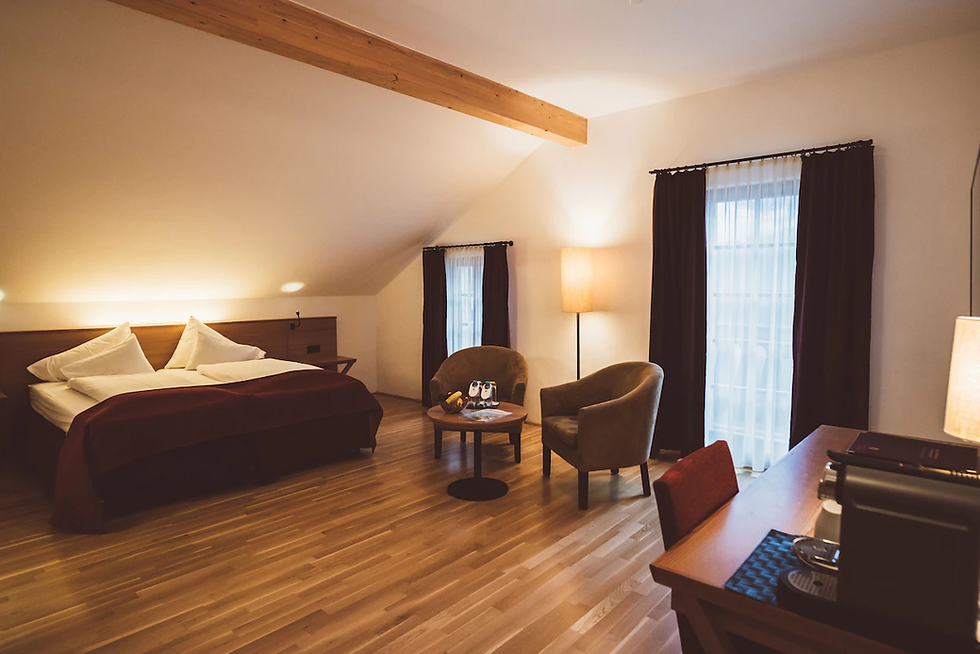
The Heritage.Hotel Hallstatt encompasses three richly storied townhouses to form a hotel the likes of which are rare indeed. The main building, Kainz house, is situated right on the jetty – here’s where you check in, start every day with a generous breakfast and unwind in the sauna at the end of your day. Stocker house, only a three-minute walk from the main house, is Hallstatt’s oldest and most unique building. It will welcome you with its special charm. Seethaler house, a five-minute walk from the main house, commands a unique view across Lake Hallstatt from its perch on the hillside. Each and every one of the three houses’ rooms has its own character and tells its own story.


Things to do in Hallstat:
Hallstatt may be tiny, but it’s packed with alpine charm and unforgettable experiences.

Scenic & Nature Highlights
• Panoramic Viewpoint - Hallstatt: This iconic skywalk offers jaw-dropping views over the village, lake, and surrounding mountains. It’s the perfect spot for that classic Hallstatt photo.
• Hallstätter Wasserfall: A serene waterfall tucked into the village—ideal for a peaceful stroll or a quiet moment away from the crowds.
• Hallstätter See: The lake itself is a gem. You can take a boat ride, go paddleboarding, or simply walk along the lakeside promenade.
• Waldbachstrub wasserfall: A dramatic cascade deep in the Echerntal valley, surrounded by lush forest and hiking trails.
Culture & History
• Salzwelten Shop & Infocontainer Hallstatt: Dive into the world’s oldest salt mine with underground slides, a salt-lake boat ride, and fascinating exhibits.
• Hallstatt World Heritage Museum: Explore prehistoric artifacts, ancient mining tools, and Roman relics that tell the story of Hallstatt’s rich past.
Village Charm
• Marketplace Hallstatt: The heart of the village, lined with colorful alpine houses, cafés, and local shops. Great for soaking in the atmosphere.
• Hallstatt boathouses: These charming wooden structures lining the lake add to the fairytale vibe. They’re especially photogenic at sunrise or sunset.
For more on Hallstat, see my post: https://www.wanderlusttravelbucketlist.com/post/fairy-tale-escapes
4th Stop: Zagreb, Croatia
(7 hours on train with 2 changes)
Zagreb is Croatia’s underrated capital—a city that blends Central European elegance with Balkan soul. If you’re craving cobblestone charm, quirky museums, and café culture without the coastal crowds, Zagreb is a brilliant choice

Where to stay in Zagreb:
Loop Hotel
3-Star Hotel
Not far from the city center itself, The Loop Hotel Zagreb offers the perfect blend of modern decoration, functionality and pleasant atmosphere. The hotel has 33 spacious and modernly decorated rooms – 1 single, 30 double and 2 triple – designed to provide our guests with maximum comfort and comfort. All rooms are equipped so that they fully meet the needs of a modern traveler.


art'otel Zagreb
5-Star Hotel
In a restored 1928 Art Déco building in central Zagreb, art’otel introduces a full-property tribute to Boris Bućan, one of Croatia’s most influential contemporary artists. His bold, graphic works appear throughout the hotel’s rooms and common areas, not as afterthoughts, but as the visual spine of the space. There is a spa, indoor pool, and rooftop bar with city views, along with YEZI, a pan-Asian restaurant that holds its own. The vibe is urban, well-located, and genuinely plugged into the local art scene.


Esplanade Zagreb Hotel
5-Star Hotel
Surely it won’t be long before the contemporary-design boutique hotels move in to Zagreb, but there’ll never be anything in the Croatian capital to match the historic appeal of the Regent Esplanade. It dates back to the Twenties, to the heyday of the Orient Express, and its Art Deco interiors have been renovated, but not updated — just looking around these rooms (and ignoring the satellite television) you could easily convince yourself it’s still 1924.
Of course those old-fashioned good looks are compatible with modern luxury-hotel comforts. Goose down pillows and duvets on the beds, oversized towels in the modern marble bathrooms, and above all plenty of space, always a luxury in a city-center grand hotel.
Elegance in the guest rooms is certainly nice, but in a classic luxury hotel like the Regent Esplanade, it’s the public spaces that really shine. The lobby is stylish, in the same gorgeous and impeccably maintained Art Deco style as the rest of the hotel, and the cocktail lounge and the French bistro have atmosphere to spare. But it’s the fine dining restaurant and the grand ballroom that are truly monumental — the Regent is the European grand hotel at its best.


Things to do in Zagreb:
Zagreb is full of surprises, and these top spots offer a mix of nature, history, and quirky charm:
Nature & Relaxation
• Park Maksimir: A lush, wooded escape with lakes, trails, playgrounds, and even a zoo. Perfect for a peaceful walk or picnic.
• Botanical Garden of the Faculty of Science, University of Zagreb: A seasonal haven of ponds, perennials, and rare plants—ideal for slow travel and nature photography.
Culture & Curiosities
• Museum of Broken Relationships: A deeply human and unique museum showcasing personal objects from failed relationships. It’s emotional, raw, and unforgettable.
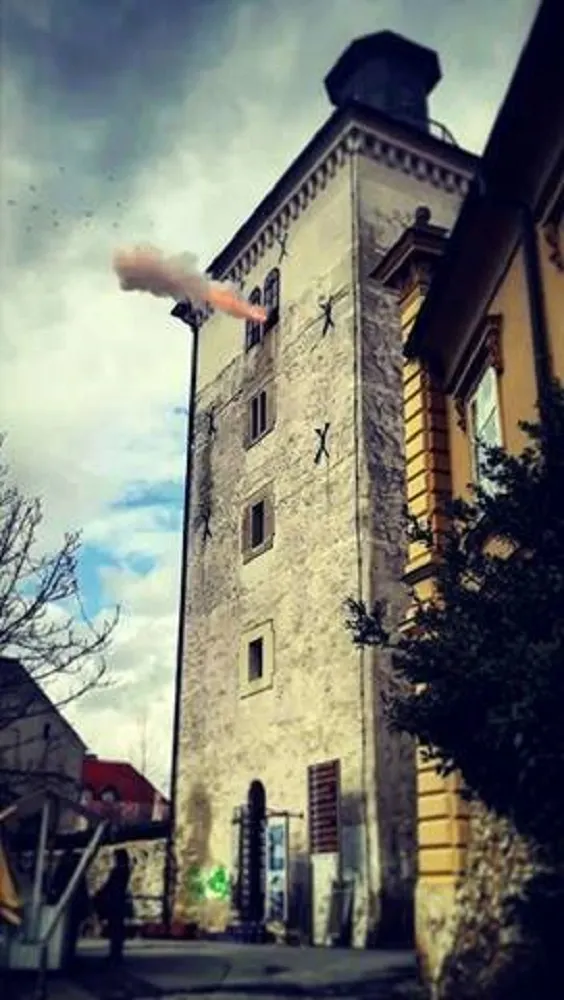
• Lotrščak Tower: Climb for panoramic views and catch the daily cannon blast. A must for history lovers and skyline seekers.
• Nikola Tesla Technical Museum: Dive into science and innovation with interactive exhibits and vintage tech. Great for curious minds.
Historic Landmarks
• Stone Gate: A medieval passageway turned shrine to the Virgin Mary. Locals light candles and offer prayers—quiet, sacred, and atmospheric.
• Ban Josip Jelačić Statue: The heart of Zagreb’s central square. A popular meeting spot surrounded by cafés and trams, buzzing with local life.
Family-Friendly Fun
• Zoo Zagreb: A sprawling zoo with global species, educational talks, and feeding sessions. Great for kids and animal lovers alike.
Stop 5: Ljubljana, Slovenia
(About 2 hours train ride direct)
Ljubljana is Slovenia’s soulful little capital—compact, green, and brimming with charm. It’s the kind of place where dragons guard bridges, cafés spill onto cobbled streets, and locals greet you with a smile and a story. If you’re craving a slower, more poetic pace of travel, this city is a gem.

Where to stay in Ljubljana:
Bloom Hotel
4-Star Hotel
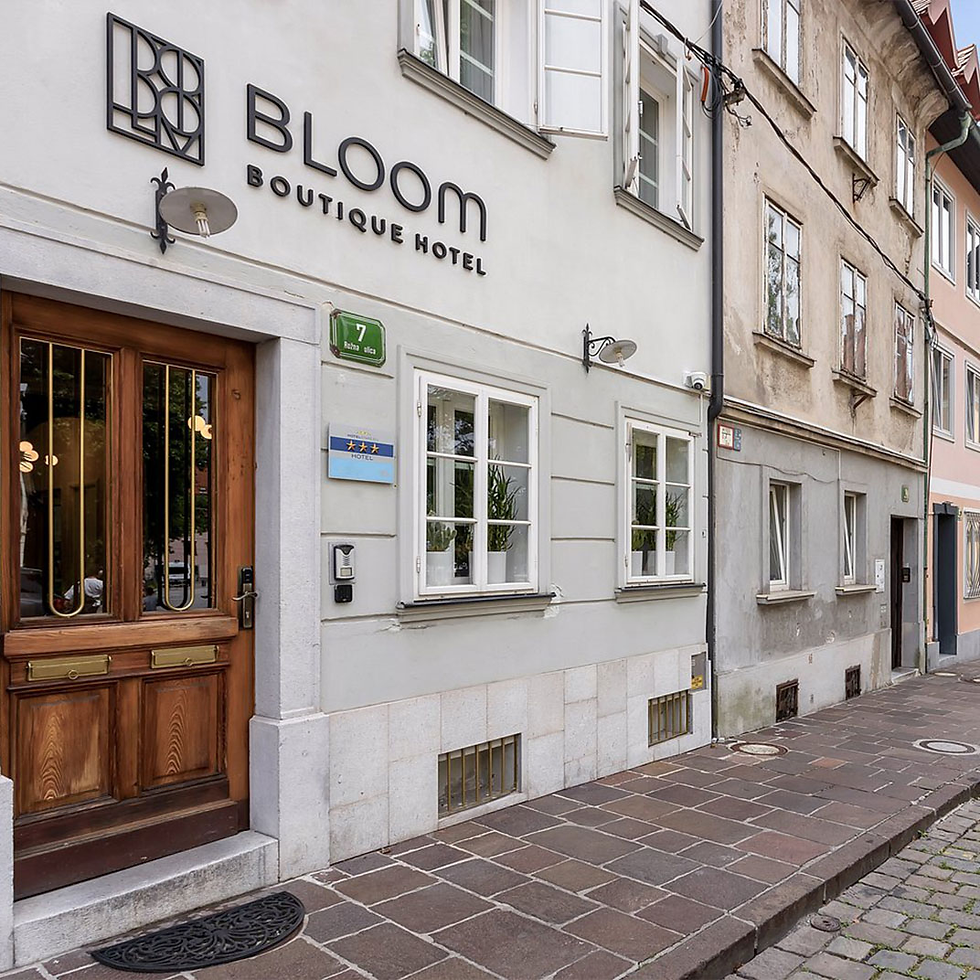
Ljubljana’s Bloom Boutique Hotel makes its home on what is, in translation, Flower Street. Inside you’ll find not pastels and floral blooms but endless expanses of green, as well as Art Deco–inspired public spaces that give way to ten more minimalist modern rooms and suites. A small courtyard garden is the extent of the public spaces; breakfast is served, as well as light fare throughout the day.


Vander Urbani Resort
4-Star Hotel
“Ljubljana” doesn’t exactly roll off the English-speaking tongue — that’s just about the only reason we can come up with for why the travel press hasn’t been singing its praises for years. The Slovenian capital is a deeply charming city, a picturesque jumble of historic architecture, public squares, sidewalk cafes and ambitious new museums, with a music scene as rich as those of cities many times its size. Set at the center of it all, in a pedestrian-only neighborhood that’s been settled since at least ancient Roman times, is the Vander Urbani, a boldly designed boutique hotel spread across four adjoining townhouses.
The contrast between the outside and inside could hardly be greater — a set of traditional Slovenian façades hides a high-design world of glass and chrome and concrete. If it sounds a bit hard-edged, know that the rooms are softened up considerably by Frette linens and robes, Molton Brown bath products and the sorts of armchairs you’ll want to sink into forever.
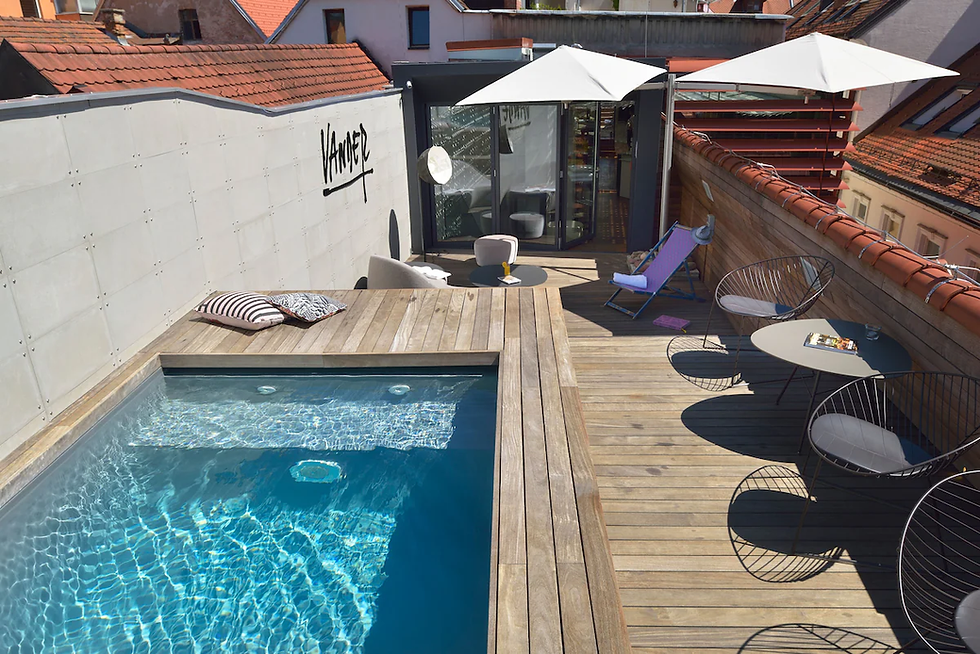
Where it all really comes together, though, is on the rooftop terrace. There some contemporary ornaments — an infinity-edged plunge pool, a glass-walled yoga studio — combine with views of the surrounding tiled rooftops and the street life below. Ljubljana does know a bit about street life, too, with a population prone to strolling the streets and lingering at sidewalk cafés when the weather is good. Also down at street level is the hotel’s own restaurant, helmed by a French chef who’s apparently been rather swayed by the local culinary tradition and agricultural bounty. The wine, too, is mostly local, Slovenian wines being yet another pleasant surprise to those of us only now getting to know the place — and the owner being something of a wine geek.


Zlata Ladjica Boutique Hotel
5-Star Hotel
Situated in a restored 17th-century house on the banks of the Ljubljanica River, Zlata Ladjica tells the story of the city through 15 individually styled rooms, each shaped by original stonework, timber ceilings, or hand-exposed murals. The building has housed everything from a goldsmith’s shop to a famed inn, and its meticulous restoration preserves the past without sacrificing comfort. One of the few freestanding buildings in Ljubljana’s old town, it offers rare views and a sense of continuity that is hard to find and easy to remember.


Things to do in Ljubljana:
Ljubljana may be small, but it’s packed with personality.

Ljubljana Castle
Ride the funicular or hike up to this medieval fortress perched above the city. Inside, you’ll find panoramic views, exhibitions, and even a glass cube elevator for a dramatic ascent.
Dragon Bridge
This Art Nouveau gem is guarded by iconic dragon statues—Ljubljana’s mythical mascots. It’s pedestrian-friendly and perfect for snapping that “I’m in Slovenia!” photo.
Tivoli Park
The city’s largest green space offers formal gardens, walking paths, and picnic spots. It’s a peaceful escape just steps from the urban buzz.
Ljubljana Zoo
Compact and family-friendly, this zoo features playgrounds, dining options, and a variety of global species. Great for a relaxed afternoon.
House of illusions
Step into a world of optical trickery and interactive exhibits. It’s quirky, fun, and ideal for curious minds of all ages.
Saint Nicholas' Cathedral
A baroque beauty with gilded columns and ceiling frescoes. Step inside for a moment of quiet awe and architectural appreciation.
Mestni trg
This curved plaza is lined with baroque buildings, boutique shops, and the centuries-old Town Hall. It’s a lovely spot to wander and soak in the city’s elegance.
For more on Ljubljana, see my post: https://www.wanderlusttravelbucketlist.com/post/10-travel-dupes
Stop 6: Venice, Italy
(About 8.5 hours on train with one change)
Venice is a dreamscape of canals, crumbling palazzos, and timeless romance—one of those rare places that feels like stepping into a painting. But it’s also a delicate city, balancing preservation with tourism.

Where to stay in Venice:
Locada di Orsaria
4-Star Hotel
Locanda di Orsaria welcomes its guests with Venetian-style rooms with Baroque and Ancien Régime inspired furniture. Its traditional decor and strategic location, a stone’s throw from Santa Lucia train station, make it the perfect base for exploring the lagoon city from top to toe. Locanda di Orsaria is right at the heart of the action: within walking distance of the hotel you can enjoy the charm of a gondola ride, savour delicious Venetian cicchetti while sipping on a spritz, and visit famous attractions like Strada Nuova, the Giardino Mistico, the Ponte delle Guglie, the Venetian Ghetto, the Ponte degli Scalzi and, of course, the iconic Grand Canal.


Ca' Pisani Hotel
4-Star Hotel
In a city like Venice, deeply attached to its past, we might expect a hotel to lean toward the classic, to play up its connection with Venice’s unique architecture and history. Hotel Ca’ Pisani, then, is a surprise, in design terms. Though the exterior is classic enough, a five-hundred-year-old merchant townhouse, the interiors show a strong Futurist influence. This is not to say that Ca’ Pisani is futuristic, by any stretch of the imagination — this is the Futurism with a capital F of the Thirties and Forties.
Thus expect bold design, emphasizing velocity, as in La Rivista, the restaurant, with its name dashed across the floor in bold, kinetic script. Of course the hotel's facilities have come a long way since the Forties, with electric curtains, remote-opening doors, and good old Italian satellite television. The beds are genuine period pieces, and the bathrooms are finished with a unique reflective “starlight” masonry.
Among the leisure offerings are a Turkish bath and a spectacular rooftop solarium/terrace. Gym facilities are off-site but nearby. Also in the neighborhood is, well, everything one comes to Venice to see. The Peggy Guggenheim foundation is literally next door, as are the Accademia Galleries, and most other significant tourist attractions are within a few minutes’ walk. This is a uniquely charming hotel, with personality to spare, and proves that white walls and difficult furniture are not the only ingredients in a successful hotel design.


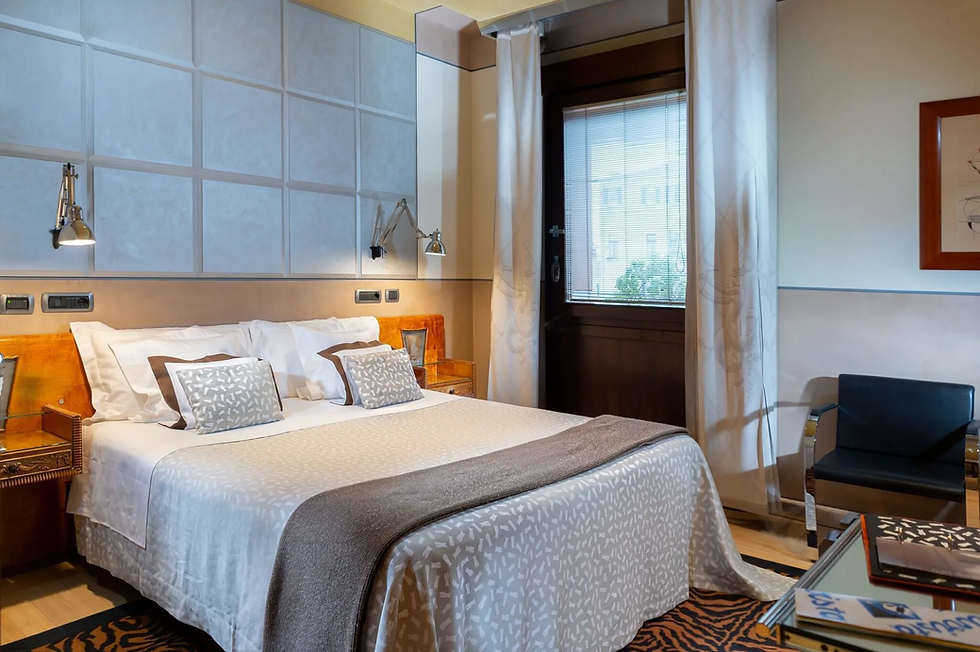
Orient Express Palazzo Dona Giovannelli
5-Star Hotel
A 15th-century Venetian palace reawakens after an eight-year renovation by architect Aline Asmar d’Amman. Built under the reign of master architect Filippo Calendario, known for the Doge’s Palace, Palazzo Donà Giovannelli was later transformed in the 1800s by architect Gian Battista Meduna and beautified with layers of Neo-Gothic and Baroque splendor. Once home to the Duke of Urbino and the Donà and Giovannelli families, it later became a Pinacoteca. Now, through Orient Express, it begins a new hospitality chapter, honoring the legacy of a noble mansion while embracing the spirit of the iconic hotel brand. Just ten minutes from the historic quay, the palace gleams anew, its courtyard, terraces, and garden inviting exploration.


Things to do in Venice:
Venice is a treasure trove of history, art, and architectural splendor.

Doge's Palace
Step into the seat of Venetian power—a Gothic masterpiece with ornate chambers, secret passageways, and the infamous prison cells. Don’t miss the armory and the golden staircase.
Ponte di Rialto
The oldest bridge across the Grand Canal, lined with shops and offering stunning views. It’s especially magical at sunrise or twilight.
Bridge of Sighs
This enclosed white-stone bridge connects the palace to the prison. Legend says prisoners sighed as they glimpsed Venice one last time—romantic and haunting.
Saint Mark's Basilica
A dazzling cathedral with gilded domes, Byzantine mosaics, and the Pala d’Oro altar. It’s a feast for the eyes and soul.
Piazza San Marco
Venice’s iconic square, framed by historic buildings and alive with music, pigeons, and café culture. It’s the city’s beating heart.
Basilica Santa Maria della Salute
A baroque beauty with a vast dome and works by Titian. It stands guard at the entrance to the Grand Canal—elegant and serene.
St Mark's Campanile
Ride the elevator to the top of this bell tower for panoramic views of Venice, the lagoon, and beyond. It’s the best vantage point in town.
Clock Tower
A Renaissance marvel with a mechanical clock and symbolic figures. It’s a blend of engineering and artistry that still keeps time over the square.
For more on Venice, see my post: https://www.wanderlusttravelbucketlist.com/post/9-fantastic-cities-to-visit-outside-the-u-s
Stop 7: Florence, Italy
(About 2 hours and 15 minutes on direct train)
Florence (or Firenze, as you’ll see on train signs) is the cradle of the Renaissance—a city where every piazza, fresco, and gelato stand feels like a brushstroke in a living masterpiece. It’s ideal for slow, immersive travel, especially if you love art, architecture, and Tuscan flavors.

Where to stay in Florence:
Ottantotto Firenze
4-Star Hotel
If Florence has a hipster neighborhood, it’s Oltrarno, just across the river from all the most famous sights (and almost all of the tourists). This is where you’ll find Ottantotto Firenze, a seven-room boutique hotel that’s the latest evolution of a Renaissance palazzetto, previously an aristocratic home and lately owned by an architect who oversaw its remarkable transformation.
Rooms are spread out over four floors, and they’re all different — unified by the aesthetic taste of Ottantotto’s owner/designer, but each one reflecting the quirks of this well-preserved heritage building. There’s an interior garden, onto which some of the rooms look, and the suite has a mezzanine level, a kitchenette, and a rooftop terrace. The style is nothing if not memorable, and never too serious — there’s a real sense of whimsy about the decoration.
Breakfast is served in the living room, in the garden, or in your room, if you’re in a Superior or the suite. Beyond that you’re at the mercy of Florence, which is a great place to be — the Oltrarno district has no end of phenomenal restaurants, and the rest of the city is only a bridge away....


Hotel Calimala
4-Star Hotel
When it comes to the dramatic, almost reckless combination of old and new, there’s still no one quite like Italy’s boutique hoteliers. In the case of Florence’s Hotel Calimala, they’ve got an ally in British/Israeli designer Alex Meitlis, of Ottolenghi restaurant fame, whose interiors here mix original architectural features like crumbling stone walls with custom-designed modern furniture and lighting. And of course they start with some pretty promising raw material: an ornate and beautifully weathered 19th-century palazzo on Via Calimala, right in the heart of the city’s historic center.
The aim was to create a place that’s unmistakably Florentine without resorting to any overt Renaissance references, and in that it’s a resounding success — the artwork here is all contemporary, by local artists, and is for sale, if you fancy a souvenir. There’s a rooftop bar and restaurant that serves as the venue for everything from breakfast to aperitivi to dinner and beyond, as well as a little plunge pool to take the edge off those summer afternoons. And while the Calimala itself offers something of a novel perspective on this heavily-traveled city, the hotel’s location means all the familiar sights are always close at hand.


Palazzo Portinari Salviati Residenza D'Epoca
5-Star Hotel
The name more or less says it all; Palazzo Portinari Salviati Residenza d’Epoca occupies the famous 15th-century palazzo that was once home to no less luminous a figure than Dante’s Beatrice, and aims to recreate the romance of the era for a modern audience. It helps that it’s practically right around the corner from Florence’s iconic medieval cathedral, and that its 13 suites contain all the luxuries of a contemporary Italian luxury hotel, in spite of their Renaissance-era aesthetics. Other inducements include the luxe Vita Nova spa and the MICHELIN-Starred restaurant Atto di Vito Mollica.


Things to do in Florence:
Florence is a feast for the senses, and these top spots offer a perfect blend of Renaissance grandeur, artistic treasures, and sweeping views:

Cathedral of Santa Maria del Fiore
Florence’s iconic Duomo is a marvel of engineering and beauty. Climb Brunelleschi’s dome for panoramic views or admire the intricate marble façade and Giotto’s bell tower from below.
Piazza del Duomo
This historic square is the beating heart of Florence, surrounded by architectural masterpieces including the cathedral, baptistery, and museums. It’s a great starting point for exploring the city.
Palazzo Vecchio
A fortress-like palace with lavish chambers, frescoes, and secret passages. It’s both a museum and a symbol of Florence’s political power during the Renaissance.
Piazzale Michelangelo
For the best sunset view in town, head to this 19th-century terrace overlooking the city. The bronze replica of Michelangelo’s David adds a dramatic touch to the skyline.
Uffizi Galleries
One of the world’s most important art museums, housing works by Botticelli, Michelangelo, Da Vinci, and Caravaggio. It’s a must for any art lover—book ahead to skip the lines.
Basilica of Santa Croce in Florence
This neo-Gothic church is the final resting place of legends like Michelangelo, Galileo, and Machiavelli. Inside, you’ll find stunning frescoes and a deep sense of history.
Ponte Vecchio
Florence’s oldest bridge, lined with glittering jewelry shops and offering postcard-perfect views of the Arno River. It’s especially magical at dawn or dusk.
Palazzo Pitti
A sprawling Renaissance palace that houses several museums and galleries. Don’t miss the Boboli Gardens behind it—lush, sculpted, and full of hidden corners.
Stop 8: Monaco, France
(About 6 hours and 45 minutes with two changes)
Monaco is a dazzling microstate on the French Riviera that feels like a movie set—glamorous, compact, and surprisingly accessible. Despite its reputation as a playground for the ultra-wealthy, you don’t need a yacht or a tux to enjoy it.

Where to stay in Monaco:
Hotel Victoria
4-Star Hotel
Overlooking the Mediterranean, a stone’s throw from the sea shore, with panoramic views from the Cap Martin to Italy, the Victoria Hotel welcomes you with its relaxed and friendly charm. Open year round, this is the perfect base to discover the sights of the French Riviera and Monaco.
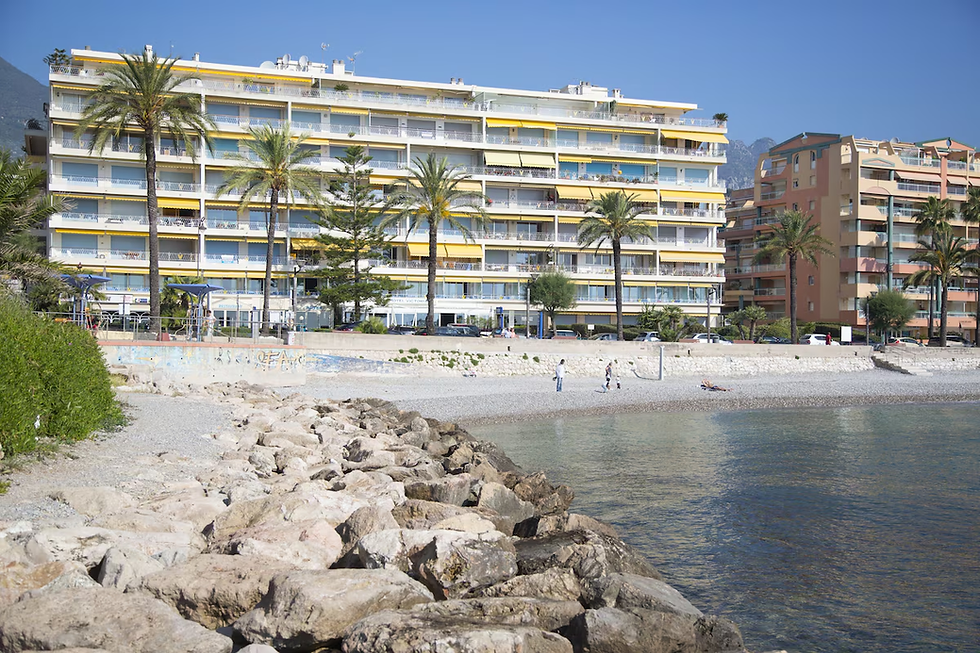


Fairmont Monte Carlo
4-Star Hotel
Though it might have been strange to say so a few years ago, the Fairmont Monte Carlo Hotel as it stands today is a building of some architectural distinction. This Seventies-vintage zig-zag of a modernist hotel behemoth has climbed out of the stylistic uncanny valley, the aesthetic no-man’s-land between contemporary and retro. Now it’s a piece of historic Monte Carlo, a pleasingly retro modernist monument — and, not incidentally, one of the finer luxury hotels in town.
And while the bones of the place have improved with age, the interiors have been kept very much up to date; a thorough renovation has this Fairmont looking extremely well turned out, if a touch on the conservative side. That’s no criticism — one doesn’t come to Monte Carlo to have one’s world turned upside down, but rather for a taste of the good life, in classic Riviera style. The basic rooms are big enough, and certainly comfortable enough, but it pays to spring for an up-close sea view, available in the better rooms and many of the suites.
Either way, you’ll soak in the view at L’Argentin, the fine dining restaurant, and Saphir 24, the lounge and bar, both of which look out over the Mediterranean through wraparound floor-to-ceiling windows. Meanwhile the spa and health club occupy a new addition to the hotel, and the soothing interiors, all white and sky blue, only intensify the atmosphere of relaxation. Monte Carlo has hotels with a longer history, as well as hotels of a more recent vintage than the Fairmont; still, in terms of character, this place stands apart.


Hôtel Métropole Monte-Carlo – The Leading Hotels of the World
5-Star Hotel
Some classic hotels are never quite the same again after a big renovation. The Métropole, however, is perhaps even more a big deal than it already was — when it started to show its age, the famed Parisian designer Jacques Garcia was commissioned for an update, and it turns out that his hyper-luxe style is the perfect match for what was already a pretty delightfully over-the-top grand hotel.
This Belle-Époque Italianate mansion is an alternative to the bigger palace hotels down on the waterfront, and while it’s not exactly understated or cozy, it’s got an air of discreet privacy about it. The rooms are stunningly opulent and decidedly old-fashioned — Mr. Garcia doesn’t go in for anything minimalist, preferring rich fabrics, ornate antiques and classic marble baths.
The location means the Métropole is just slightly off the beaten path, as does its status as an independent, outside the SBM conglomerate that controls the Monte-Carlo casino and many of the hotels. An excellent Riviera-style French restaurant is a must, as there’s so much competition around town; the Metropole’s is Les Ambassadeurs by Christophe Cussac. Likewise any luxury hotel worth its salt needs a spa of the Metropole by Givenchy’s caliber — here all varieties of relaxation are possible, from purifying rituals to simple poolside cocktails. And the pool, by the way, is a stunner, surrounded by landscaped gardens and home to a fine alfresco Mediterranean restaurant called Odyssey. Unique in the principality, it’s enclosed in fall and winter to allow for year-round swimming — or year-round loafing by its side, for that matter.


Things to do in Monaco:
Monaco may be tiny, but it’s packed with elegance, history, and coastal charm.

Prince's Palace of Monaco
Explore the 13th-century residence of the Prince of Monaco, perched on Le Rocher. Tour the lavish state apartments and catch the changing of the guard in the Place du palais.
Musée océanographique de Monaco
Founded by Prince Albert I, this cliffside museum and aquarium houses over 6,000 marine specimens. It’s a must for ocean lovers and families alike.
Cathedral of Our Lady Immaculate
This Romanesque cathedral is the final resting place of Princess Grace and Prince Rainier III. Its serene interior and historic significance make it a meaningful stop.
Casino de Monte-Carlo
Step into cinematic glamour at this Beaux-Arts masterpiece. Whether you’re playing or just admiring the architecture, it’s quintessential Monaco.
Place du Casino
The elegant plaza in front of the casino is perfect for people-watching, luxury car spotting, and soaking in the Riviera vibe.
Private Cars Collection of HSH Prince of Monaco
A treasure trove of vintage and Formula 1 cars from Prince Rainier III’s personal collection. Ideal for motorsport enthusiasts and design lovers.
Jardins Saint-Martin
These terraced gardens offer Mediterranean flora, sculptures, and stunning sea views. A peaceful escape just steps from the Oceanographic Museum.
Stop 9: Marseille, France
(About 3 hours via train with one stop in Nice)
Marseille is France’s oldest city and one of its most vibrant—gritty, sun-drenched, and full of soul. It’s not your typical polished Riviera stop, but that’s exactly what makes it unforgettable.

Where to stay in Marseille:
Mama Shelter Marseille
3-Star Hotel
The first Mama Shelter was a bit of a curveball for Paris — a bit edgy, quite budget-friendly, and clearly aimed at an audience that cares more for a vibrant crowd and less for traditional luxury than your typical Parisian boutique-hotel customer. All of which make Marseille a perfectly sensible location for a sequel. The second Mama Shelter is a perfect fit for this diverse, colorful port city, and its location, in between the Old Port and the arty Cours Julien district, puts you equally close to the established tourist sites and the emerging cultural centers.
Philippe Starck’s whimsical design sense is in top form here. While he’s quite comfortable at the luxury end of things, he excels at bringing smallish, bare-bones spaces to life. And while Mama Shelter Marseille is far from uncomfortable, it’s equally far from palatial. This is the budget boutique done right, with just a touch of plushness in the places where it counts the most — money spent on beds is money well spent, and the in-room iMac serves as the entertainment system.
Mostly it’s about sociability, about buzz, and about keeping its inhabitants entertained. The bar dials down the pretentiousness and aims for a game-room vibe, and the restaurant serves inventive yet accessible Mediterranean cuisine, which is accompanied by live music several nights a week. Pure luxury addicts, perhaps, need not apply, though avoiding the boredom of excessive comfort is partly the point — this hotel, like all the newly spawned Mama Shelters, is anything but dull.


Les Bords de Mer
4-Star Hotel
Les Bords de Mer simply means “the seaside,” and as a name for this particular hotel, it’s perfectly descriptive: it’s set right on Marseille’s waterfront, with all of its 19 rooms facing directly out to sea, so close that you could practically dive into the harbor from your balcony. (Note: do not do this.) It’s got, in some ways, the best of two worlds: the ocean views and Mediterranean exposure that make the Côte d’Azur a perennially desirable destination, and close access to Marseille, one of France’s most diverse and vibrant cities — it’s five minutes’ walk from the Vieux-Port and the old town center.
The style is light and bright, inspired by the optimistic modernism of the Fifties as well as the contemporary taste for unpretentious simplicity. Those sea views mean these rooms are a good deal more calming than the typical urban boutique hotel. And the restaurant’s dining room and terrace are blessed with similarly impressive views, to say nothing of the heated rooftop swimming pool. It’s a rare hotel that provides something of a resort experience — complete with a spa, as well as day trips by boat to the coastline’s famous calanques — right in the middle of a lively and inspiring city.


Le Petit Nice
5-Star Hotel
There’s often a contrast drawn between the luxe escapes of the French Riviera and the edgy urbanity of the city of Marseille. But at Le Petit Nice, thanks to the hospitality of the well-known chef Gérald Passedat, Marseille displays its own vision of Mediterranean luxury. This is a family affair from the beginning, established by the Passedat family in 1917. But anyone looking to history to find Le Petit Nice’s golden age is looking in the wrong place — it’s as spectacular right now as it’s ever been.
The location, between the coastline and the Corniche, feels a world apart from the bustle of the city, and lends the hotel something of a seaside resort atmosphere, even though it’s mere minutes from the center of town. The interiors take their cues from the classic colors of Provence — gold and lavender feature prominently — and the style is a harmonious marriage of modern and classic.
There’s a wellness area that amounts to a hammam, a Japanese bath, and a swimming pool, while the waters of the Mediterranean lie a few steps away. And it’s overlooking those same waters that you’ll find a pair of restaurants, the bistronomic Le 1917 and the eponymous Le Petit Nice.


Things to do in Marseille:
Marseille is full of soul, sea views, and striking contrasts.

Notre-Dame de la Garde
Perched high above the city, this basilica offers sweeping views and a golden statue of the Virgin Mary watching over Marseille. It’s a spiritual and visual landmark you won’t forget.
Museum of European and Mediterranean Civilisations (MUCEM)
A modern architectural gem by the sea, MUCEM explores the rich cultural tapestry of the Mediterranean. The rooftop views and Fort Saint-Jean connection make it a must-visit.
Cathédrale La Major
This neo-Byzantine cathedral stuns with its striped façade and opulent interior. It’s a peaceful retreat with serious architectural flair.
Parc national des Calanques
A natural wonder of limestone cliffs, turquoise waters, and hidden coves. Hike, kayak, or boat your way through this rugged paradise just outside the city.
Palais Longchamp
A 19th-century monument built to celebrate the arrival of water to Marseille. Its grand fountain, gardens, and museums make it a serene and photogenic stop.
Château d'If
Set on a rocky island, this fortress-prison was immortalized in The Count of Monte Cristo. Reach it by boat and explore its dramatic history and sea views.
Old Port of Marseille
The city’s historic heart, buzzing with cafés, fish markets, and boats. It’s the perfect place to sip pastis and watch Marseille unfold.
Parc Borély
A tranquil escape with manicured gardens, fountains, and lakeside cafés. Ideal for a picnic or a quiet stroll under the Provençal sun.
Stop 10: Barcelona
(About 5.5 hours via train direct)
Barcelona is a city that pulses with creativity, color, and coastal charm. It’s where Gaudí’s surreal architecture, Catalan culture, and Mediterranean vibes collide in the most captivating way. Whether you're chasing art, tapas, or beach sunsets, Barcelona delivers in style.

Where to stay in Barcelona:
H10 Catalunya Plaza
4-Star Hotel
Some hotels make statements, some push the boundaries of architecture or engineering or aesthetics, some invite you to live for a few days like a Ferragamo or a maharaja — and some, like Barcelona’s H10 Catalunya Plaza, are just good hotels. It starts with a polestar-central location right on Catalunya Plaza, at the axis of the Barri Gòtic, El Raval and L’Eixample, where La Rambla and Passeig de Gràcia intersect. Arrive by train and the distance to the check-in desk may not be any longer than the line for a taxi; Catalunya station is twenty meters away.
Behind the building’s 19th-century façade is a well-designed modern hotel. Accommodations span from the tiny and functional basic room to the ornate, multi-balcony apartment inspired by the style of Catalan Art Nouveau. Whichever room you choose — and there’s plenty between the extremes — there will be no mood-interpreting light shows or mind-bending art installations, just comfortable pillow-topped beds, pristine bathrooms and plenty of natural light.
Beyond the rooms, there’s an attractive restaurant, a stylish little lobby bar and, this being Barcelona, the de rigueur “chill-out space.” It turns out the formula for getting people to chill is pretty straightforward: a lovely, leafy terrace set with candle-lit tables and strung with warm overhanging lights. And when the time comes to hit the streets, the city surrounds you in every direction.


Ohla Barcelona
5-Star Hotel
The façade of Ohla Barcelona blends seamlessly with the Catalan Gothic architecture that surrounds it, obscuring the fact that the interior takes its cues not from the spires and stone but from the clean lines of modern hotel minimalism. Ohla Barcelona brings ultra-personalized service and impeccable design to one of the city’s most desirable neighborhoods, the Gothic Quarter.
Despite occupying the building that housed Barcelona’s first department store, Ohla Barcelona is mercifully free of creepy vintage mannequins, restored art objects, or antique furniture within. This is a hotel for people content to let the neighborhood evoke the old days while they kick back beneath a private canopy next to the rooftop pool.
While the guest rooms vary in size, they tend to adhere to the same contemporary color palette of black, white and charcoal. Purple rugs and oak floors keep things from feeling overly serious, while bathrooms are suitably spacious, with freestanding tubs and strategically placed windows overlooking the city. But the truly memorable offering isn’t an aesthetic one: Ohla Barcelona is all about personalization, right down to the softness of your pillows and the scent of your linen. This kind of modular hospitality might strike you as a gimmick, but it’s hard to roll your eyes at the opportunity to create your own design hotel experience.
The same degree of choice applies to the cuisine: Ohla Barcelona has two restaurants (one a Michelin-starred gourmet affair, the other a bit more casual) and two lounges. The rooftop terrace hosts one of the latter, along with a pool, and rounds out the laid-back sophistication with a row of cozy outdoor sofas, perfect for sipping a drink and taking in the view.


Almanac Barcelona
5-Star Hotel
A decade or two ago Barcelona’s boutique-hotel style leaned heavily towards dark, moody, eccentric styles, while it was in Madrid that you’d find stately buildings refurbished with contemporary-luxe interiors. Just off the Passeig de Gràcia in the upscale Eixample district, the Almanac Barcelona is an example of the second type: an elegant 19th-century edifice (plus 20th-century addition) whose interiors, by designer Jaime Beriestain, recall several well-loved eras of design history, from Art Deco to mid-century modernism to the present day.
The elegance of the design is matched by some substantial comforts; the beds are custom-made in Austria, the bath products made in Barcelona by the local perfumier Jimmy Boyd, and the hyper-modern bathrooms are clad in classic white marble. The rooms are high-tech and clean-lined but still warm and enveloping, and admit plentiful sunshine through full-length windows.
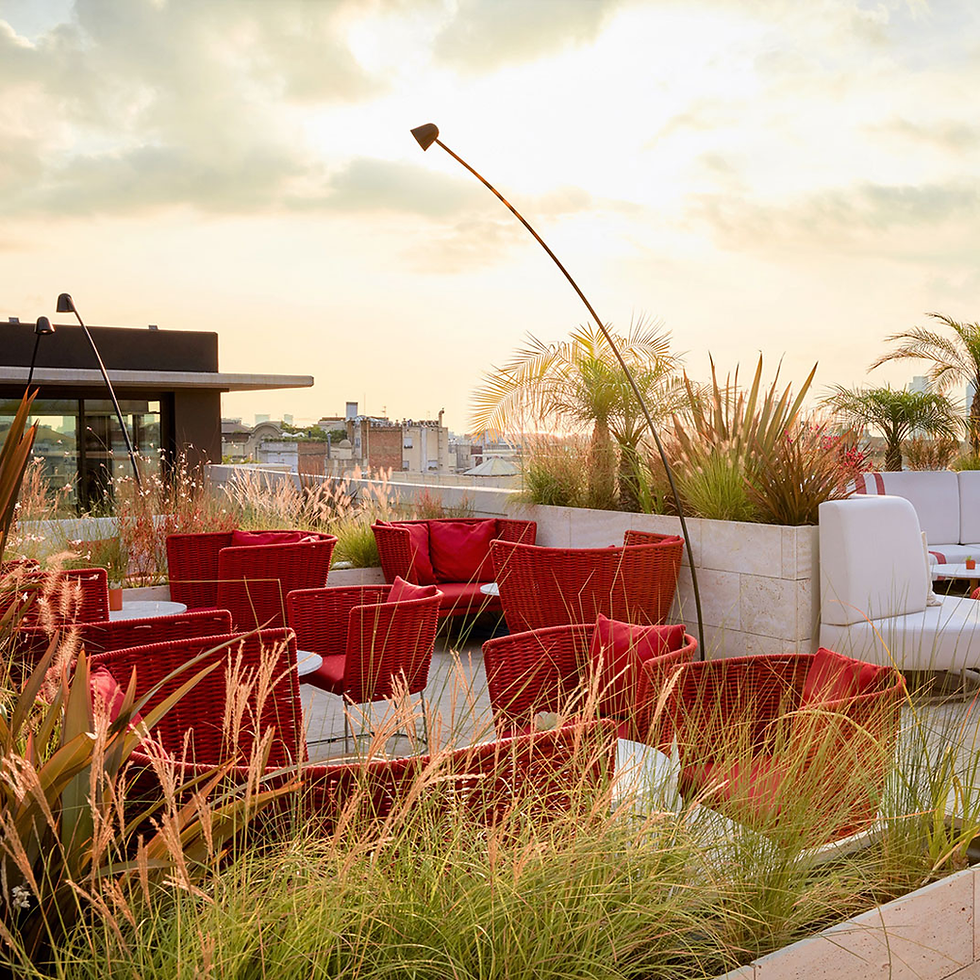
This neighborhood is among the best places in Barcelona for shopping, and it’s not hard up for restaurants either. But you’ll be in good hands inside the Almanac — Virens, the ground-floor restaurant, specializes in plant-based cuisine, and Azimuth is a triumph, not least for its rooftop setting, with indoor and outdoor views of the city panorama.


Things to do in Barcelona:
Barcelona is a city that dances between Gothic grandeur and modernist whimsy.

Casa Batlló
A fantastical apartment block designed by Gaudí, with a dragon-scaled roof and flowing, organic shapes. It’s like stepping into a surrealist dream.
Park Güell
This mosaic-covered park is a Gaudí masterpiece, filled with sculptural buildings, colorful tiles, and sweeping views over the city.
Basílica de la Sagrada Família
Gaudí’s unfinished basilica is one of the most iconic landmarks in Europe. Its forest-like interior and towering spires are simply breathtaking.
Basílica de Santa Maria del Mar
A serene 14th-century Gothic church with soaring columns and stained glass. It’s a peaceful counterpoint to the city’s buzz.
La Pedrera - Casa Milà
Another Gaudí gem, this undulating stone building hosts exhibitions and concerts. The rooftop chimneys look like surreal sculptures.
Picasso Museum Barcelona
Set in medieval mansions, this museum houses an extensive collection of Picasso’s early works and sketches—perfect for art lovers.
Cathedral of Barcelona
A majestic Gothic cathedral with cloisters full of geese and panoramic rooftop views. It anchors the historic heart of the city.
Palau Güell
One of Gaudí’s earliest works, this ornate mansion showcases his flair for detail and innovation. It’s tucked just off La Rambla.
For more on Barcelona, see my post: https://www.wanderlusttravelbucketlist.com/post/summer-festivals-around-the-world#viewer-yqlev245827
11th Stop: Valencia
(About 5.5 hours direct on train)
Valencia is a sun-drenched gem on Spain’s southeastern coast that blends Mediterranean charm with futuristic flair. It’s got that perfect mix of old-world elegance, beachy vibes, and bold creativity—ideal for someone who thrives on immersive, off-the-beaten-path experiences.

Where to stay in Valencia:
Casual Socarrat
3-Star Hotel
Casual Socarrat Valencia is a bold, adults-only boutique hotel that channels the fiery spirit of the city—literally. Inspired by Las Fallas, Valencia’s famous fire festival, this hotel is all about passion, art, and local culture woven into every detail. Each of the 35 rooms is uniquely designed to reflect a slice of Valencian life—think murals of fireworks, culinary icons, and local legends.No kids, no chaos. It’s a tranquil retreat for grown-up travelers looking to unwind and soak up the city’s energy without distraction. Your furry travel companion is welcome, and they’ll be pampered too. Located on Calle de la Paz, you’re steps from Town Hall Square, the Cathedral, and the Central Market.


NH Collection
4-Star Hotel
Madrid and Barcelona have more than their fair share of the finest hotels in Europe, but Valencia, Spain’s third-largest city, isn’t quite so amply blessed. You’d never know it, though, from looking at the NH Collection Valencia Colón. The setting, in a heritage building on Carrer Colón, could hardly be more central, convenient to the financial district, the best shops, and many of the city’s most famous sights. And the hotel itself could hardly be more impressive: a mere 47 rooms, decorated by Lorenzo Castillo in a vibrant, eclectic style that includes French, British, and Indian influences.
And despite the boutique-hotel style — impressive given NH’s status as Spain’s largest hotel chain — this is a luxury hotel through and through. Rooms include NH’s high-end mattresses as well as inducements like Nespresso machines and lavish stone-clad bathrooms. There’s a Mediterranean restaurant called Sonata 32, as well as an expansive breakfast buffet, and a cocktail bar, Cara a Cara, featuring a well-known mixologist, Diego Cabrera, and designed in the style of an English members’ club. More than enough to get you started — and of course, here in central Valencia, there’s no shortage at all of eminently worthy restaurants and bars.


Hospes Palau del Maar
5-Star Hotel
In the Hotel Palau del Mar, from the nationwide Hospes group, two 19th-century Palacete buildings have been stitched together and transformed into Valencia’s first five-star luxury boutique hotel.
The style is utterly modern luxury, with stunning interiors in monochrome white fabrics and rich dark woods, with flat-screen televisions on the walls and sprawling bathrooms behind sliding doors. At just sixty-six rooms, oriented about central courtyards, the Palau del Mar is intimate, and quiet too, feeling less like a city hotel and more like a resort, complete with basement spa, offering a steam room and sauna in addition to an eye-popping plunge pool, set into a backdrop of dark stone.
Some stylish hotels feel a bit flimsy, but this is substantive luxury through and through, without any of the Regency furnishings or antique fabrics that usually serve as signifiers of the high life.
As for the city itself, you’re positioned at the edge of the historic city center, as near the old market as to the new designer shops. The new City of Arts and Sciences complex ensures that architecture freaks will come to see Valencia as Santiago Calatrava’s city, in much the same way that Barcelona is Gaudí’s town, or Bilbao in some small sense Gehry’s. And if you’re here to see some cutting-edge design, the Palau de la Mar may be the only hotel that measures up—there would be something inauthentic about walking over one of Calatrava’s bridges, only to check into a dismal chain hotel.


Things to do in Valencia:

Cultural & Architectural Highlights
• City of Arts and Sciences: A jaw-dropping complex of ultra-modern buildings housing a planetarium, science museum, and Europe’s largest aquarium.
• La Lonja de la Seda: A UNESCO-listed Gothic masterpiece that once served as the silk exchange—pure medieval drama.
• Valencia Cathedral & El Miguelete Tower: Climb the tower for panoramic views and explore the chapel said to house the Holy Grail.
Nature & Eco Experiences
Turia Gardens: A reclaimed riverbed turned into a lush, 9-km green corridor—perfect for biking, picnicking, or just wandering.
• Albufera Natural Park: A short trip from the city, this wetland reserve offers boat rides, birdwatching, and dreamy sunsets over rice fields.Culinary Adventures
• Central Market: One of Europe’s largest produce markets—ideal for sampling local cheeses, jamón, and fresh horchata.
• Paella Workshops: Learn to cook authentic paella Valenciana in its birthplace, often paired with a visit to the rice fields.Neighborhoods & Local Life
• Ruzafa: A boho-chic district full of indie boutiques, street art, and vibrant cafés.
• El Carmen: The historic heart with winding alleys, lively nightlife, and hidden plazas.
Coastal Escapes
• Playa de la Malvarrosa: A wide, sandy beach just minutes from the city—great for a morning swim or sunset stroll.
• Boat Trip to Tabarca Island: A marine reserve with crystal-clear waters, perfect for snorkeling and seafood feasts.
For more on Valencia, see my post: https://www.wanderlusttravelbucketlist.com/post/ultimate-road-trip-europe#viewer-4zrmv508034
Stop 12: Malaga, Spain
(About 5 hours via train)
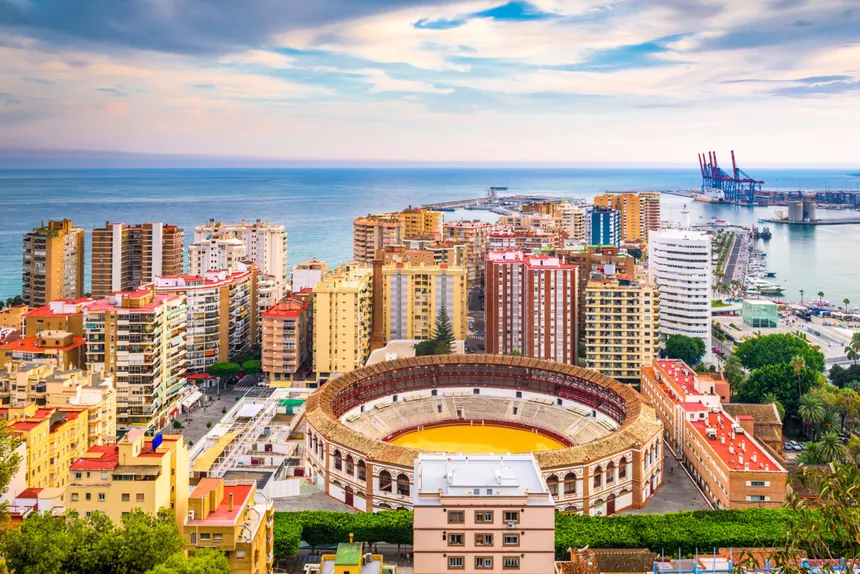
Malaga is a sun-drenched city on Spain’s Costa del Sol that’s far more than just a beach destination—it’s a vibrant blend of ancient history, modern art, and Andalusian soul. If you’re drawn to dramatic landscapes, rich local culture, and seaside charm, Malaga is a dream stop.
Where to stay in Malaga:
Graffiti Suites El Museo
3-Star Hotel
Located in the historic neighborhood of Fontanalla in Málaga city and surrounded by museums and only 10KM from the airport, Graffiti Suites Málaga is a boutique fully serviced aparthotel where you can experience the best hotel service in the comfort of your fully equipped and furnished suite.


Vincci Larios Diez
4-Star Hotel
Set in the historic heart of Málaga, on the 19th-century Calle Larios, in the 200-year-old landmark that once housed the Gómez Raggio department store, Vincci Larios Diez is nevertheless a thoroughly modern luxury hotel. Its rooms and suites retain echoes of the building’s history, but the overall atmosphere is contemporary, a sunny mix of uncluttered spaces, judiciously applied accent colors, and stylish modern furniture. Among the hotel’s most impressive spaces is the rooftop restaurant, Gastro Space El Taller de Larios Diez, with its elevated views over the rooftops of the Málaga-Centro district.


La Donaira
5-Star Hotel
Finca La Donaira is more than a hotel — it’s also a working organic farm, a high-end stable dedicated to Lusitano horses, and a collection of active experiences scattered about its extensive Andalusian grounds. It sums up the southern Spanish good life rather neatly, and on a firmly eco-conscious foundation. The restored farmhouse shelters nine individually decorated rooms, each furnished with tasteful antiques and an intoxicating medley of weather-worn stone, reclaimed wood, adobe, and luxe textiles.


Things to do in Malaga:
Malaga is a city that dances between ancient history and modern flair, with sun-soaked beaches, Moorish fortresses, and a thriving arts scene.

Cultural & Historic Gems
• Alcazaba of Malaga: A stunning 11th-century Moorish fortress with lush gardens and panoramic views.
• Gibralfaro Castle: Perched above the Alcazaba, it offers sweeping vistas of the city and coastline.
• Roman Theatre: Nestled at the foot of the Alcazaba, this ancient site was rediscovered in 1951 and is beautifully preserved.
• Malaga Cathedral: A mix of Renaissance and Baroque architecture with a fascinating backstory—its second tower was never built due to funds being diverted to support American independence.
Art & Museums
• Picasso Museum: Dive into the life and works of Malaga’s most famous son.
• Carmen Thyssen Museum: A treasure trove of 19th-century Spanish art.
• Centro Pompidou Málaga: A colorful cube housing contemporary art from the Paris-based Pompidou collection.
Coastal & Outdoor Experiences
• La Malagueta Beach: Urban beach vibes with golden sand and nearby tapas bars.
• Pedregalejo & El Palo: Traditional fishing neighborhoods perfect for beachfront seafood and local charm.
• Sunset Catamaran Cruise: Sail along the coast with a glass of cava in hand.
• Caminito del Rey: A thrilling cliffside hike through Gaitanes Gorge—ideal for adventure seekers.
Food & Local Flavor
• Mercado Atarazanas: A lively market for fresh produce, jamón, and local delicacies.
• Tapas Tour: Sample everything from boquerones to salmorejo in the historic center.
• Paella Cooking Class: Learn to make authentic paella (with sangria, of course).
• El Pimpi: A legendary bodega with Andalusian flair—book ahead for a table.
Local Life & Unique Finds
• Flamenco Show: Catch an intimate performance in a traditional tablao.
• Soho Arts District: Explore street art, indie galleries, and creative spaces.
• Calle Larios: Marble-paved pedestrian street lined with boutiques and cafés.
• Hammam Al Ándalus: Unwind in a Moorish-style bathhouse with massages and mint tea.
Stop 13: Lisbon, Porutgal
(About 13.5 hours on train direct)
You could definitely sleep overnight on the train, but I will recommend some hotels.
Lisbon is one of those cities that effortlessly blends old-world charm with a vibrant, creative pulse. Whether you're chasing tiled facades, sipping vinho verde at a miradouro, or diving into pastel de nata heaven, Lisbon delivers.

Where to stay in Lisbon:
Dalma Baixa
3-Star Hotel
Featuring Wi-Fi throughout the property, Dalma Baixa Hotel Lisbon is a mere 8 minutes' walk from Praca da Figueira.
Arco do Triunfo is located relatively near this 3-star hotel, and such natural sites as Miradouro Sao Pedro de Alcantara are 1.2 km away. Time Out Market Lisboa is situated merely 14 minutes' walk away. 2.3 km from the hotel, guests will also find Parc Eduardo VII. This accommodation is 750 metres from Alfama and right at Baixa-Chiado underground station. Humberto Delgado airport is a 15-minute car journey from Dalma Baixa Hotel.
There are 14 rooms featuring air conditioning, as well as modern amenities like a flat-screen TV with satellite channels. Bathroom essentials include a separate toilet and a shower, and such comforts as a hair dryer and complimentary toiletries.
This Lisbon hotel offers a daily buffet breakfast. ALMA Henrique Sa Pessoa offers Mediterranean dishes and is situated right off the property.


AlmaLusa Baixa & Chiado
4-Star Hotel
If you ever wonder why you’re seeing so many mentions of Portugal in the travel press these days — well, it’s because of hotels like AlmaLusa Baixa/Chiado, a fantastically stylish boutique hotel built in a heritage building that began its life in the 17th century as the city’s arsenal. Simply put, if they keep opening hotels like this, we’re going to keep on writing about them. That’s just how this works.
The location seems an odd one, at first glance, for an ultra-hip design hotel — the Praça de Munícipio square is historic but not exactly a hipster neighborhood. But sometimes the best hotels make an oddball setting their own, and that’s what’s happening here. AlmaLusa’s designer, Giano Gonçalves, let the constraints of this protected landmark building guide him, and the result beautifully spans centuries, with period architectural details comfortably coexisting with the latest technology, the whole thing a timeless, eclectic, uncategorizable fantasy.
And what it might otherwise miss out on thanks to its unusual location — that is, interaction with the city — is provided by Delfina, the all-day restaurant, serving Portuguese brasserie-style cuisine and local wines. Here guests mix with locals, and you begin your day with local pastries and end it with typically Portuguese seafood. (It’s worth mentioning that the food magazines are in a similar situation to the travel press vis-à-vis Portugal, if that helps you imagine your meals.


Tivoli Avenida Liberdade Lisboa – A Leading hotel of the world
5-Star Hotel
Lisbon is all aflutter with new hotels, but spare some attention for a classic: the Tivoli Avenida Liberdade, first established in 1933, is back after a substantial renovation that returns it to the top of its game — the lobby feels like a gallery where the guests are on display, a throwback to the days when a luxury hotel’s lobby was like a substitute town square.
The rooms, of course, feel anything but exposed. Here the designers have brought the look rather more up to date, and matched the contemporary visuals with modern five-star comforts, as well as some low-tech classics like signature linens and, at the high end, both a walk-in shower and a separate bathtub.
Two restaurants, the Art Deco–inspired SEEN and the seafood-focused Cervejaria Liberdade, serve guests and locals alike, as do the three bars, each one of which is self-explanatory: Sky, Lobby, and Pool. An Anantara spa is further proof that the Tivoli is playing in the big leagues. And the location is as central as can be, as is typical for a grand dame like the Tivoli; the Avenida Liberdade is convenient to many of the most popular business or cultural destinations, and surrounded by some particularly impressive shopping.


Things to do in Lisbon:
Lisbon is a treasure trove of history, architecture, and oceanic charm.

• Oceanário de Lisboa: Dive into one of Europe’s finest aquariums, showcasing marine ecosystems from around the globe—from tropical reefs to icy Antarctic waters.
• Castelo de São Jorge: Perched atop Lisbon’s highest hill, this Moorish castle offers panoramic views and a walk through centuries of royal and military history.
• Jerónimos Monastery: A UNESCO World Heritage site, this Gothic masterpiece is a tribute to Portugal’s Age of Discovery and houses the tomb of Vasco da Gama.
• Belém Tower: A fairytale-like fortress guarding the Tagus River, this iconic monument once served as a ceremonial gateway to Lisbon.
• Lisbon Cathedral: The city’s oldest church, blending Romanesque, Gothic, and Baroque styles—rebuilt multiple times due to earthquakes.
• Cmo Archaeological Museum: A hauntingly beautiful roofless Gothic church turned museum offering a glimpse into Lisbon’s seismic past.
• Praça do Comércio: A grand riverside square lined with cafes and arcades—perfect for people-watching and soaking up Lisbon’s vibrant energy.
• Monument to the Discoveries: A striking tribute to Portugal’s explorers, this riverside monument celebrates the country’s maritime legacy.
For more on Lisbon, see my post: https://www.wanderlusttravelbucketlist.com/post/romantic-destinations-affordable-towns-with-splurge-options
Stop 14: Porto, Portugal
(About 2.75 hours via train direct)
Porto is a soulful, photogenic gem on Portugal’s northern coast—where azulejo-tiled buildings meet the rolling Douro River and port wine flows as freely as the Atlantic breeze. If you're drawn to dramatic landscapes, rich culture, and boutique charm, Porto is a dream destination.

Where to stay in Porto:
Almada Wine House
3-Star Hotel
Porto Old Town offers a collection of spacious and elegantly designed apartments, each inspired by the city's iconic monuments.
Located in Santo Ildefonso, just 2 minutes from Trindade Metro Station, these accommodations provide a comfortable and stylish stay in the heart of Port, perfect for travelers who want a comfortable stay while exploring the city.


Pousada do Porto - Rua das Flores
4-Star Hotel
The Pestana group is responsible for an outsized proportion of Portugal’s hotel trade, and among their specialties is the rehabilitation of historical properties. Pousada do Porto - Rua das Flores is just such a place — an 18th-century structure on a pedestrians-only street in Porto’s historic district, meticulously restored and opened to the public as an 84-room boutique-style luxury hotel.
As carefully preserved as the heritage architecture may be, Pestana’s designers clearly felt no pressure to re-create the interior styles of the 1700s. Stone walls and herringbone floors strike classic notes, but the furnishings and décor are as contemporary as can be, full of saturated colors and rich with subtle references to flowers, in tribute to the famous Rua das Flores outside. Meanwhile the in-room comforts are pure modern luxury, from the stone-clad walk-in showers to the soundproofing and electronics.
There’s space for a sauna, an indoor pool, and a fitness center. And while the location, in one of Porto’s most vibrant corners, means you’re by no means at the mercy of the hotel restaurant, the P Gastro Bar is a worthy option all the same, set on the ground floor and spilling out into the building’s inner courtyard.


Vila Foz Hotel & SPA - member of Design Hotels
5-Star Hotel
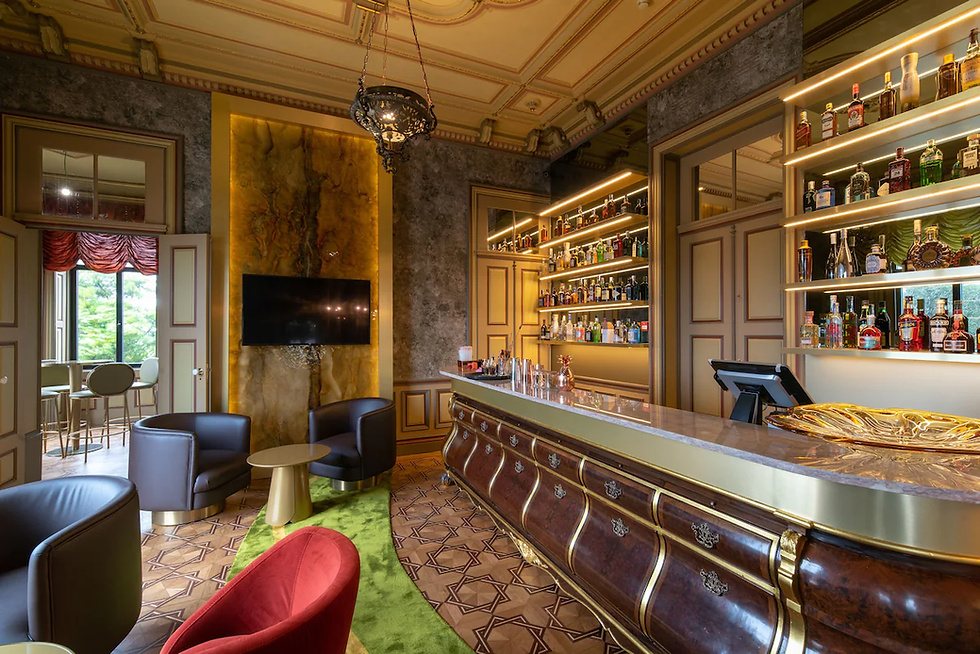
In Foz do Douro, where the city meets the Atlantic, Vila Foz Hotel & Spa is a haven of exclusivity and elegance. Housed in a 19th-century mansion, meticulously restored and complemented by a contemporary building, it preserves the historic charm while offering the comfort of modernity. With 66 rooms and suites of distinct character, a Spa dedicated to well-being and an award-winning gastronomic offer, the hotel invites you to a unique experience. At the Vila Foz Restaurant, distinguished with a Michelin Star, and at the Flor de Lis, recommended by the Michelin Guide, the signature cuisine celebrates the flavours of the Atlantic with sophistication. More than a hotel, Vila Foz is a destination where the authenticity of the city of Porto and the serenity of the sea come together to create unforgettable moments.


Things to do in Porto:
Porto is a treasure trove of history, architecture, and soul-stirring views.

• Porto Cathedral: A Romanesque masterpiece perched on a hilltop, offering fortress-like interiors and Gothic cloisters that whisper centuries of stories.
• Livraria Lello: One of the world’s most beautiful bookstores, with its iconic red staircase and art nouveau charm—perfect for book lovers and architecture buffs alike.
• Clérigos Church: Climb the 75-meter bell tower for panoramic views and admire the ornate Baroque design inside.
• Ribeira do Porto: Wander the riverside promenade, soak in the Douro views, and enjoy the vibrant atmosphere of this historic district.
• Palácio da Bolsa: Step into 19th-century grandeur with guided tours through opulent rooms and neoclassical architecture.
• Chapel of Souls: Snap a photo of its stunning blue-and-white tiled façade depicting scenes from the lives of saints.
• Church of Saint Francis: A Gothic gem with lavish Baroque interiors—don’t miss the gilded woodwork.
• Porto: Beyond the landmarks, the city itself is a living canvas of culture, cuisine, and cobbled charm.
Fly home from Porto.


Comments