
Where Time Stands Still: Wandering Europe’s Most Enchanting Historic Towns
“Old Europe doesn’t whisper; it sings—through cathedral bells, fortress walls, and the quiet poetry of ancient squares.”
Europe’s historic towns feel like portals—places where time folds in on itself and the past lingers in every stone archway, market square, and winding medieval lane. From the sienna‑colored streets of Siena to the storybook lakeside charm of Lucerne, the fortified citadel of Carcassonne, the fairytale spires of Tallinn, the fjord‑kissed wharfs of Bergen, and the golden, sun‑baked maze of Toledo, each town offers its own distinct rhythm of history and beauty. Together, they form a tapestry of cultures, eras, and architectural wonders that invite travelers to slow down, wander, and experience Europe the way it once was—and, in these remarkable places, still is.
In this post, we will journey to some of the fantastic European towns including:
Siena, Italy
Siena is one of those Italian towns that feels almost impossibly preserved—an amber‑hued medieval world perched on Tuscan hills, where life still moves to the rhythm of ancient traditions. Traveling here is less about checking sights off a list and more about sinking into an atmosphere that hasn’t changed much since the 1300s. Siena’s historic center is a UNESCO World Heritage Site, famous for its narrow brick lanes, Gothic architecture, and that warm, earthy palette that inspired the color “burnt sienna.”

Best time to visit:
The most rewarding seasons in Siena are spring (April–June) and fall (September–October), when the Tuscan countryside is glowing, the temperatures are comfortable, and the city feels lively without being overwhelmed. Spring brings blooming hillsides and long, golden afternoons ideal for wandering the medieval streets, while fall offers harvest festivals, crisp air, and that unmistakable Tuscan light.
Where to stay:
Il Battistero Siena - Residenza d'Epoca
3-Star Hotel
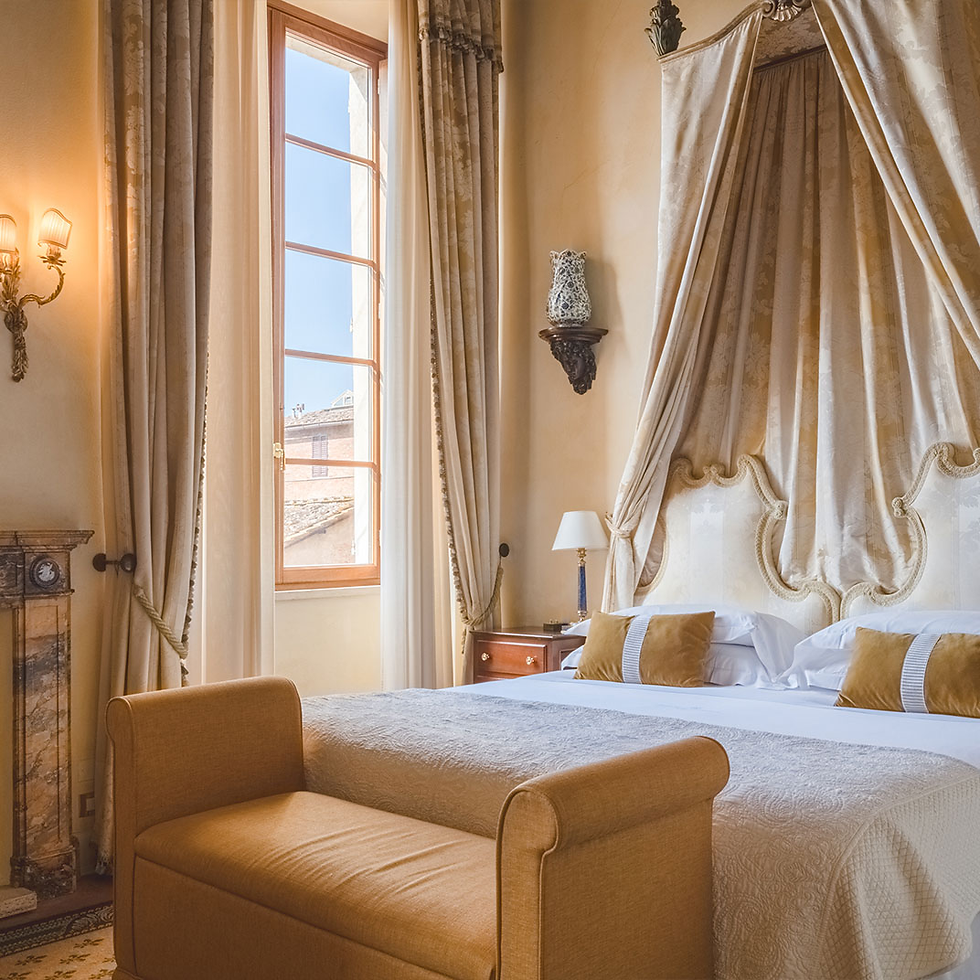
Just off Siena’s Piazza del Campo, and literally straight across the road from the gorgeous Gothic building that is the Baptistery of San Giovanni, is a beautiful little boutique hotel that goes by the name of Il Battisterio Siena - Residenza d’Epoca. The “little” part is apparent simply from the fact that it comprises just seven suites. And the “beautiful” bit you’ll simply have to take on the evidence presented in the photos — or from the fact that a balanced mixture of contemporary Italian furnishings, heritage antiques, and historical architecture, in the hands of a capable designer, are a typically winning combination.
Period architectural details like rough-hewn exposed beams provide the historical atmosphere, while the design style, for the most part, sticks to the low-key, neutral-toned minimalism that’s become something of a modern Italian trademark. An exception is the throwback-style Papa Alessandro VII suite, a pair of interconnecting bedrooms named for a 17th-century resident who went on to become Pope — auspicious footsteps to follow in, to say the least. There’s an impressive wine cellar, and a bistro right out front serves breakfast, lunch, aperitifs, and dinner — and the rest of the city center is right at your feet.


Hotel Palazzetto Rosso
3-Star Hotel
If only these red brick walls could talk. Hotel Palazzetto Rosso, located in the heart of Siena’s medieval center, has been hosting travelers since the Middle Ages. Plenty has changed since the inn’s original heyday, when traders from all over the world came to Tuscany on business. But the building itself was constructed according to 13th-century planning regulations, and the original façade, decorated with traditional wrought-iron ensigns and flares, remains the same.
Inside, the hotel has changed with the times. Tuscany is more of a leisure destination than a merchants’ crossroads, and the nine-room Palazzetto Rosso is much more than a place to rest your head between trade deals. It’s a place to linger over cappuccino at cheerful red N7 table that resembles a piece of oversized origami, or to relax in a 3D armchair by Pedrali. Indeed, the decor at Hotel Palazzetto Rossi represents a greatest hits list of contemporary Italian designers.
There’s old-world elegance in the architecture, to be sure — high vaulted ceilings, rich frescoes, curving archways — but the slate gray floor tiles are by 14 Ora Italiana, the mod Zippo banquettes and cool white bar by Claudio Dondoli and Marco Pocci, the lighting scheme by Michele De Lucchi and Giancarlo Fassina for Artémide. All told, it’s a satisfying mix of Tuscan tradition and cutting-edge design. Take the bistro tables by Luca Nichette for Casamania: they’re done in black and white, the official colors of Siena.
It’s impossible to guess just how many people have climbed up the imposing brick staircase that leads from the lobby to the guest rooms and suites above. No two rooms are alike, but all feature a mix of old and new. Expect painted friezes, wood-beamed ceilings, stone fireplaces and Venetian drapery alongside striking modern design pieces, Smart TVs, and contemporary artwork. Some suites contain unexpected amenities. In Suite 3, for instance, the bathtub is located in a giant glass and concrete cube in the center of the room, while other rooms offer priceless relics from the past, like a sink fitted with an antique fountain. All rooms and suites have views over some sort of interesting Italian scene, whether it be the silhouette of Monte dei Paschi Bank — the oldest extant bank in the world, thank you very much — or a cobblestone street filled with locals standing in line for gelato.
Indeed, all of Siena’s historic treasures and pleasures are just outside the Hotel Palazzetto Rosso’s front door. A fair number show up on the breakfast buffet table, too — check out the spread of local charcuterie and cheese — and in the hotel’s charming enoteca, a quiet candlelit venue to enjoy a glass or two at the end of the day.


Grand Hotel Continental Siena – Starhotels Collezione
5-Star Hotel
Siena is, on the one hand, a time machine, a meticulously preserved medieval city, known for its artworks and architecture, and ever-popular with travelers of all nationalities. But people live here too; and alongside its medieval fortifications and Renaissance palazzos is a thriving boutique and cafe culture to rival any of Italy's modern cities.
Today's Grand Hotel Contintental is Siena's top luxury hotel, and the only hotel of its kind in the heart of the city, just off the pedestrian-only Piazza del Campo. The building was converted from a grand aristocratic residence, the seventeenth-century Palazzo Gori, and has been restored and refurbished — but not redesigned. All of the original details remain, the frescoes are brighter than ever, and the ballroom is as grand as it must have been three hundred years ago.
The rooms are every bit as opulent as the public spaces, each one individually designed, with frescoed or beamed ceilings, terracotta floors, and period artworks and furnishings — though modern touches like internet access and satellite TV make this a modern hotel. The restaurant, Sapordovino, is splendidly set beneath the palazzo's glass-domed courtyard, and the wine bar is a surprisingly stylish option. The only caveat, owing to the space restrictions in Siena's historic downtown — though the hotel does offer such niceties as a swimming pool and tennis courts, these are actually a short shuttle ride away, at the Grand Hotel Continental's sister property on the outskirts of town.


Things to do in Siena:
1. Wander the Piazza del Campo
The heart of Siena and one of Europe’s most striking medieval squares. Its shell shape, sun‑soaked brick, and lively cafés make it the perfect place to linger, people‑watch, and feel the city’s pulse.
2. Climb the Torre del Mangia
Ascend the slender 14th‑century tower for sweeping views of terracotta rooftops and the rolling Tuscan countryside. It’s one of the most iconic panoramas in Italy.
3. Explore the Siena Cathedral (Duomo di Siena)
A Gothic masterpiece of black‑and‑white marble, intricate carvings, and dazzling frescoes. Don’t miss:
• The Piccolomini Library
• The marble mosaic floors (open seasonally)
• The Facciatone viewpoint for a unique skyline perspective
4. Visit Santa Maria della Scala
Once a medieval hospital, now a vast museum complex filled with frescoes, archaeological finds, and centuries of Sienese history. It’s atmospheric, layered, and surprisingly immersive.
5. Stroll Through the Contrade Neighborhoods
Siena is divided into 17 historic districts, each with its own colors, symbols, and fierce identity. Wandering these quieter lanes reveals fountains, flags, and the living spirit behind the Palio.
6. Experience the Palio (If You’re Lucky)
Held twice a year (July 2 and August 16), the Palio is a whirlwind of medieval pageantry, neighborhood pride, and a thrilling bareback horse race. Even outside race days, the traditions echo everywhere.
7. Taste Siena’s Tuscan Flavors
Food is a highlight here. Seek out:
• Pici pasta with cacio e pepe or ragù
• Ribollita and pappa al pomodoro
• Wild boar dishes
• Panforte and ricciarelli for dessert
Pair everything with Chianti Classico or Brunello from nearby vineyards.
8. Visit the Basilica of San Domenico
A stark, powerful Gothic church tied to the life of Saint Catherine of Siena. Its quiet interior offers a contemplative break from the busy streets.
9. Explore Siena’s Medieval Walls and Viewpoints
Walk along the edges of the old town to find peaceful overlooks, olive groves, and postcard‑worthy views of the cathedral rising above the rooftops.
10. Take a Day Trip Into the Tuscan Countryside
Siena is perfectly placed for exploring:
• Chianti wine villages
• Montalcino and Montepulciano
• The dreamy landscapes of the Val d’Orcia
Lucerne, Switzerland
Lucerne feels like a storybook city brought to life — a place where medieval charm, lake‑side serenity, and dramatic Alpine scenery all meet in one breathtaking sweep. It’s one of those destinations that stays with you long after you’ve left, and it fits beautifully with your love for historic European towns that blend atmosphere, beauty, and soul.

Best time to visit:
• Spring & Fall: Mild weather, fewer crowds, gorgeous scenery
• Summer: Peak season, lively, ideal for lake cruises
• Winter: Quiet, cozy, and magical with snow‑capped peaks
Where to stay:
Hotel de la Paix
3-Star Hotel
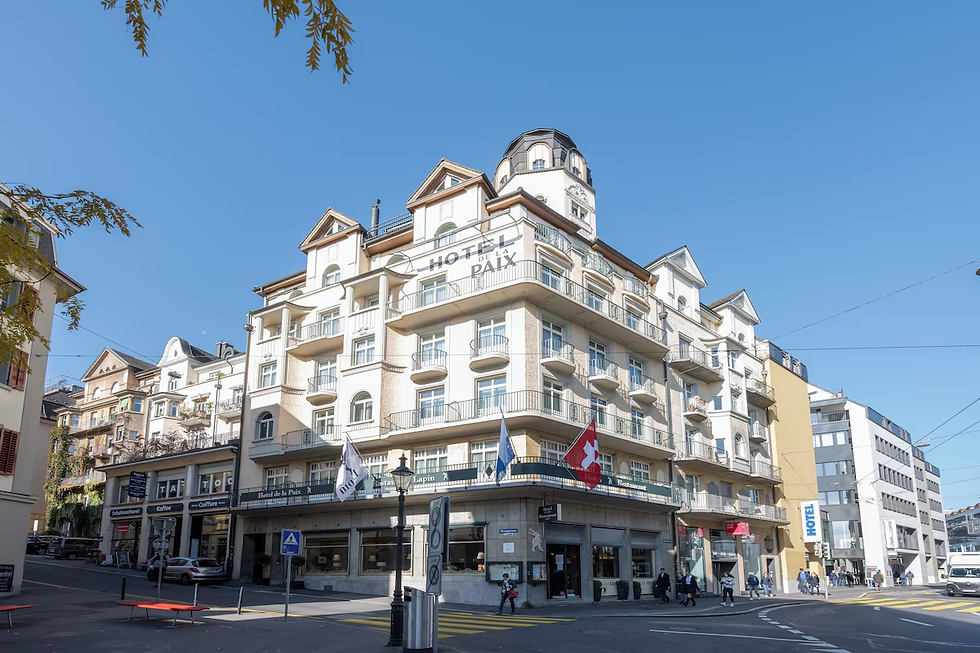
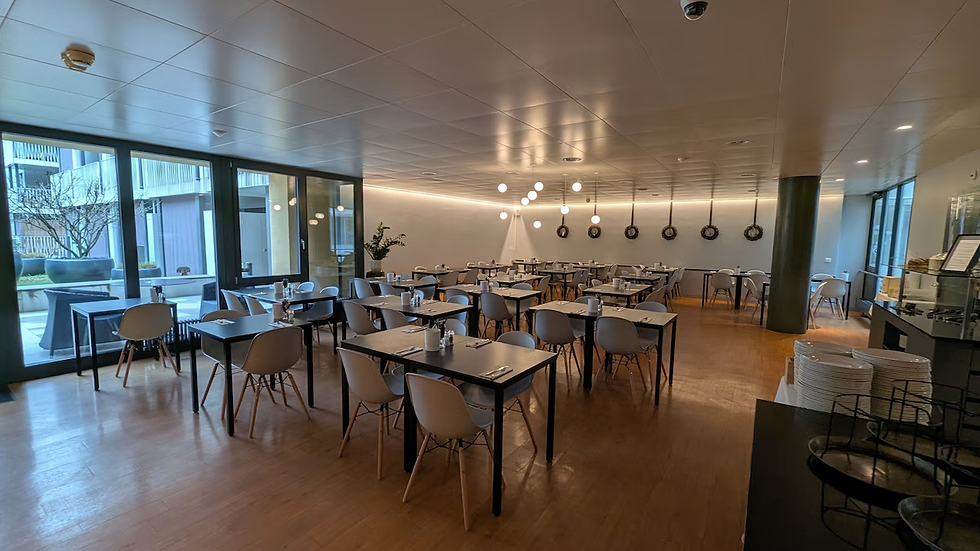
Where the old town leads to Stroll invites and historical sights encourage time travel, where the lake beckons to the promenade and amazes the mountain panorama – there stands the family city hotel De La Paix. From our lobby you can reach all the attractions of the city of Lucerne in just a few steps. And friendly and comfortable rooms are a wonderful place to relax.

Cascada Boutique Hotel
4-Star Hotel
Cascada Boutique Hotel sits in Lucerne’s vibrant Neustadt, where the city feels more local than touristy. Housed in a century-old building that began life as a hospice in 1910, it now offers 74 contemporary rooms, each individually styled after a Swiss waterfall. The effect is distinctive yet understated, with thoughtful details that root the hotel in its alpine setting. Downstairs, Bolero brings a splash of Spain to central Switzerland with tapas, paella, and a notable wine list. Step outside and the city unfolds: lake light, mountain air, and medieval streets all within minutes.


Burgenstock Hotel & Alpine Spa
5-Star Hotel
The Burgenstock Hotel is located 450 meters above Lake Lucerne and is surrounded by the Swiss Alps. You have got a 360 degree view from the whole hotel. The hotel is right in the middle of the historic Burgenstock Resort a 60 hectares large private ground on the Burgenberg. Nevertheless it takes only 1 minute to the own funicular which brings you to the ship station of Kehrsiten. From there it only takes 25 minutes to the city of Lucerne. An additionally shuttle bus runs regularly between the resort and the next train station.


Things to do in Lucerne:
Walk Across Chapel Bridge (Kapellbrücke)
The city’s signature landmark — a 14th‑century wooden bridge lined with historic painted panels. Sunrise and sunset are especially magical.
Wander the Old Town (Altstadt)
Cobblestone lanes, frescoed buildings, boutique shops, and riverside cafés. It’s compact, colorful, and perfect for slow exploration.
Cruise on Lake Lucerne
A scenic boat ride gives you sweeping views of mountains, villages, and the deep blue lake. You can pair it with mountain excursions for a full day.
Ride Up Mount Pilatus or Mount Rigi
Pilatus: Dramatic, rugged, reached by the world’s steepest cogwheel railway.
Rigi: Softer, greener, known for panoramic views and gentle hikes.
Visit the Lion Monument
A moving rock‑carved sculpture honoring Swiss Guards. Mark Twain famously called it “the most mournful and moving piece of stone in the world.”
Explore the Musegg Wall & Towers
A preserved medieval wall with nine towers — several open to climb. The views over Lucerne are spectacular.
Tour the KKL Luzern
A striking modern concert hall by Jean Nouvel. Even if you don’t attend a performance, the architecture alone is worth seeing.
Carcassonne, France
Carcassonne feels like stepping straight into a medieval legend — a hilltop fortress of stone walls, watchtowers, and winding lanes that look almost too cinematic to be real. If you’re drawn to historic European towns with atmosphere and soul (which I know you are), Carcassonne is one of the most evocative places you can visit.

Best time to visit:
• Spring & Fall: Ideal weather, fewer crowds
• Summer: Lively but very busy, especially during the Carcassonne Festival
• Winter: Quiet, moody, and atmospheric
Where to stay:
Hôtel Du Pont Vieux
3-Star Hotel
At the foot of the medieval city, in the emblematic Trivalle street and 500m from the city center of Carcassonne, the Hotel du Pont Vieux is an ideal stopover for your tourist or professional stay in Cathar Country!
Jean Michel and Catherine welcome you in this beautiful building of the eighteenth century with a warm atmosphere. The 19 air-conditioned rooms, renovated in a contemporary style, offer all the comfort and equipment desired for a pleasant stay. Some rooms have a view of the ramparts.
Enjoy the hotel terrace with panoramic views of the ramparts or the shady garden to relax.
1km from the train station and 3km from Carcassonne airport, the Hotel du Pont Vieux *** will be your point of departure to discover the Cathar Country, a rich and varied tourist treasure!


Hotel De La Cite Carcassonne
4-Star Hotel
Carcassonne is the largest walled citadel in Europe, and the Hôtel de la Cité sits behind the ancient fortifications, with the Romanesque Château Comtal and the Gothic Basilica of Saint-Nazaire as its neighbors. Though the citadel’s ramparts date back to the 13th century, and the original Roman village some seven hundred years before that, the Hotel de la Cité is not quite one hundred years old. In its current incarnation as a member of the MGallery Collection, however, it looks like something straight out of the 15th century, the rooms packed with antique furniture and ornate woodwork, and stained-glass windows adding color to the sunlight.
Some rooms open onto balconies or terraces overlooking the ramparts of the citadel, while others look out windows onto the narrow cobblestone streets — only conveniences like air conditioning, satellite television and spacious modern bathrooms break the illusion of time travel.
The Michelin-starred Barbacane restaurant is, for many, almost worth the trip in itself; you haven’t had cassoulet until you’ve had it here, and the chef is available for lessons, in case you’d like to attempt your own. A more casual brasserie and summertime terrace restaurant round out the gastronomic options, and guests sip cocktails to the tune of gentle piano accompaniment in the library bar. The only downside is that, sooner or later, you have to return to the twenty-first century, at least until you can spare the time to visit again.
Please note: The hotel is located within the fortress structure with restricted vehicle access.


Hôtel Le Parc - La Table de Franck Putelat
5-Star Hotel
Medieval Carcassonne, the birthplace of cassoulet and the Languedoc red wines that pair with it, is a foodie destination, so it stands to reason that several of its best hotels are attached to fine dining venues. So it is at Hôtel Le Parc, a boutique hotel that was created as an elegant and practical addition to the celebrated La Table de Franck Putelat. Come for the creative tasting menus and relax afterward, if you’ve adequately planned ahead, in one of the hotel’s ultra-chic rooms and suites.
There are just seven of them, and they’re all quiet and refined, outfitted with sophisticated lighting and modern but earthy decor — bearskin rugs, carved wooden chairs, artwork and design objects inspired by nature. Each has a large private terrace facing the surrounding landscape, making the most of the hotel’s leafy location beside Carcassonne’s old ramparts. Bathrooms are spacious and contemporary, with walk-in showers and housemade products, and several suites have private indoor or outdoor Jacuzzis. A lavish breakfast spread featuring local fruits and freshly baked bread can be enjoyed in the restaurant or delivered to one’s terrace.


Things to do in Carcassonne:
• Walk the double‑walled fortress with its 52 towers
• Explore Château Comtal, the castle at the heart of the citadel
• Stroll the ramparts for sweeping views of the countryside
• Visit the Basilica of Saints Nazarius and Celsus, known for its stained glass
• Enter through the dramatic Narbonnaise Gate, the main fortified entrance
• Wander the cobblestone lanes, shops, and cafés inside the walls
• Catch medieval shows or reenactments in summer
Lower Town (Bastide Saint‑Louis)
• Explore the local markets, boutiques, and cafés
• Visit the Musée des Beaux‑Arts for a small but charming art collection
• Climb the Saint Vincent Church bell tower for panoramic views
• Walk across Pont Neuf or the Old Bridge for fortress views
Nature, Views & Nearby Sights
• Stroll or cruise along the Canal du Midi, a UNESCO World Heritage Site
• Relax at Cavayère Lake, great for swimming and picnics
• Visit Les Châteaux de Lastours, dramatic hilltop castle ruins nearby
• Explore the Jardin du Calvaire, a peaceful garden with sculptures
Food & Wine
• Try cassoulet, the region’s signature dish
• Sip local wines from Corbières, Minervois, or Limoux
• Enjoy terrace dining inside the Cité for magical nighttime views
Tallinn, Estonia
Tallinn is one of Europe’s most enchanting small capitals — a place where medieval towers, Baltic seaside light, and a cutting‑edge digital culture all blend into one atmospheric, walkable city. It’s perfect if you love historic towns with soul, story, and a touch of fairytale mood.

Best time to visit:
May–September: Warmest weather, long days, outdoor cafés
December: Magical Christmas markets
Winter: Quiet, atmospheric, and snowy — perfect for cozy Old Town vibes
Where to stay:
Hotel St. Barbara
3-Star Hotel
Hotel St. Barbara is a 3-star hotel located in the heart of Tallinn, Estonia, at Roosikrantsi tn 2a, just a short walk from the historic Old Town. Built in 1903, the hotel is housed in a beautifully preserved limestone building designed by architect Bernhard and offers 53 spacious, well-lit guestrooms with high ceilings and large windows. It provides free Wi-Fi, private parking (for an additional fee), and a German-style restaurant, Baieri Kelder, for dining and private events.


Nunne Boutique Hotel
4-Star Hotel
Nunne Boutique Hotel is a 4-star boutique hotel located in the heart of Tallinn’s Old Town, Estonia, at Nunne tn 14, 10133. The hotel blends historic charm with modern comfort, offering a range of uniquely themed rooms and suites, many with spa access, and is known for its warm hospitality and excellent location just 300 meters from the city center.


The Burman Hotel
5-Star Hotel
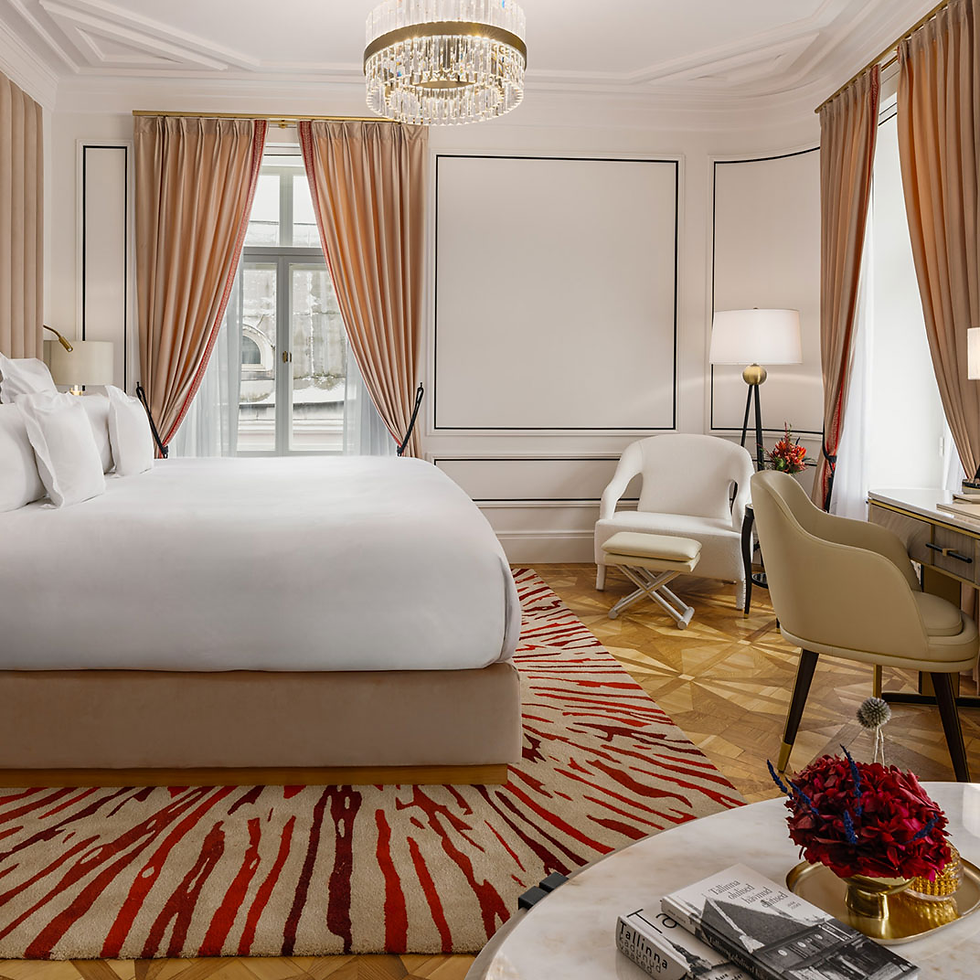
The Burman has existed in one form or another for over 150 years, but not like this. Today, thoroughly renovated, it’s part of the Bombay Club, a high-end, boutique-sized casino complex in the heart of Tallinn’s Old Town, complete with gaming salons, performance spaces, restaurants, and, in the Burman, a 17-room luxury boutique hotel.
Forget everything you think you know about casino hotels, though; this one is discreet, tasteful, and elegant rather than opulent. The service is highly personal — a benefit of the hotel’s small size — and the details are exquisitely well chosen, from handmade mattresses that match those carried on the Orient Express to bath products by Amouage, an ultra-luxe concern that’s far from common in hotel bathrooms at any level.
You’ll also find a rather more elaborate spa than most 17-room hotels can muster, as well as a bakery and three restaurants: one Cantonese, one Japanese, and one French. The club and casino, meanwhile, offer all the nightlife you could possibly need — not to mention the small matter of the whole city of Tallinn at your feet.


Things to do in Tallinn:
Old Town (Vanalinn)
Wander cobblestone streets lined with merchant houses and Gothic spires
Explore Town Hall Square, the heart of medieval Tallinn
Visit St. Olaf’s Church, once the tallest building in the world
Climb up to Toompea Hill for sweeping views of the city
Historic & Cultural Sites
Alexander Nevsky Cathedral — onion‑domed and striking
Kiek in de Kök & Bastion Passages — underground tunnels and fortifications
Rocca‑al‑Mare Open Air Museum — traditional Estonian village life
Parks & Neighborhoods
Kadriorg Park — elegant gardens and art museums
Kalamaja — bohemian district with wooden houses, cafés, and Telliskivi Creative City
Pirita — seaside greenery and peaceful walking paths
Seasonal Events
Tallinn has a lively cultural calendar, especially in winter and early spring:
Tallinn Bun Fest (Jan–Feb)
Foodlover Restaurants Week (Feb)
Tourest International Tourism Fair (Feb)
Bergen, Norway
Bergen is one of Norway’s most atmospheric cities — a blend of fjords, mountains, UNESCO‑listed history, and a lively student‑driven cultural scene. It’s compact, walkable, and the perfect base for fjord adventures, scenic rail journeys, and seafood‑forward dining.

Best time to visit:
- Summer (June–August): Long days, festivals, fjord cruises, best weather — also the busiest.
- Spring/Fall: Fewer crowds, beautiful scenery, but expect rain (Bergen is famously rainy).
- Winter: Quiet, cozy, holiday markets, and access to nearby ski areas; some attractions have limited hours.
Where to stay:
Zander K Hotel
3-Star Hotel
Sister hotel to the stately and luxurious Bergen Børs, the 249-room Zander K Hotel is rather more youth-oriented — modernist, minimalist, and with a more utilitarian approach to its comforts. This isn’t meant as a criticism, though; while its luxe sister is decidedly high-end, Zander K’s got everything a design-focused boutique hotel needs, and nothing a low-maintenance modern traveler would find excessive.
Bergen is Norway’s famously rainy second city, and Zander K’s artwork acknowledges the weather, with cartoonish depictions of storm clouds and umbrellas. The design, by the Swedish firm Claesson Koivisto Rune, is crisp and utilitarian, the rooms making liberal use of blond wood and a whole monochrome rainbow of gray tones.
The public spaces are considerably less sparse; the lobby is a classic multi-use all-day space, serving everything from breakfast and espresso to cocktails and organic beers and wines, and features a menu of locally sourced dishes for lunch and dinner. It’s a fine place to work, to socialize, or simply to lounge — and right outside the hotel is the central rail station and, a few blocks beyond, the heart of what might be Norway’s most scenic, livable, and unique cities.

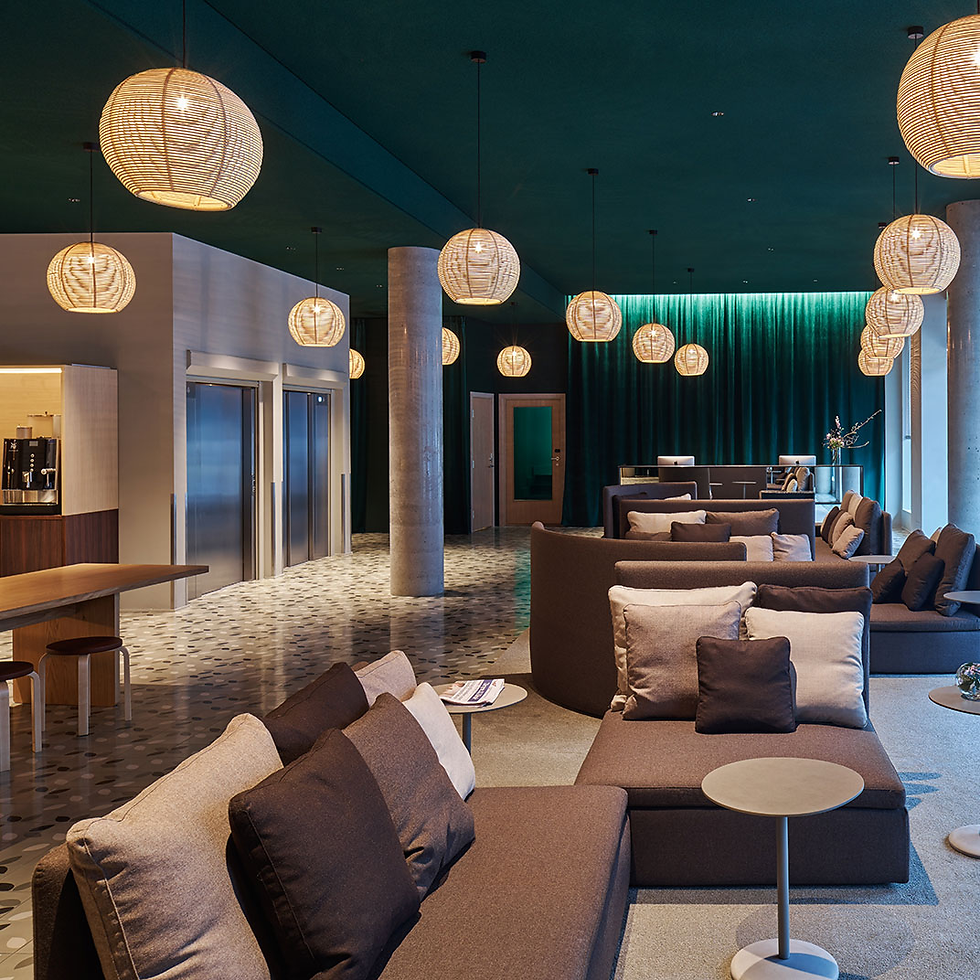

Bergen Børs Hotel
4-Star Hotel
If you know your Nordic languages, you might not be surprised to hear that the Bergen Børs Hotel occupies the building that once housed Bergen, Norway’s stock exchange. That famous Scandinavian minimalism you’re looking for is here, but it’s concealed within the 19th-century neo-Renaissance style of the historic building. The interiors, by designers Claesson Koivisto Rune, are sparse but not severe, and as contemporary as they are, they pay subtle tribute to the era of the Børs’s foundation. The comforts are first-rate, but the style avoids needless opulence — though the suites do make use of some of the built-in ornamentation left behind by the stately building’s former offices. BARE Restaurant is highly regarded for its locally sourced Nordic cuisine, and the bar is an elegant one, set in the old chamber of commerce hall. There are a handful of other restaurants in the market building, and the location places you steps from the fish market, the port, and the railway station, right in the heart of this compact and picturesque city — Bergen is known for its beauty, for its quality of life, and for its easy access to the wild outdoors of Norway.


Opus XVI
4-Star Hotel
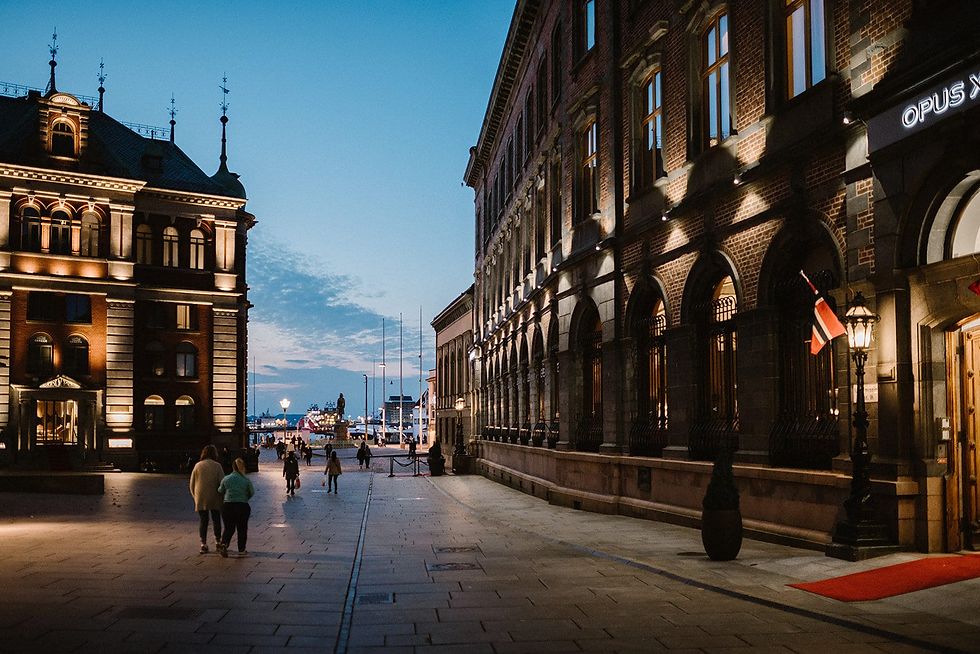
A contemporary celebration of creative heritage at this boutique Bergen bolthole. Like the bold melodic flourishes that open the famous Edvard Grieg concerto it is named after- Opus XVI captures you from the first moment. Created by descendants of the Bergen-born composer- this boutique hotel pairs a celebration of his life and legacy with up-to-the-minute style and comfort. Step into the grand entrance hall- where features of the original Victorian building include marble columns and polished granite walls. Unwind in your room- an individually-styled delight for any fan of pared-back- Scandinavian design. Suites named after Grieg masterpieces offer even more style and space to play with. Outside- the poster-paint wooden houses of historic Bryggen are just steps away. Take in top city sights such as the views from Mount Floyen and the KODE art galleries- or learn more about Edvard Grieg- his travels and friendships with creative minds such as Henrik Ibsen- at the Opus XVI library exhibition. During summer- lunchtime concerts bring his piano works to life. At the end of the day- take a seat beneath the crystal chandeliers in the restaurant- for delicious menus full of local produce. From beginning to end- each day at Opus XVI is a perfect duet of modern luxury and warm hospitality. Opus XVI is a Small Luxury Hotels of the World property. NEAR OPUS XVI Bergen city centre- Vagsallmenningen plaza- Bryggen historic waterfront- Mount Floyen funicular railway.


Things to do in Bergen:
1. Explore Bryggen (UNESCO World Heritage Site)
Colorful wooden Hanseatic-era buildings, narrow alleys, artisan shops, and centuries of maritime history. It’s the city’s most iconic sight.
2. Ride the Fløibanen Funicular to Mount Fløyen
Panoramic views over the harbor + forest trails, cafés, and scenic overlooks at the top. Great at sunset.
3. Take a Fjord Cruise
Bergen is the gateway to Norway’s most dramatic fjords. Top options include:
• Mostraumen Fjord Cruise (4 hours)
• Osterfjord Half-Day Cruise
• Hardangerfjord Express to Rosendal
• Norway in a Nutshell® (fjord cruise + Flåm Railway + mountain villages)
4. Visit the Fish Market
A classic Bergen experience — seafood stalls, local specialties, and a lively waterfront atmosphere.
5. Wander Nordnes & Sandviken
Charming old wooden houses, narrow lanes, and quiet residential streets that feel like stepping back in time.
6. Hike One of Bergen’s Seven Mountains
Mount Fløyen and Mount Ulriken are the most accessible. Ulriken has a cable car and rugged summit trails with sweeping views.
7. Visit the KODE Art Museums
Four museums + composer homes featuring Munch, Picasso, and major Norwegian collections.
8. Explore the Hanseatic Museum & Schøtstuene
One of Bergen’s oldest wooden buildings, preserving the life and trade of Hanseatic merchants.
9. Gamle Bergen (Old Bergen Museum)
An open-air museum with 55 reconstructed wooden houses showing life in the 18th–19th centuries.
10. Rosenkrantz Tower & Bergenhus Fortress
Historic fortress complex with panoramic views and medieval architecture.
Toledo, Spain
Toledo is one of Spain’s most atmospheric historic cities — a hilltop maze of medieval streets, cathedrals, synagogues, and Moorish architecture, just 35 minutes from Madrid by high‑speed train. It’s known as the City of Three Cultures for its Christian, Jewish, and Muslim heritage.

Best time to visit:
The best time to visit Toledo is spring (April–May) and fall (September–mid‑October). These seasons offer mild weather, lighter crowds, and ideal conditions for exploring the medieval old town, viewpoints, and cultural sites. Summer is very hot and crowded, while winter is quiet and atmospheric but cooler with shorter hours.
Where to stay:
Hotel Cigarral De Caravantes
3-Star Hotel
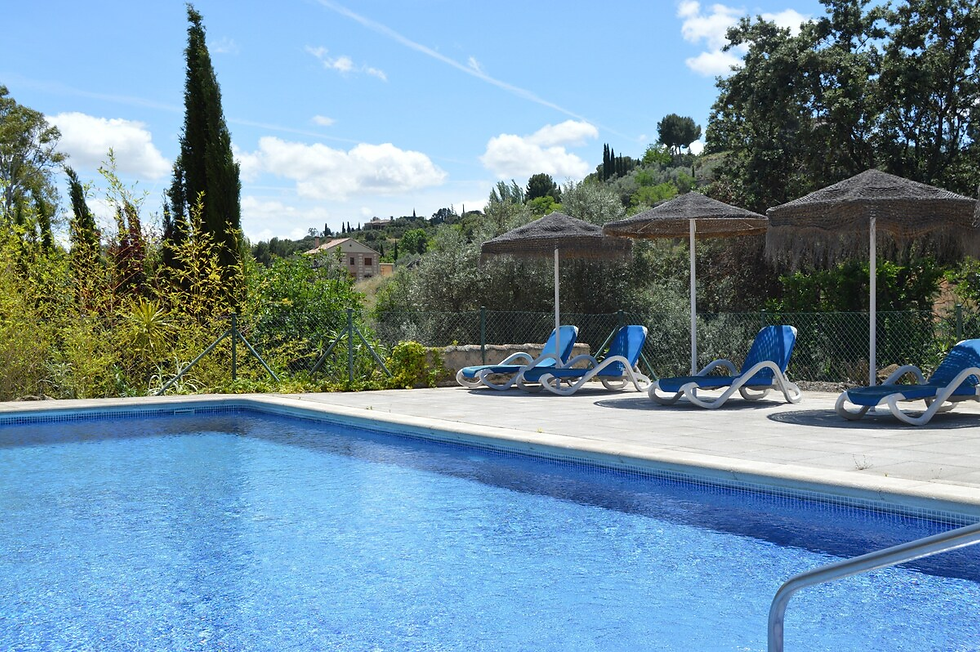
The Hotel Cigarral de Caravantes , located on the emblematic Emperor's Hill in Toledo, stands out for offering stunning views of the city and the Tagus River, making it a privileged option for staying in a charming hotel in Toledo.
The facilities occupy a 16th-century building originally intended as a residence for the nobility. A perfect combination of history and modernity, it has been carefully restored to ensure a unique overnight stay in Toledo .
At the Hotel Cigarral de Caravantes, we offer our guests an exceptional experience with our unique restaurant and outdoor pool.
An unparalleled place to stay in Toledo , in a prime location.


Hotel Boutique Adolfo
4-Star Hotel
Standing on the city’s most emblematic and famous square, the Adolfo occupies a building with a beautiful façade which was once a café. Contemporary-style guestrooms with a balcony overlooking the square, a charming roof terrace with good views, plus a pleasant restaurant where the focus is on set menus.


Valdepalacios Hotel Gourmand
5-Star Hotel
Valdepalacios is a 5‑star luxury country estate set on a 600‑hectare private property about 1 hour from Toledo. It’s known for its serene, exclusive atmosphere and refined rural elegance — perfect for travelers who want countryside luxury paired with Michelin‑level dining. Set on a vast private estate with fields, gardens, and wildlife, the hotel boasts a full spa with indoor pool, sauna, and wellness treatments, and an outdoor pool overlooking the countryside.


Things to do in Toledo:
1. Toledo Cathedral (Catedral Primada)
• One of Spain’s greatest Gothic cathedrals
• Stunning altarpiece, treasury, and art collection
• Don’t miss the sacristy with works by El Greco, Velázquez, and Goya
2. Alcázar of Toledo
• Fortress dominating the skyline
• Houses the Army Museum
• Incredible panoramic views
3. Jewish Quarter (Judería)
• Atmospheric lanes and artisan shops
• Synagogue of Santa María la Blanca
• Synagogue of El Tránsito + Sephardic Museum
4. Iglesia de Santo Tomé (El Greco’s Masterpiece)
• Home to The Burial of the Count of Orgaz
• Essential for art lovers
5. Monastery of San Juan de los Reyes
• Beautiful cloisters and Gothic architecture
• Built by the Catholic Monarchs
6. Mirador del Valle
• The most iconic viewpoint of Toledo
• Perfect for sunrise or sunset
7. Puente de San Martín & Puente de Alcántara
• Two medieval bridges with dramatic river views
• Great for photos and scenic walks
8. Mosque of Cristo de la Luz
• Small but fascinating 10th‑century mosque
• Shows Toledo’s layered Christian–Jewish–Muslim history
9. Museo del Greco
• Dedicated to the painter’s life and work
• Set in a beautiful historic house
10. Wander the Old Town
• Medieval streets, artisan workshops, and hidden courtyards
• Great for damascene metalwork, ceramics, and marzipan
11. Try Toledo’s Signature Foods
• Carcamusas (pork + tomato stew)
• Venison and game dishes
• Manchego cheese
• Mazapán (marzipan)
12. Take a Tagus River Walk or Boat Ride
• Peaceful paths along the river
• Lovely views back toward the city walls
Positano, Italy
Positano is one of those places that feels almost unreal — a vertical village of pastel houses spilling down a cliff into the Mediterranean. It’s romantic, dramatic, and effortlessly cinematic.

Best time to visit:
The best time to visit Positano is May–June and September. These months offer warm, sunny weather, swimmable seas, and lighter crowds compared to the peak summer rush. July and August are beautiful but very hot and extremely crowded, while October brings a pleasant shoulder season with cooler evenings. Winter is quiet and atmospheric, but many hotels and restaurants close.
Where to stay:
Casa Teresa
3-Star Hotel
At Casa Teresa you won't find waiters in uniform but a welcoming and friendly family whose goal is the satisfaction of their guests! The serene atmosphere, hospitality, and courtesy will amaze you... all this at Casa Teresa Positano in the heart of the Amalfi Coast!
Casa Teresa in Positano offers a complete, high-quality service thanks to the love and dedication Teresa and her family put into hosting guests. It's essentially like having the services of a 4-star hotel, but at the cost of a small property. Its location is the ideal starting point for the most beautiful excursions that Campania has to offer, such as: Amalfi, Paestum, Sorrento, Capri, Ischia, Procida, Pompeii and Herculaneum, the Solfatara and the Royal Palace of Caserta.
Right in the center, just steps from Positano's traditional restaurants, the area's characteristic bars, and the beach. Casa Teresa offers antique-style rooms and a splendid terrace overlooking the sea, for shared use by guests. The rooms feature antique-style furniture and chandeliers, characteristic tiled floors, and artwork on the walls. Each comes with a TV, fan, and private bathroom with shower and complimentary toiletries.


Casa Buonocore
4-Star Hotel
Casa Buonocore feels more like a private Positano residence than a hotel. Housed in a 17th-century palazzo just above Piazza dei Mulini, it was once the Buonocore family’s summer retreat before opening to travelers in 2012. The décor reflects their fashion background, with whitewashed rooms, patterned tiles, colorful fabrics, and terraces scented with jasmine. With only night bedrooms, including a suite with a generous sea-view terrace, the mood is intimate and relaxed. Breakfast is served indoors or on the patio, and the beach is a short walk downhill, complete with towels and bags provided for guests.


Il San Pietro di Positano
5-Star Hotel
Even by Italian standards, Positano is naturally breathtaking: its colorful houses and churches cling desperately to the mountainside, with postcard-perfect views of the sea coming seemingly a dime a dozen. Perhaps a bit more than a dime, actually; it’s possible (if unlikely) that there are still some secret places left on the Italian coasts, untouched by tourism, but even if that’s true, Positano certainly isn’t one of them.
Il San Pietro isn’t much of a secret either, and the key to its appeal is quite simple; it may just be the best hotel on the Amalfi Coast, and is a strong contender for any global list.
A small 17th-century chapel devoted to San Pietro marks the hotel entrance, and the rest of the property hangs on the cliffside below, each level descending the face like a staircase—perhaps a disquieting experience for those not comfortable with heights, but offering unparalleled views of the sea from every room and every terrace. The hotel is built just one room deep, and there are no inferior views; each room hugs the cliff at its back side and opens onto a private terrace at the front.
Given the views, the interiors are almost irrelevant. Fortunately they haven’t been neglected: rooms are spacious, with tile floors, individually designed in a spare and tasteful style. Standard and deluxe rooms differ mostly in size, and the “special” rooms offer such unique details as glass-walled bathrooms for bathing with a view.
The restaurant at the hotel’s top offers traditional Italian cuisine with stunning views of the Gulf of Salerno, as does the swimming pool, carved dramatically into the terraced cliffside. A lift descends from the hotel lobby to a private beach below, complete with a seaside cocktail bar.
All of this paradise on earth means Il San Pietro is not exactly a budget hotel—“exclusive” hardly begins to describe the situation. Positano is one of the world’s great hideaways, a celebrity haunt for decades, and Il San Pietro has seen its share of the beautiful people; one guess who room 8½ is named for.


Things to do in Positano:
1. Wander the Vertical Streets
• Explore Via dei Mulini and the tiny alleys branching off
• Boutique shopping (linen, sandals, ceramics)
• Endless photo spots
2. Spiaggia Grande
• Main beach with classic Positano views
• Rent loungers or take a boat out
3. Fornillo Beach
• Quieter, more local, and just a short walk from Spiaggia Grande
4. Boat Day on the Amalfi Coast
• Swim in coves
• Visit hidden beaches
• Optional stop in Capri
5. Hike the Path of the Gods (Il Sentiero degli Dei)
• One of Italy’s most breathtaking hikes
• Panoramic views over the entire coast
6. Visit Nearby Towns
• Amalfi (cathedral, lemon groves)
• Ravello (gardens + villas)
• Praiano (quiet, romantic)
Mdina, Malta
The “Silent City” perched on a hilltop in the center of the island. This is one of those destinations that feels like stepping straight into another century.

Best time to visit:
The best time to visit Mdina is April–June and September–October. These months offer warm, pleasant weather, fewer crowds, and ideal conditions for exploring the Silent City’s narrow lanes, viewpoints, and historic sites. Summer is beautiful but hot and busier, while winter is cooler and quieter with a more atmospheric feel.
Where to stay:
Palazzo Bifora
3-Star Hotel
Palazzo Bifora welcomes you to immerse yourself in Mdina’s timeless atmosphere. Hidden away amidst the oldest alleyways of the Medieval city and named after the revivalist mullioned window on its façade, it has been renovated to meticulously blend the original features with modern décor and the latest of technology. All set in a design reminiscent of colonial times with a palette choice reflecting Maltese flora – sage, clovers and golden hues. The carefully restored heritage home offers memorable curated stays while embracing Mdina’s architectural beauty and culture.


Howard House Hotel
4-Star Hotel (just outside city walls)
The Howard House Hotel in Mdina is a 4-star boutique hotel located in the historic city of Mdina, Malta. It offers elegant accommodations with a focus on comfort, charm, and proximity to Maltese cultural landmarks. The hotel features a tranquil setting within the ancient city walls, ideal for travelers seeking a peaceful yet central base.


The Xara Palace Relais & Chateaux
5-Star Hotel
High-end boutique hotels are flourishing in Malta, but mostly in the Baroque capital — the Xara Palace is the rare exception, a stunning 17th-century palazzo in the mostly medieval city of Mdina, a historically rich destination in the island’s interior. In its current incarnation the hotel is a tribute to the city’s aristocratic heritage, and while it’s been subtly updated to meet contemporary luxury-hotel expectations, its atmosphere remains period-correct. De Mondion, the Michelin-starred restaurant, is a particular highlight, and For a more informal dining experience, head to Trattoria AD 1530.


Things to do in Mdina:
1. Wander the Silent City
Narrow, winding streets
Honey-colored limestone buildings
Quiet, peaceful atmosphere
Perfect for photography and slow exploration
2. St. Paul’s Cathedral
Baroque masterpiece
Beautiful interior + museum
Central landmark of Mdina
3. Mdina Dungeons Museum
Atmospheric underground chambers
Historical exhibits about medieval Malta
4. Palazzo Falson Historic House Museum
13th‑century noble home
Art, antiques, and rooftop views
5. Mdina Gate
Iconic filming location (including Game of Thrones)
Beautiful entrance to the city
6. Bastion Views
Panoramic views over Malta’s countryside
Magical at sunset
Reine, Norway
Reine is the postcard village of the Lofoten Islands — red rorbuer cabins on stilts, jagged granite peaks rising straight from teal water, and a quiet fishing‑village atmosphere. It’s one of the most photographed places in Norway and absolutely worth the journey.

Best time to visit:
The best time to visit Reine is June–August, when you get mild temperatures, long days, and the Midnight Sun—ideal for hiking, boating, and photographing the dramatic Lofoten landscapes. May and September are excellent shoulder months with fewer visitors, crisp light, and calmer prices while still offering good weather. October–April brings short days, storms, and cold, but it’s the best season for Northern Lights and cozy rorbuer stays.
Where to stay:
Eliassen Rorbuer (1.5 miles from Reine)
3-Star Hotel
Welcome to the oldest fisherman’s cottage resort in the Lofoten Islands, a stunning place with a story and a heart. Here you will find traditional and modern fisherman’s cottages, sea house apartments and restaurant Gadus.
Experience spectacular nature, silence, midnight sun, northern light, storm, breathtaking sea, fjord and mountain view of the famous Reinefjord, fishing boats and red fishermen’s cottages – the genuine Lofoten atmosphere.


Reine Rorbuer - by Classic Norway Hotels
3-Star Hotel
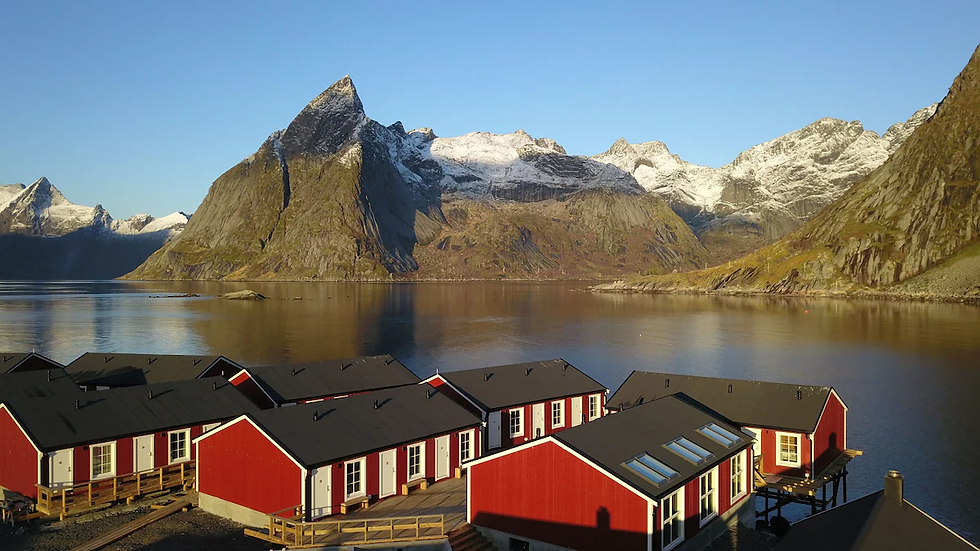
Reine Rorbuer is a boutique accommodation located in the picturesque fishing village of Reine, in the Lofoten archipelago of Norway. Situated by the Reine Fjord and surrounded by dramatic mountain peaks, it offers traditional rorbuer (fishermen’s cottages) and guest rooms, blending authentic heritage with modern comfort. The property features fjord views, free Wi-Fi, private bathrooms, and fully equipped kitchenettes in the cottages.

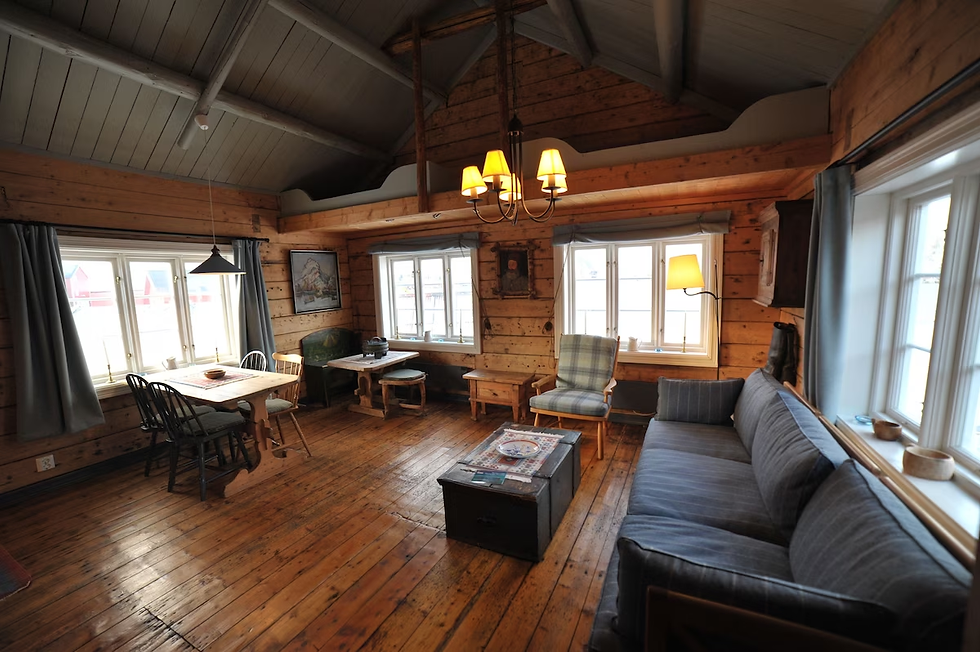

The Tide - Rorbuer (3.5 miles from Reine)
4-Star Hotel
The Tide - Rorbuer is a modern hotel and restaurant located in the picturesque fishing village of Sørvågen, Lofoten Islands, Norway. It offers guests a choice between cozy guest rooms and self-catering cottages (rorbuer), all featuring sea or mountain views, private kitchens, and outdoor furniture. The property is known for its excellent dining experience at The Havet restaurant, which serves local specialties, and a fully licensed bar.


Things to do in Reine:
1. Hike Reinebringen
The most famous viewpoint in Lofoten — steep but unforgettable.(Go only in safe conditions.)
2. Boat Trip into Reinefjorden
Take the ferry to Vindstad and walk to Bunes Beach, one of Norway’s most stunning hidden beaches.
3. Explore the Islands
Reine connects by bridges to Sakrisøy and Hamnøy, each with photo‑perfect cabins and seafood spots.
4. Kayaking, SUP, or Fishing Trips
Calm fjords make for gorgeous paddling and classic Lofoten fishing experiences.
5. Reine Cultural Center
Visit the Harr art gallery for atmospheric northern‑Norway paintings.
Ronda, Spain
Here’s a beautifully skimmable, atmospheric guide to traveling to Ronda, Spain — one of Andalusia’s most dramatic and romantic hill towns.

Best time to visit:
The best time to visit Ronda is April–June and September–October, when the weather is warm but comfortable, the skies are clear, and the town’s dramatic viewpoints and cliffside walks are at their most enjoyable. Summer (July–August) is hot and busy, while winter is cooler and quieter with a more atmospheric feel.
Where to stay:
Hotel Rural La Hacienda de Ronda
3-Star Hotel
The Hotel Rural Hacienda de Ronda is nestled in the heart of the Andalusian countryside, just a short drive from Ronda 's picturesque historic center . Its prime location offers visitors the opportunity to explore iconic landmarks such as the famous Puente Nuevo (New Bridge), the majestic Church of Santa María la Mayor, and the vibrant Plaza de España. Furthermore, the surrounding area provides the perfect setting for leisurely strolls, hiking trails, and unique cultural experiences in absolute tranquility.
At this charming hacienda, every detail is carefully considered to ensure an unforgettable stay. Its spacious and inviting rooms combine modern comfort with a delightful rustic style, many offering panoramic views of the surrounding landscape. Among the amenities are an outdoor swimming pool surrounded by gardens, a terrace perfect for relaxing at sunset, and a restaurant that delights guests with authentic Mediterranean flavors. Guests praise the tranquility of the location, the warm hospitality of the staff, and the ambiance that invites them to disconnect and enjoy a unique experience in the heart of Málaga.

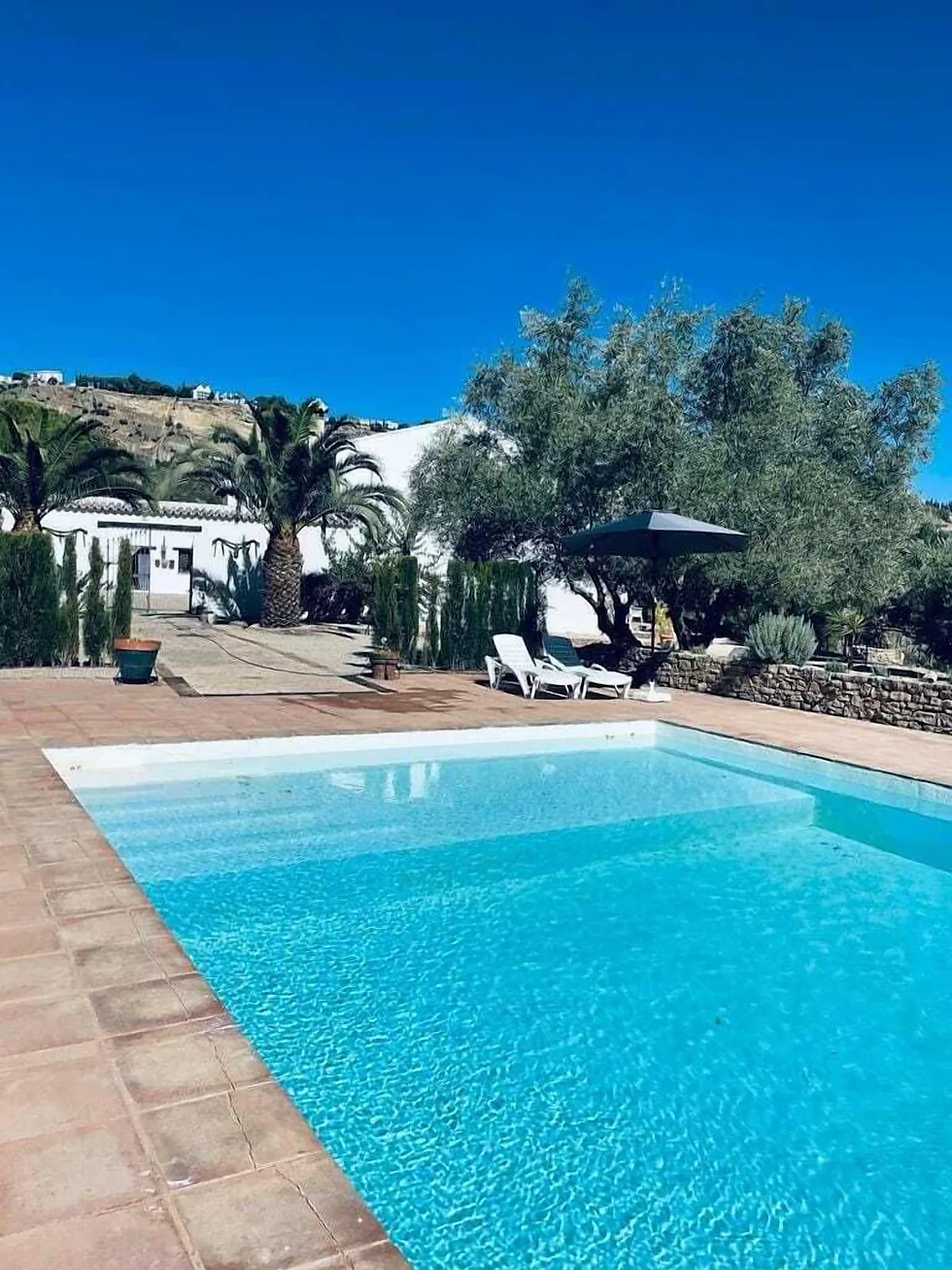

Hotel Boutique Molino del Arco
4-Star Hotel
Hotel Boutique Molino del Arco is a 4-star rural boutique hotel located in the countryside near Ronda, Spain, set in a historic 17th-century manor house surrounded by olive groves and fruit trees. The hotel offers a peaceful retreat with elegant rooms, a swimming pool, a restaurant serving regional cuisine, and access to outdoor activities like hiking and wine tasting.


Catalonia Ronda
4-Star Hotel
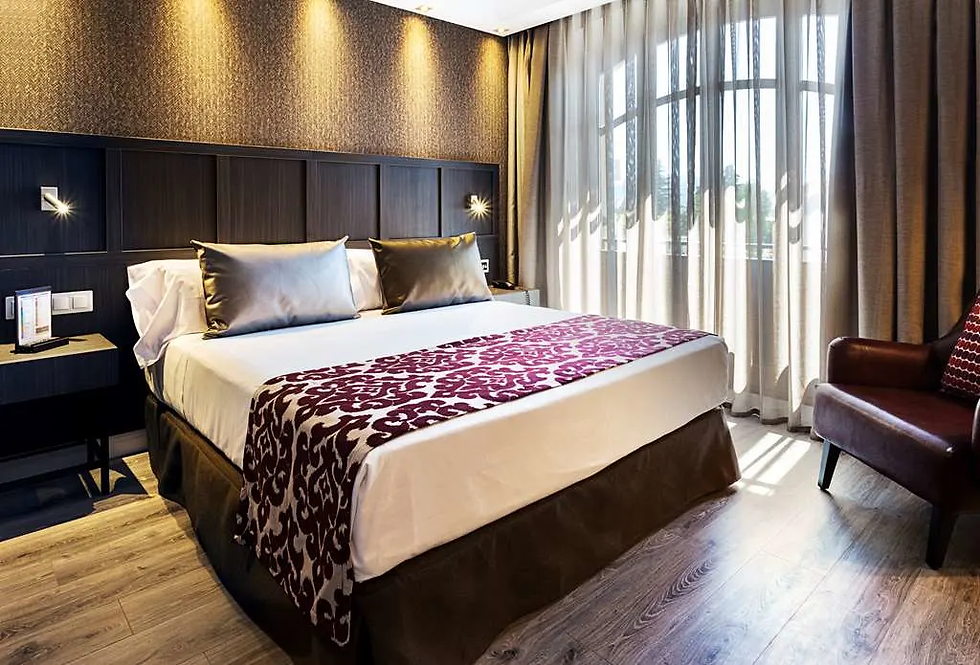
Hotel Catalonia Ronda is a boutique-style hotel located in the historic center of Ronda, Spain, just steps from the iconic Puente Nuevo and the city’s famous bullring. Situated at C. Virgen de la Paz, 16, 29400 Ronda, Málaga, the hotel offers modern accommodations with a focus on design, comfort, and panoramic views of the Tajo Gorge.


Things to do in Ronda:
1. Puente Nuevo (The New Bridge)
• The iconic stone bridge spanning the 390‑ft El Tajo Gorge
• Best views from the Mirador de Aldehuela and Mirador de Ronda
2. El Tajo Gorge Walks
• Scenic paths along the cliff edges
• Great for photography and golden‑hour views
3. Plaza de Toros (Ronda Bullring)
• One of Spain’s oldest and most beautiful bullrings
• Even if you skip bullfighting, the museum + architecture are worth it
4. La Ciudad (Old Town)
• Quiet, atmospheric lanes
• Arab walls, old mansions, and hidden courtyards
5. Arab Baths (Baños Árabes)
• Exceptionally well‑preserved Moorish baths
• Beautiful arches and stonework
6. Mondragón Palace
• Small palace with gardens and views over the valley
7. Wine Tasting
• Ronda has a growing wine scene
• Vineyards like Descalzos Viejos offer gorgeous setting
Taormina, Italy
Taormina is Sicily’s glamorous hilltop resort town, perched high above the Ionian Sea with views of Mount Etna, ancient ruins, chic boutiques, and pebble‑beach coves. It’s long been a favorite of artists, aristocrats, and travelers seeking that perfect blend of history, scenery, and la dolce vita.

Best time to visit:
The best time to visit Taormina is April–June and September–October, when the weather is warm and pleasant, the sea is swimmable, and the town feels lively without the intense summer crowds. July and August bring beautiful beach days but also high heat and heavy tourism, while winter is quiet with many hotels and restaurants closing for the season.
Where to stay:
Hotel Bel Soggiorno
3-Star Hotel
The privilege of being able to look over the balcony and feel surrounded by priceless beauty. The Bay of Naxos and Mount Etna. Sunset brings about magical emotions, at night-time the hint of lights lining the summit of the Volcano and of the fishing boats that go through the rich, mythical sea of Naxos, knitting the legends together. And in the morning, after a tasty, local Mediterranean breakfast, a partnered shuttle will take you to the prettiest beaches of the coast in just a few minutes. The Hotel is also very close to the famous center of Taormina, bordered by the two ancient city gates.


The Ashbee Hotel
5-Star Hotel
Built steps away from the ruins of an ancient Greek theater, perched on a cliff overlooking the Ionian Sea, with a garden full of citrus trees, the Ashbee would almost be too insistently Sicilian, too steadfastly true to its type, if it weren’t for its English heritage. Instead it’s lent a charming dose of eccentricity by its history as the villa of a British colonel who retired here in the first decade of the 20th century.
Designed by and later named for Robert Charles Ashbee, an architect in the Arts and Crafts lineage of William Morris, the Ashbee’s twenty-four guest rooms are all unique, fitted out with a mix of contemporary and antique furniture to complement the art. Many of the suites include private terraces and windowed alcoves overlooking the long coastline and the gardens. Should Arts and Crafts bring to mind flowering vines and little birds, know that the Ashbee’s dominant color is a vibrant white made all the brighter by the wash of Mediterranean sun — white walls, white curtains, white trim, crisp white sheets — with the occasional well-placed splash of color in the form of a plush purple chair or a vase full of flowers.
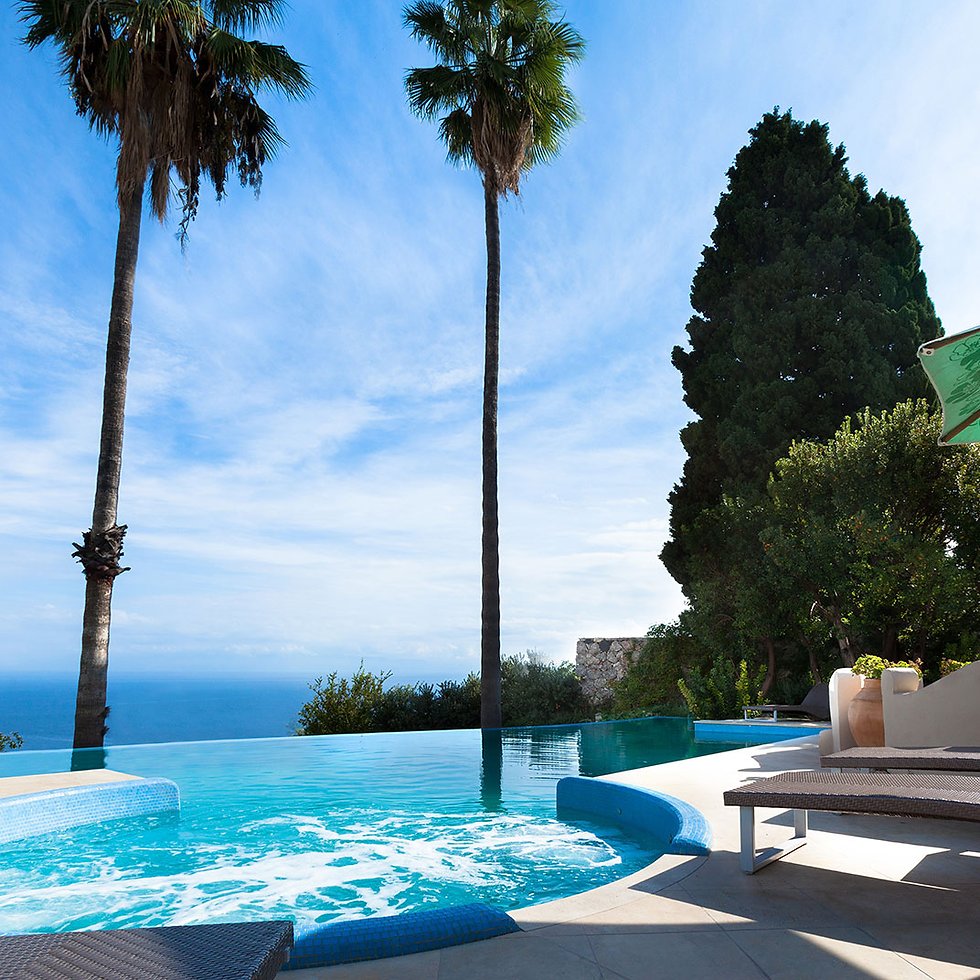
Set beneath an expansive terrace with spectacular views of the coastline, circled by palm trees, the pool, with its turquoise water and its infinity-style edge, seems to bleed into the Ionian Sea and its Mediterranean surroundings in a way that should impress even those of us lucky enough to have grown bored of infinity pools.
The dining offering includes the bar in the lounge, the Lounge Terrace — perfect for an aperitif — and the Michelin-starred St. George by Heinz Beck restaurant, which also offers a romantic outdoor service during the summer.
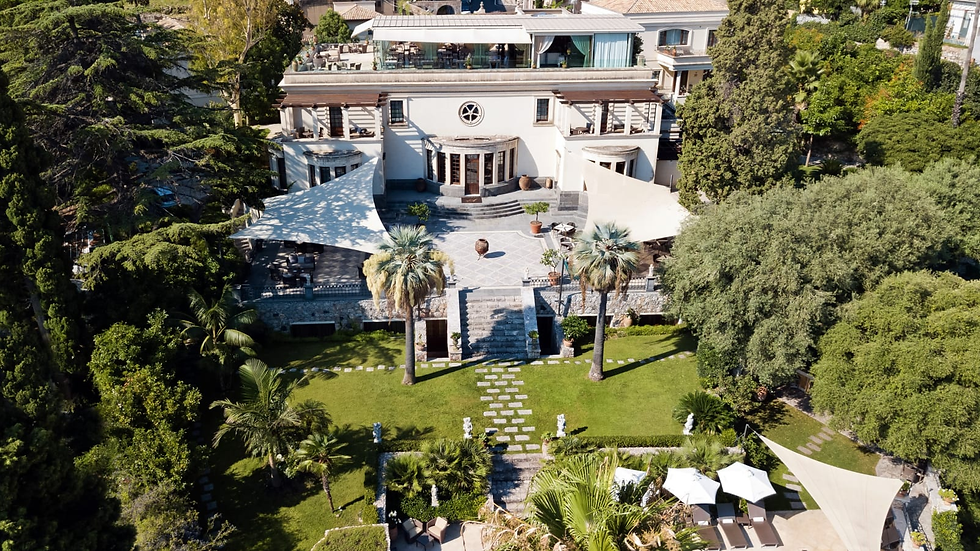

San Domenico Palace, Taormina, A Four Seasons Hotel
5-Star Hotel
The Sicilian town of Taormina is nothing if not spectacular, with the Ionian Sea at its feet and Mount Etna at its back. No less spectacular is San Domenico Palace, Taormina, A Four Seasons Hotel — first a 14th-century convent, later a 19th-century grand hotel, playing host to everyone from Oscar Wilde to Audrey Hepburn. And now, as a member of the Four Seasons family, it’s simply a top-flight luxury resort, made newly famous as the setting for the second season of The White Lotus. It’s been thoroughly renovated along the way, bringing its facilities up to 21st-century luxury standard — but aesthetically, the treatment has been subtle, retaining as much of the historical atmosphere as possible. It’s full of artworks and antiques, and not reproductions but originals from the old convent’s collection, lending the décor an authenticity that’s beyond reproach. The rooms and suites, of course, have been updated as well, though the changes are similarly subtle — functionally they’re as modern as can be, while the look is something approaching timelessness. A stunning pool terrace, a lavish spa, and a generous handful of very fine restaurants and bars are present as a matter of course. Meanwhile the hotel’s offerings go beyond typical luxury fare, and present options that are tailored to the location: from tastings of local wines to culinary and architectural tours and even sailing expeditions along the Sicilian coast.


Things to do in Taormina:
1. Ancient Greek Theater (Teatro Antico)
One of Sicily’s most iconic sites — panoramic views of Etna + the sea.
2. Corso Umberto
Taormina’s main pedestrian street — boutiques, cafés, gelato, and lively piazzas.
3. Isola Bella
A tiny island connected by a sandbar; Taormina’s most famous beach.
4. Mazzarò Beach
Easy to reach via cable car; pebble beach with beach clubs and restaurants.
5. Villa Comunale Gardens
Lush public gardens with sea views — perfect for a quiet wander.
6. Castello di Taormina & Madonna della Rocca
A scenic uphill walk with sweeping views of the coastline.
7. Day Trips
Mount Etna
Etna wine region
Alcantara Gorges
Sibiu, Romania
Sibiu is a storybook medieval city in Transylvania, known for its pastel houses with “eyelid” windows, cobblestone squares, German‑influenced architecture, and a relaxed, artsy vibe. It’s one of Romania’s most beautiful cities and a perfect base for exploring the Carpathian Mountains and nearby villages.

Best time to visit:
The best time to visit Sibiu is May–June and September, when the weather is mild, the old town feels lively but not crowded, and festivals bring extra energy to the city. July and August are warm and busy with peak tourism, while winter is cold but atmospheric—especially in December, when Sibiu’s Christmas Market becomes one of the most magical in Europe.
Where to stay:
Art Hotel
3-Star Hotel
With a design specific to the boutique hotel concept, Art Hotel Sibiu is a "journey" among new and old textures and materials, preserved for hundreds of years, which now breathe at the same pace.
Accommodation in the center of Sibiu! Hotel services & facilities on an artistic level.
Art Hotel is the newest 4-star hotel in the heart of Sibiu, situated on Centumvirilor Street, 200m from the Great Square, bordered by the fortification walls of medieval Sibiu.


Rosen Villa
4-Star Hotel
Rosen Villa Sibiu is a 4-star guesthouse located in the heart of Sibiu’s historic old town, just a 5-minute walk from the city center and major attractions like the Council Tower and Franz Binder Museum. It offers a peaceful retreat with a garden, sun terrace, and private parking, managed by the welcoming hosts Raul and Paraschiva.


Noblesse Boutique Hotel (.35 miles from Sibiu)
5-Star Hotel
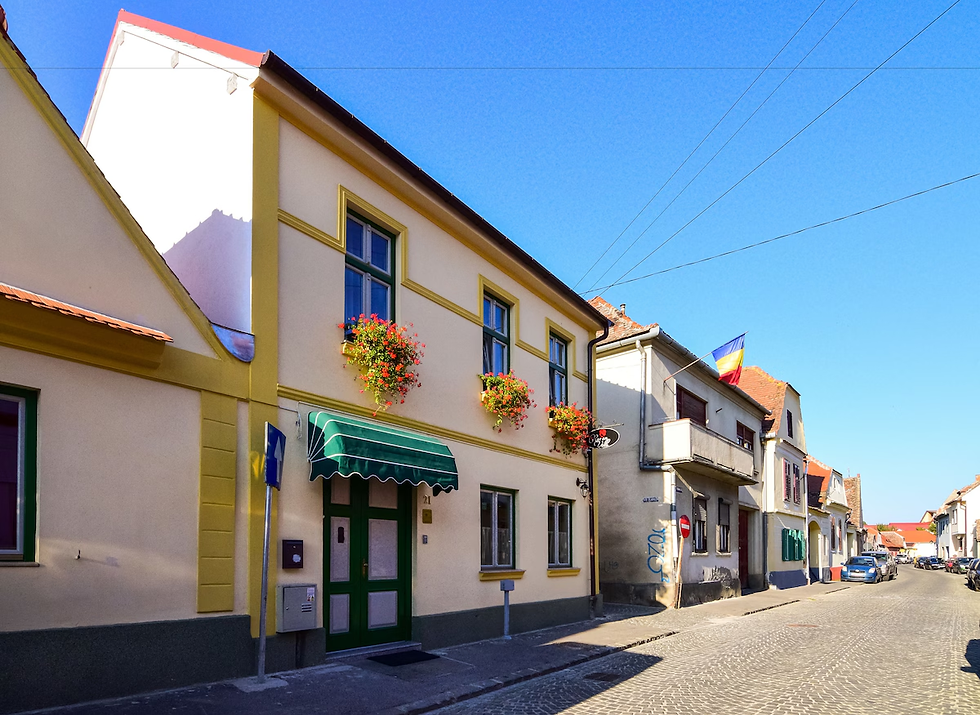
Noblesse Boutique Hotel is a 5-star boutique hotel located in Sibiu, Romania, at 17 Strada Blănarilor, just a 5-minute walk from the city center. It offers a quiet, cozy atmosphere with well-maintained rooms, a complimentary breakfast buffet, and access to a fitness center. The hotel is known for its excellent service, elegant interior, and convenient location near major attractions like the Council Tower and Great Square.


Things to do in Sibiu:
1. Explore the Big Square (Piața Mare)
The heart of Sibiu — colorful buildings, cafés, and lively events.
2. Wander the Small Square (Piața Mică)
Charming bridges, towers, and the famous “houses with eyes.”
3. Climb the Council Tower
Panoramic views over the rooftops and mountains.
4. Bridge of Lies
A cast‑iron pedestrian bridge wrapped in local legends.
5. Brukenthal National Museum
One of Romania’s top art museums, housed in a baroque palace.
6. ASTRA Museum of Traditional Folk Civilization
An open‑air museum with historic wooden houses, windmills, and lakes.
7. Day Trip the Transfăgărășan Highway
A dramatic mountain road with hairpin turns and glacier lakes (summer only).
Eze, France
Eze is a medieval, cliff‑top village perched dramatically 1,400 feet above the Mediterranean between Nice and Monaco. It’s tiny, romantic, and impossibly scenic — a maze of stone lanes, bougainvillea, and panoramic terraces overlooking the Côte d’Azur.

Best time to visit:
The best time to visit Èze is April–June and September–October, when the weather is warm and clear, the Mediterranean views are at their most stunning, and the village feels lively without the heavy summer crowds. July and August offer peak Riviera sunshine but come with heat and congestion, while winter is mild and quiet with some seasonal closures.
Where to stay:
Eze Hermitage Hôtel
3-Star Hotel
The Hermitage hotel is nestled in a superb flower garden, halfway between Nice and Monaco, on the Grande Corniche, just a few kilometers from the famous medieval village of Eze, where the exotic garden dominates with one of the most beautiful views of the world.
A true haven of peace, with breathtaking views between the Mediterranean and the mountains of the Mercantour National Park. Ideal departure for hikes suitable for adults and children, a bike shelter is available for cyclists and 2 free car parks complete the hotel offer.
An elegant building with 24 rooms, on 2 floors without elevator, all personalized with care to offer the guests the greatest comfort. Some of our rooms have a balcony or terrace with sea or mountain view.


Hôtel Les Terrasses D'Eze
4-Star Hotel
Nestled in the Côte d'Azur hilltops, Les Terrasses d'Eze Hotel is ideally situated between Nice and Monaco, just minutes from the iconic medieval village of Eze.
The hotel offers a unique panorama of the Mediterranean Sea from Saint-Jean-Cap-Ferrat and Villefranche-sur-Mer’s bays to the Cap d'Antibes.
Its unique architecture, staggered like the decks of a ship, allows travelers to enjoy the French Riviera as if on a boat, floating on the water.


Hôtel Cap-Estel
5-Star Hotel
There are two ways to properly do the Riviera: either march into one of the big grand hotels in Cannes, in full view of throngs of adoring fans or paparazzi, plonk down a pile of cash, and flounce around like the celebrity you are; or else find some secluded spot and duck in, out of the view of prying eyes (this latter usually still involves plonking down a pile of cash, but that’s the Riviera for you).
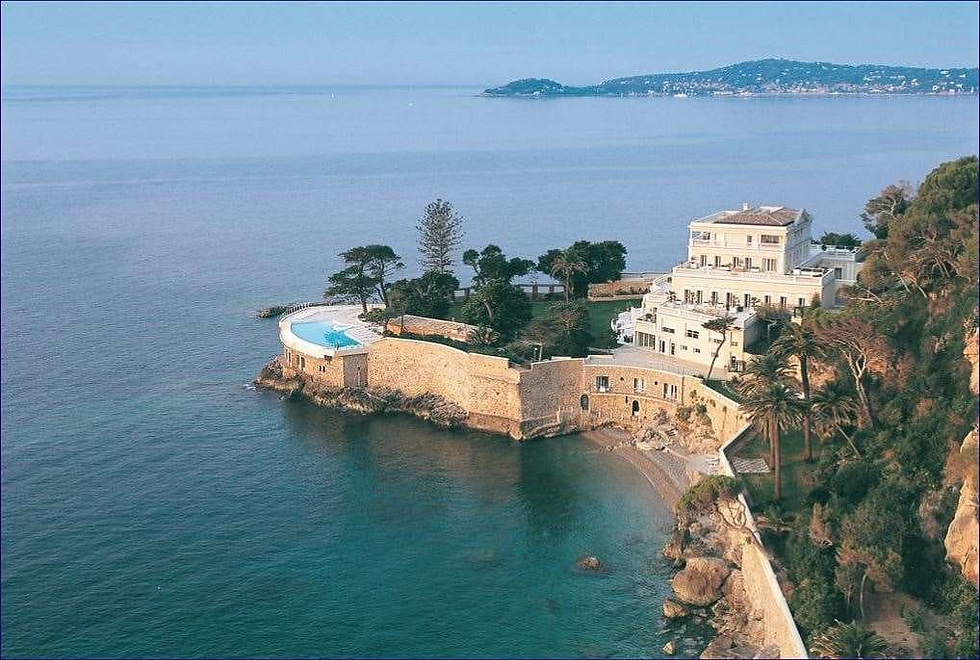
Cap Estel falls squarely in the latter category. Built by a 19th-century Russian aristocrat, it’s always been intended as a posh and private hideaway — out at the end of its own five-acre peninsula, it’s nothing if not secluded. Inside it’s equal parts period piece and modern boutique, in vibrant blues and bright minimalist white, with modern beds and baths alongside antique mirrors and Louis XVI armchairs. Rooms look out over the Mediterranean from private terraces and balconies, and the suites are sprawling and decadent, some in the main building and others in an Italian-style villa closer to the sea.
Meals are served at the Pool House, by the seaside infinity pool, or in the dining room, both reserved for guests only — no chance you’ll have to have your photo taken here. In fact there’s no need to step off the grounds at all; Cap Estel comes with a fitness center with another beautifully tiled indoor pool, a sauna, and facilities for massage and spa treatments, as well as a private beach and even a billiards room, a piano bar, and a private cinema.


Things to do in Eze:
1. Wander the Medieval Village
Stone alleys, artisan shops, hidden courtyards, and endless photo spots.
2. Jardin Exotique d’Èze
A stunning clifftop garden with cacti, sculptures, and the best panoramic views.
3. Nietzsche Path (Sentier Nietzsche)
A steep but rewarding hike between Èze‑sur‑Mer and the hilltop village.
4. Fragonard Perfume Factory
Free tours + a chance to shop classic French fragrances.
5. Beach Time at Èze‑sur‑Mer
Pebble beach with clear water and a quieter vibe than Nice.
Bruges, Belgium
Bruges (Brugge) is a storybook medieval canal city filled with cobblestones, swans, Gothic architecture, and chocolate shops. It’s one of Europe’s most atmospheric small cities — romantic, walkable, and perfect for slow wandering.

Best time to visit:
The best time to visit Bruges is late spring (May–June) and early fall (September–October), when the weather is mild, the canals and squares feel lively but not overcrowded, and the city’s medieval charm really shines. Summer brings long days and warm weather but also peak crowds, while winter is quieter and atmospheric — especially in December, when Bruges transforms into a festive, fairy‑lit Christmas market town.
Where to stay:
Boutiquehotel 't Fraeyhuis
4-Star Hotel
Bordering Bruges’ fairytale Minnewater Park, Boutiquehotel ’t Fraeyhuis is a thorough reinvention of a centuries-old manor. Formerly Hotel Egmond, it still carries traces of its Renaissance past - with a grand fireplace here, and exposed beams there - now paired with stone floors, moody photography, and modern design. The garden bar, situated behind a glass-walled lounge, draws locals as much as guests. With just 12 individually styled rooms, this former noble residence feels private, cultured, and perfectly at home in the city of romance.


Hotel de Orangerie
4-Star Hotel
Bruges may no longer be one of the economic centers of Belgium, but this ancient Flemish city remains one of Europe’s most picturesque destinations, its streets lined with a wealth of carefully preserved historic buildings. One of these architectural treasures, a fifteenth-century convent along the Den Dijver canal, has been converted into a charming traditionally-styled boutique hotel, Hotel de Orangerie.
A recent renovation has left the rooms in fine shape; all differ in layout and décor, but all are handsomely old-fashioned, with antique furnishings, fine fabrics and the sort of calm and private atmosphere that can’t help but recall the building’s cloistered heritage. A superb breakfast — recently cited as Belgium’s best — is available downstairs, and English-style afternoon tea is served in the summer months on a terrace by the side of the canal.
The only thing missing is a restaurant, though the surrounding area hardly lacks for options. The location is perfect for sightseeing, at the heart of the old city, best navigated on foot or by bicycle, or seen from a gondola on the canal.


The Secret Garden
5-Star Hotel
On the side that faces the picturesque Groenerei canal it’s a stately urban house, while on the back side it’s practically a country retreat. The Secret Garden is set right in the heart of Bruges, which, to be fair, is no megalopolis — but the tranquility on offer here is still remarkable. In its concept — and its size — it’s got more in common with bed and breakfasts than with luxury hotels, boutique or otherwise, but it’s also rather more comfortable than the B&B tag suggests: the décor is lavish, the bathrooms (with their Hermès products) spa-like, and the swimming pool and hot tub are a welcome surprise.


Things to do in Bruges:
1. Take a Canal Boat Tour
• The most iconic Bruges experience
• Glides past bridges, swans, and medieval facades
• Beautiful in any season
2. Explore the Historic Centre (UNESCO)
• Cobblestone lanes, stepped‑gabled houses, and Gothic architecture
• Perfect for slow wandering and photography
3. Rozenhoedkaai (Rosary Quay)
• The postcard view of Bruges
• Magical at sunrise and golden hour
4. Climb the Belfry of Bruges
• 366 steps to panoramic city views
• Great for understanding Bruges’ medieval layout
5. Visit the Basilica of the Holy Blood
• Small, ornate basilica
• Houses a revered relic and beautiful interiors
6. Markt Square
• Colorful guild houses
• Cafés, horse‑drawn carriages, and lively energy
7. Burg Square
• Stunning architecture: Town Hall, Basilica, and historic facades
• One of Bruges’ most elegant corners
8. Chocolate Tasting
• Visit artisanal chocolatiers like Dumon, The Chocolate Line, or Pralinette
• Great for a self‑guided chocolate crawl
9. Belgian Beer Experiences
• Try local brews at De Halve Maan Brewery
• Visit cozy pubs like ’t Brugs Beertje
10. Begijnhof (Beguinage)
• Peaceful white‑washed houses and a tranquil garden
• A quiet escape from the busy center
11. Minnewater Lake (Lake of Love)
• Romantic, willow‑lined lake
• Lovely for a slow stroll
12. Groeningemuseum
• Flemish art, including works by Van Eyck and Memling
• Compact and beautifully curated
13. Windmills of Bruges
• Scenic walk to the city’s historic windmills on the eastern edge
• Great for photos and a quieter vibe.


Comments